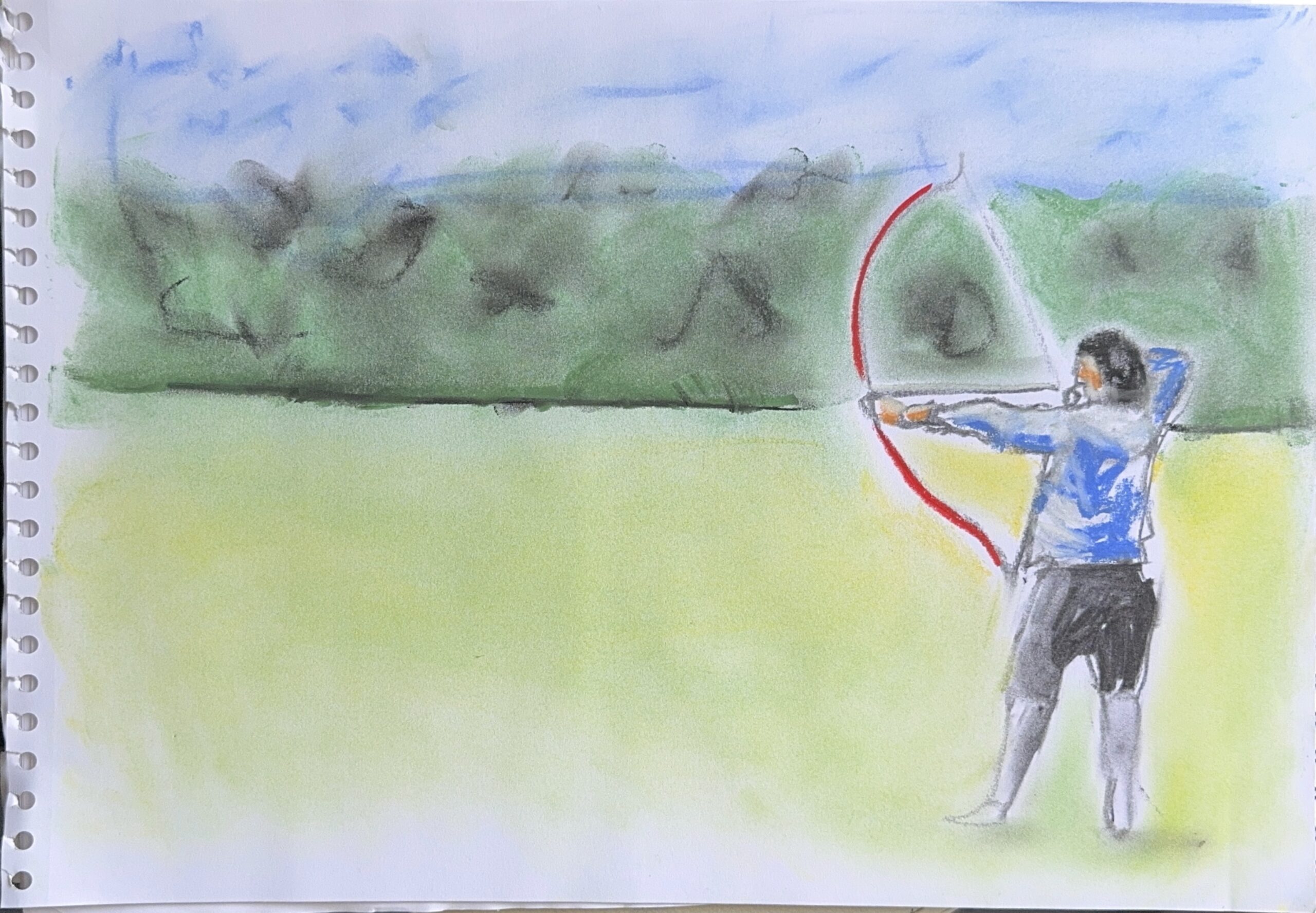
Exercise brief
Aim
Fill several pages of your sketchbook with quick sketches of moving figures.

Method
Try to fill at least a page a day, using a range of media - pencil, charcoal, ink. This will be a rich resource for future work as well as improving your figure drawing through regular practice. You’ll have to work quickly. Don’t worry about details but work instead to capture the energy of the figures. The subject matter might be individuals or groups of people.

How well have you managed to create the sense of a moving figure or figures rather than a static pose?

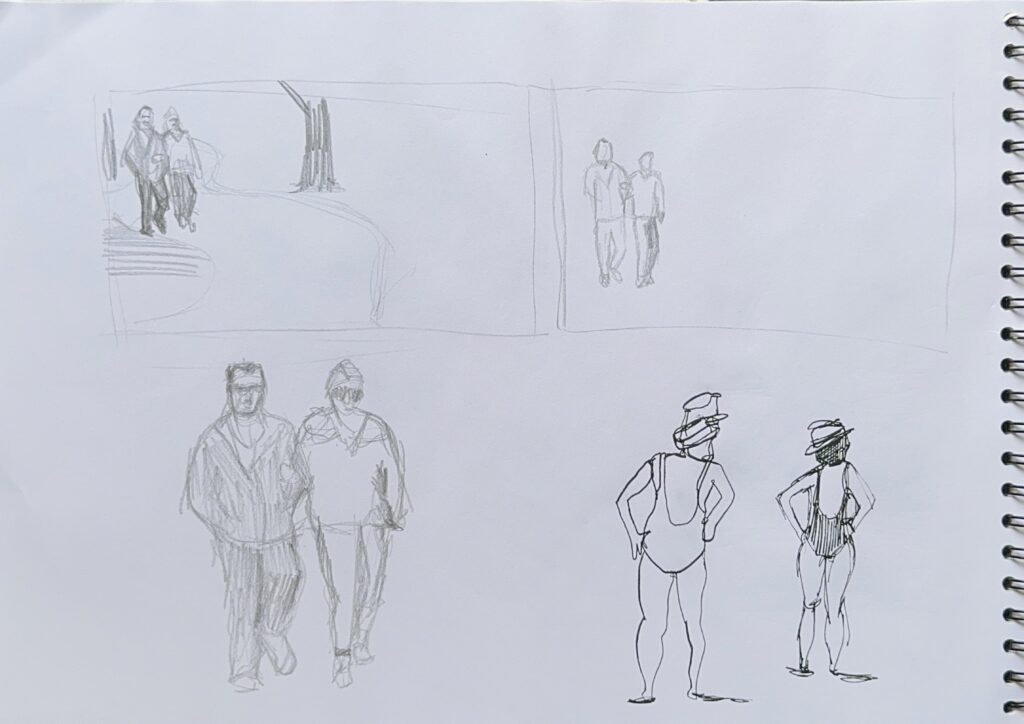
‘People watching’ is a good way to understand human movement and interaction. This might be at the supermarket, on a bus or train, in a pub or café, cinema queue or takeaway. Night or day, observe different kinds of people – how they stand, how they interact, what they carry, what they’re doing with their hands, and how they dress. If you can do a few small and quick sketches on the spot, that’s great. If not, take a few discreet photos and try to keep the atmosphere of the scene in your memory until you return home, then try to recapture the colour, movement, drama, noise, etc., in your sketches.

Reflection
How successful were your attempts to retain an image of a scene to draw later? Did your drawings become more fluent as you worked through your sketchbook, perhaps becoming more confident with working in this way? Make some notes in your learning log.
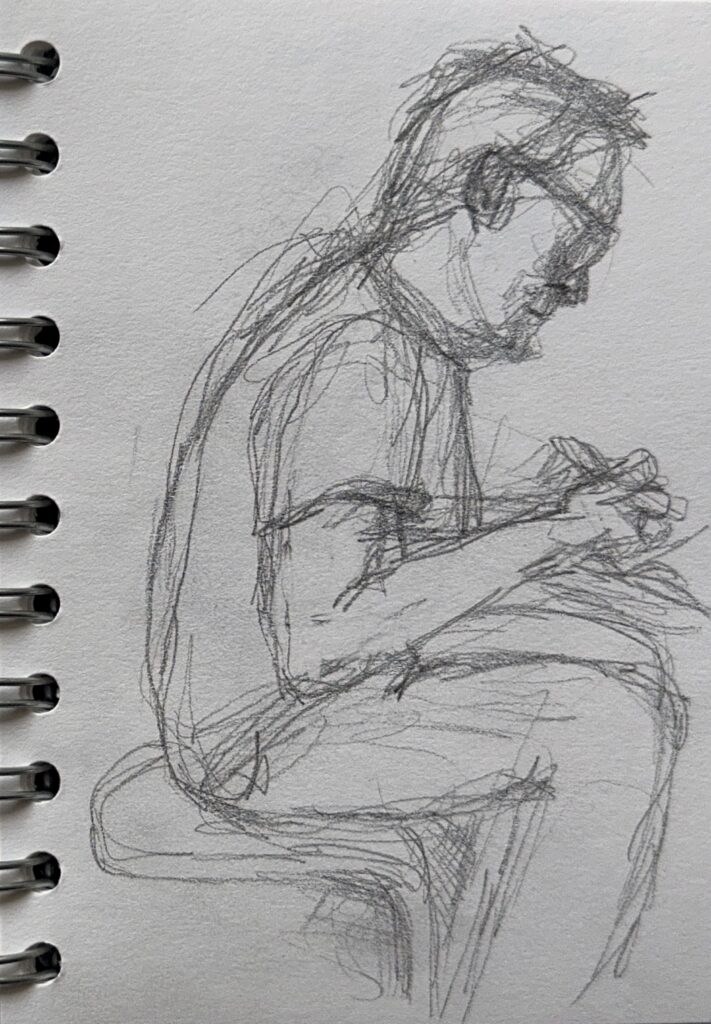
Even though ultimately I would love to work with the figure, I have felt rather unconfident working on the moving figure. Partly, I think, this is because I cannot hold onto the figure in my mind’s eye. So I’m loosing it as I draw since people move constantly. The first few sketches are sketches of my daughter and spouse: she was crocheting and he was reading and writing. I didn’t ask them to pose, and they were constantly fidgeting.
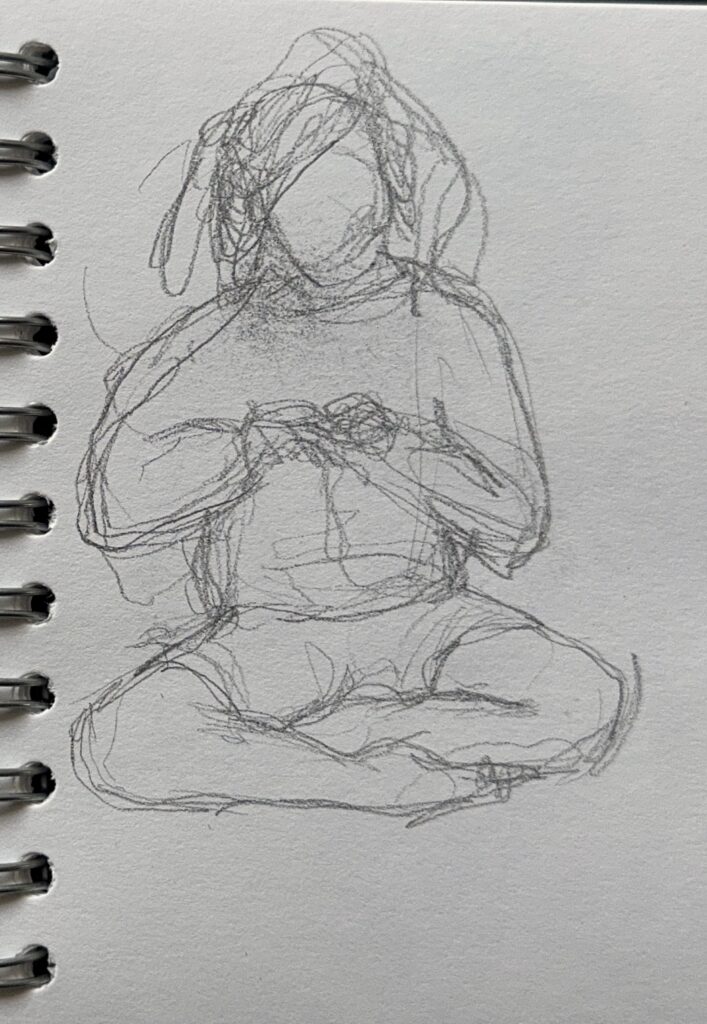
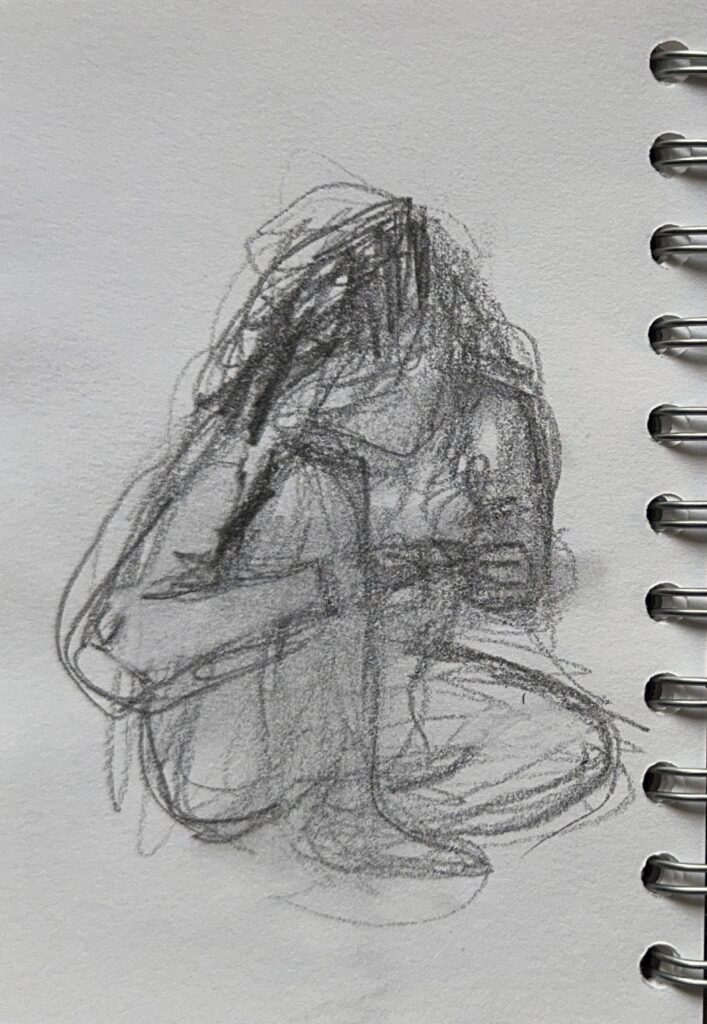
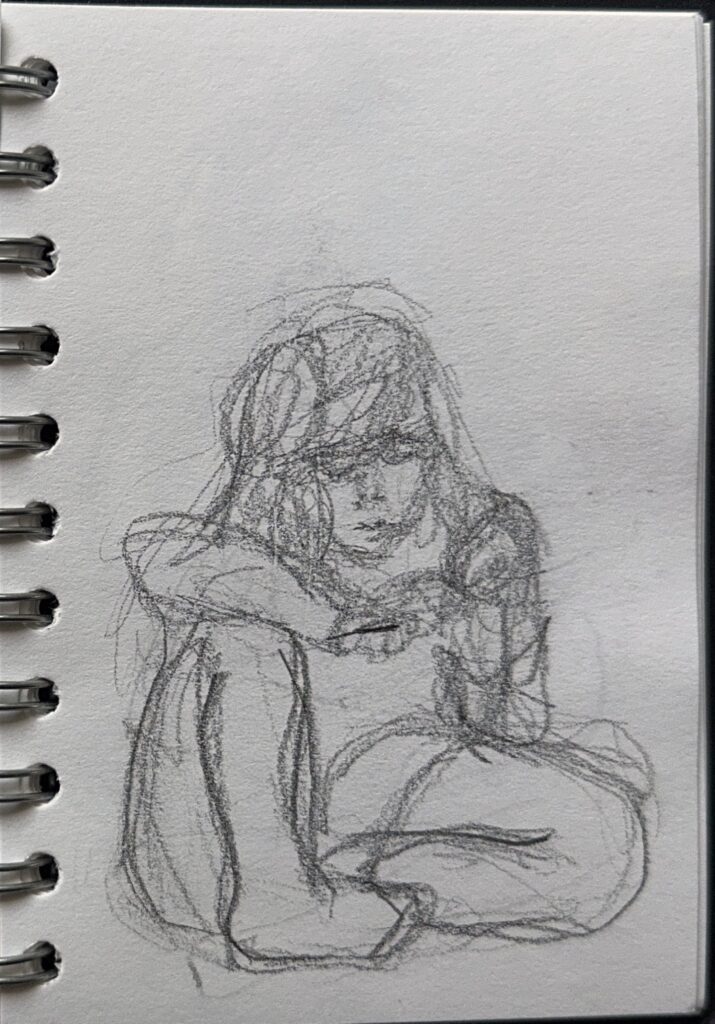
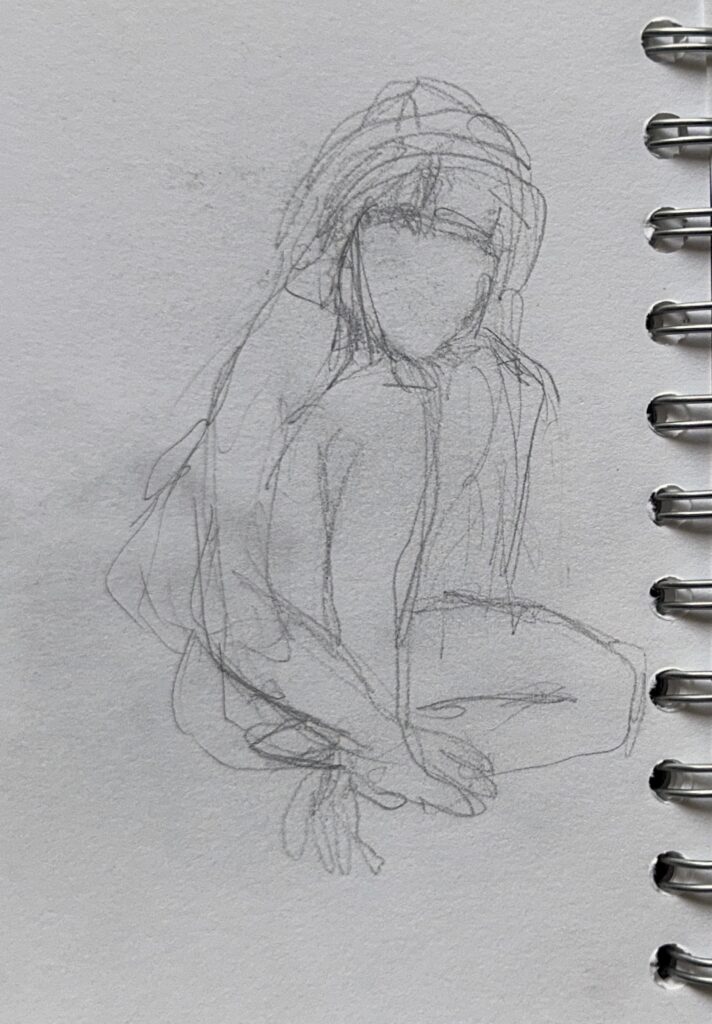
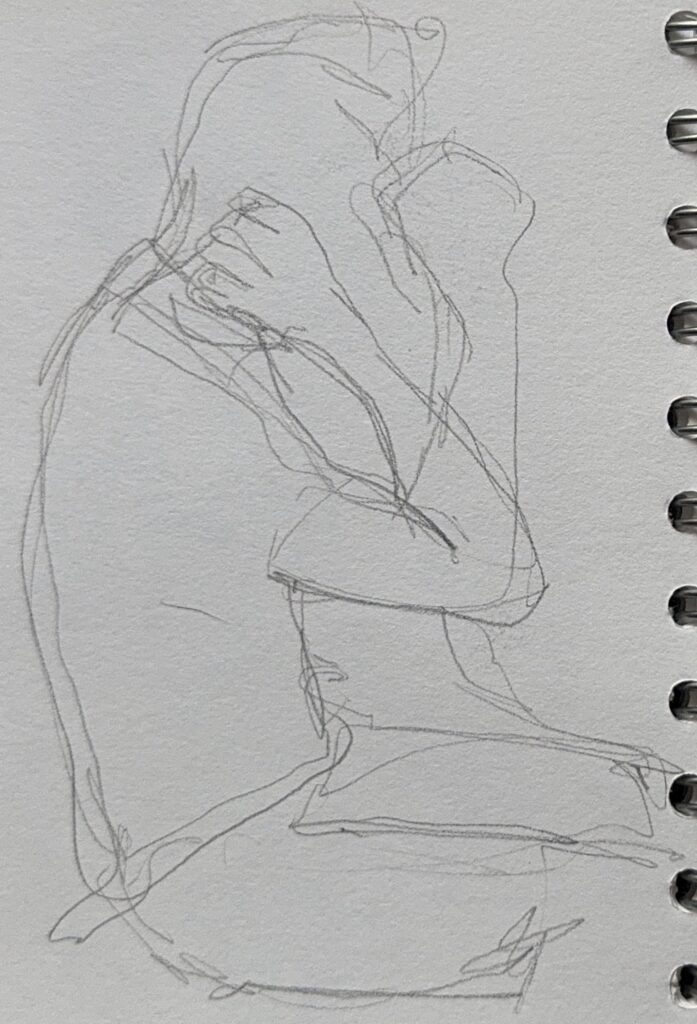
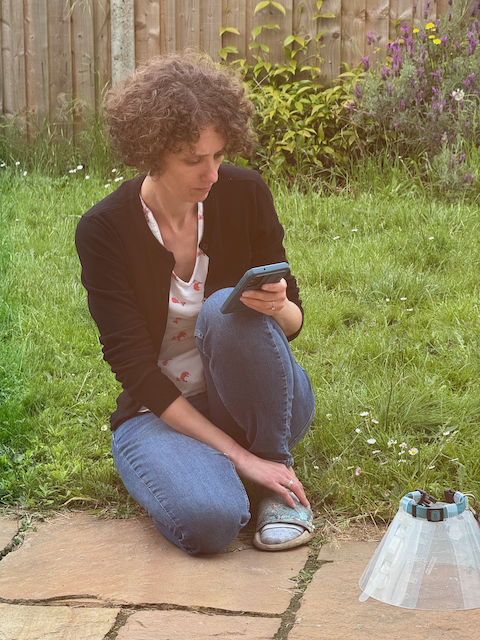
Next, I experimented with a different approach: rather than sketching live, I searched for snapshots of people in action on my phone and set up a projector so I could see them in larger scale.
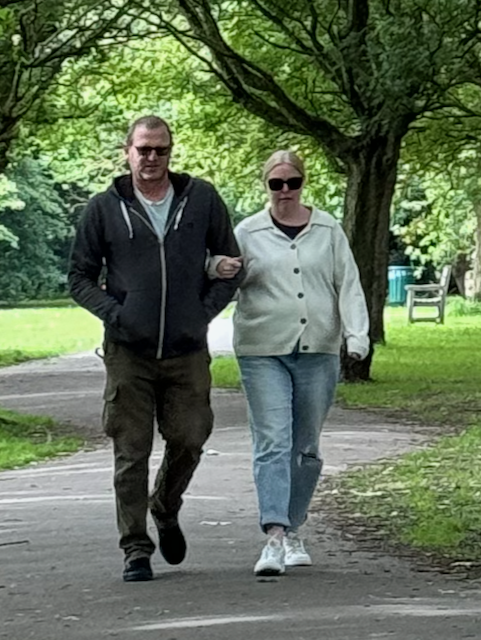
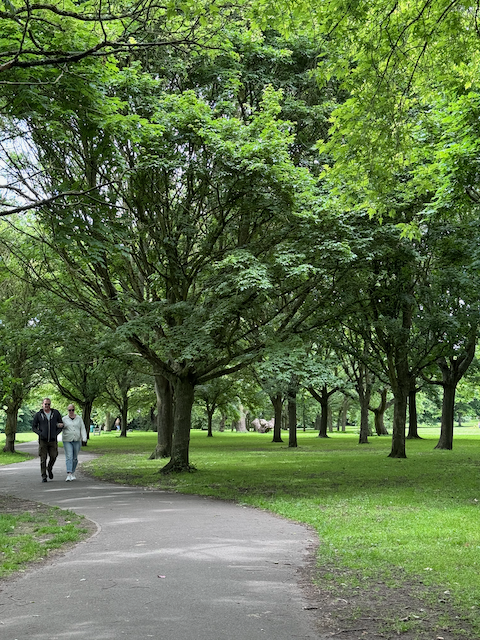
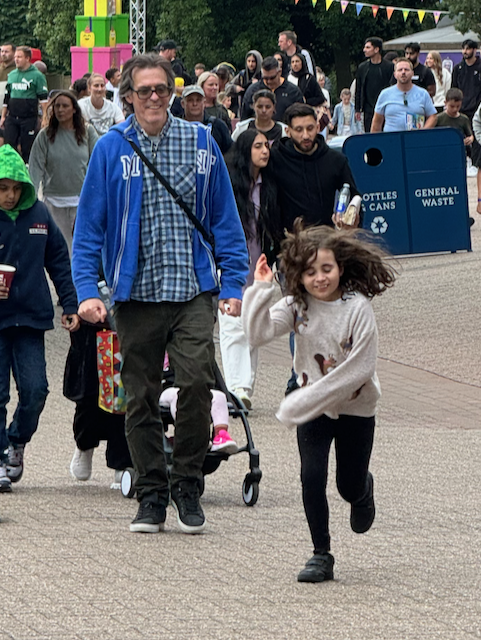

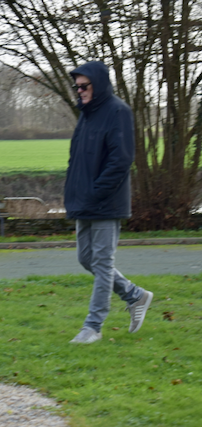
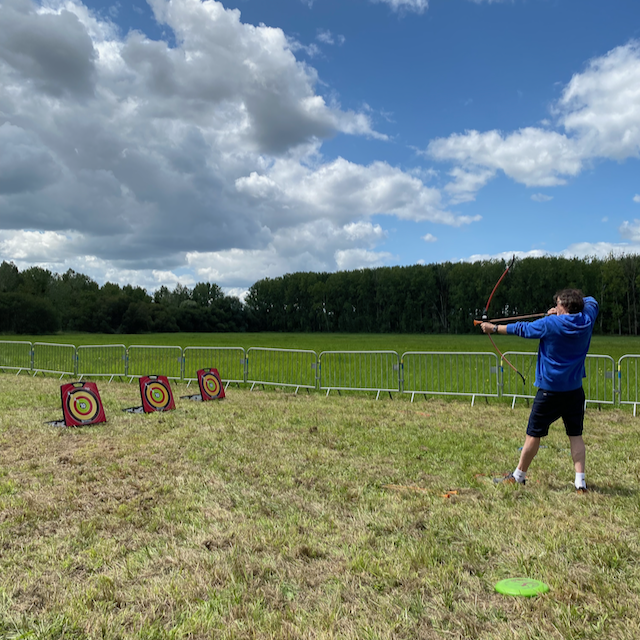
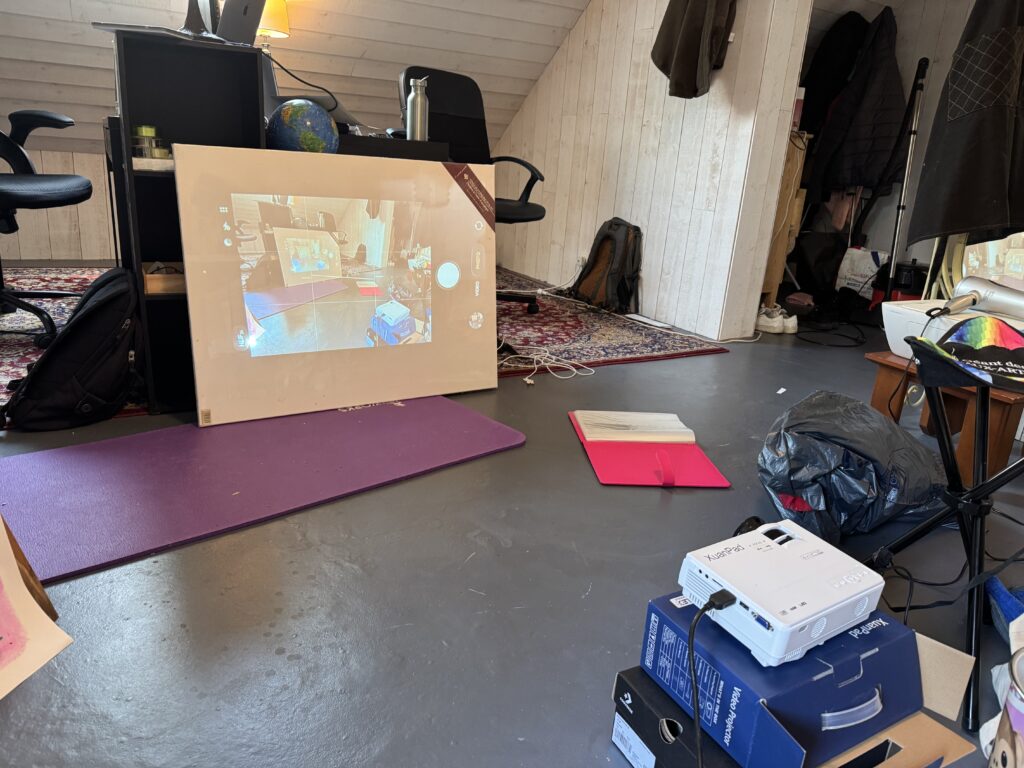
I also tried to use a variety of medium (pastels, ink, colour pencils, charcoal, and graphite pencils).
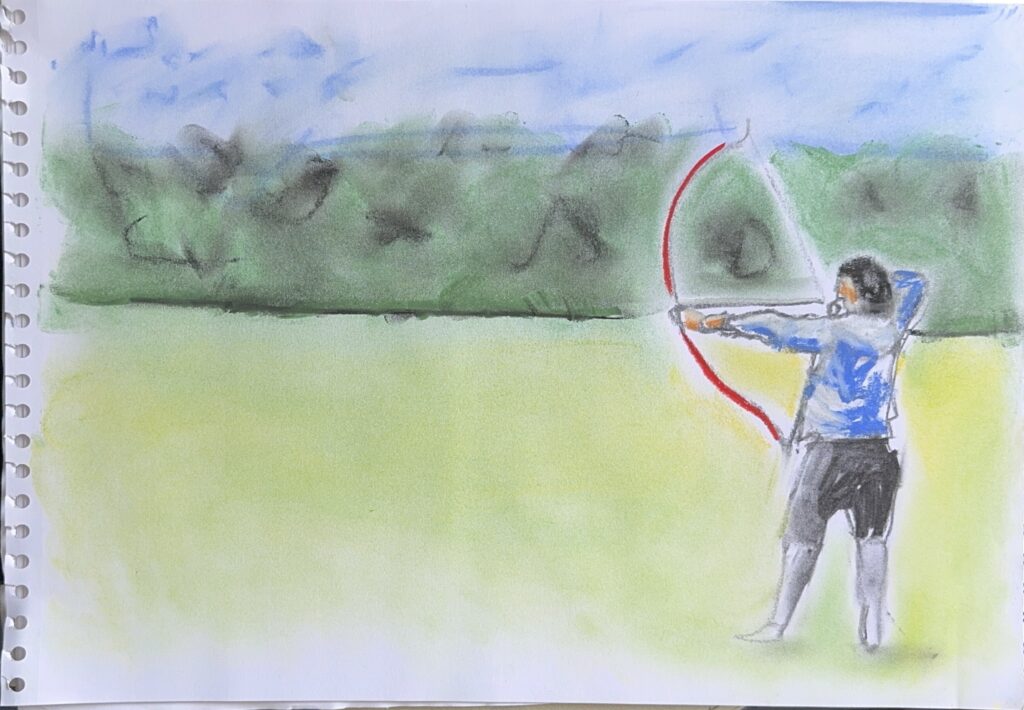
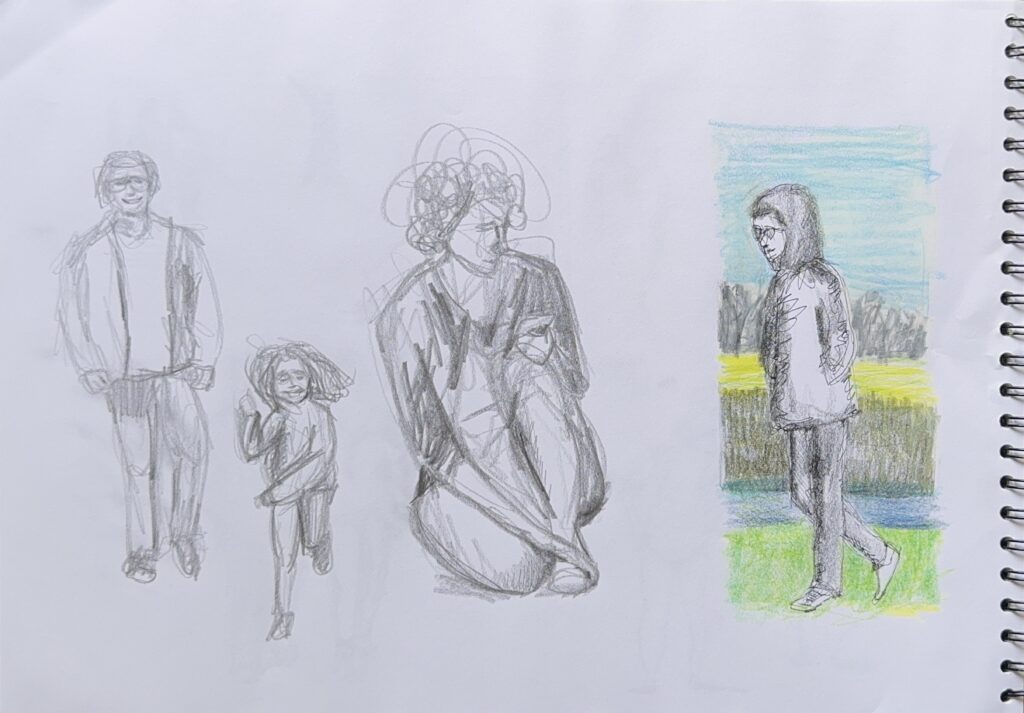
Reflections
How successful were my attempts to retain an image of a scene to draw later? Not very successful! I find it really difficult to “hold on” to a scene in my mind’s eye. This may be exacerbated by ADHD: I am known to forget things mid-sentence!
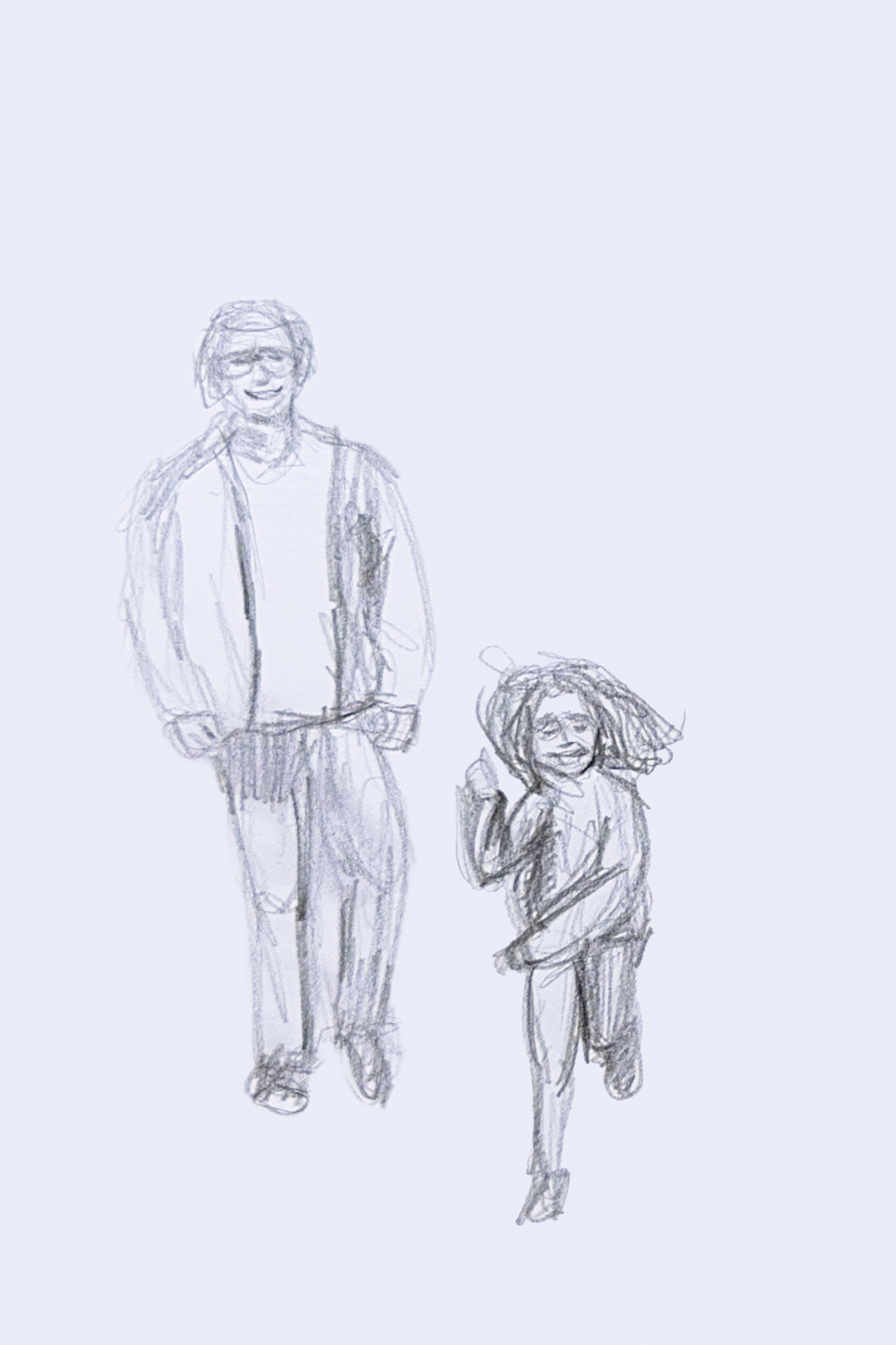
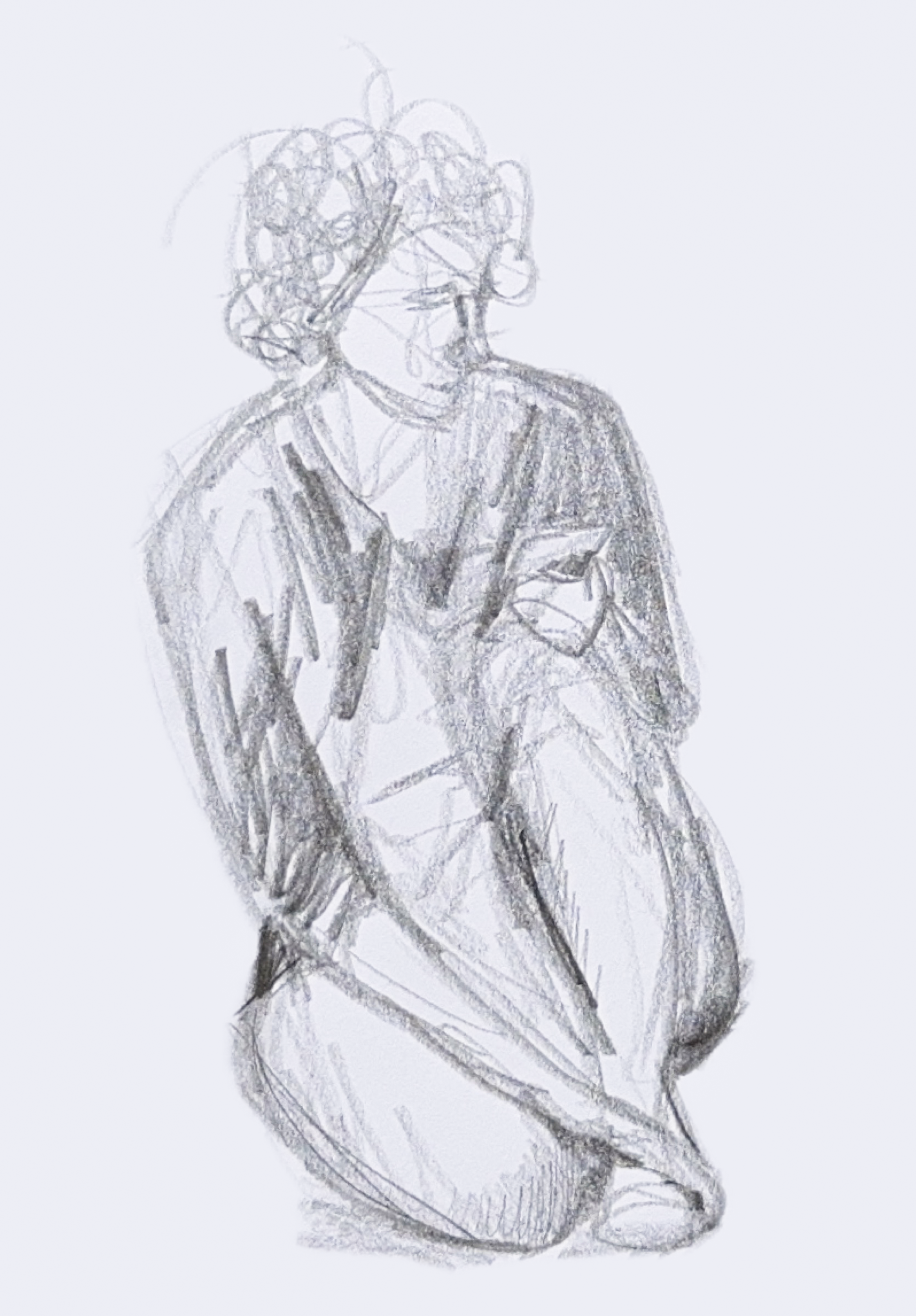
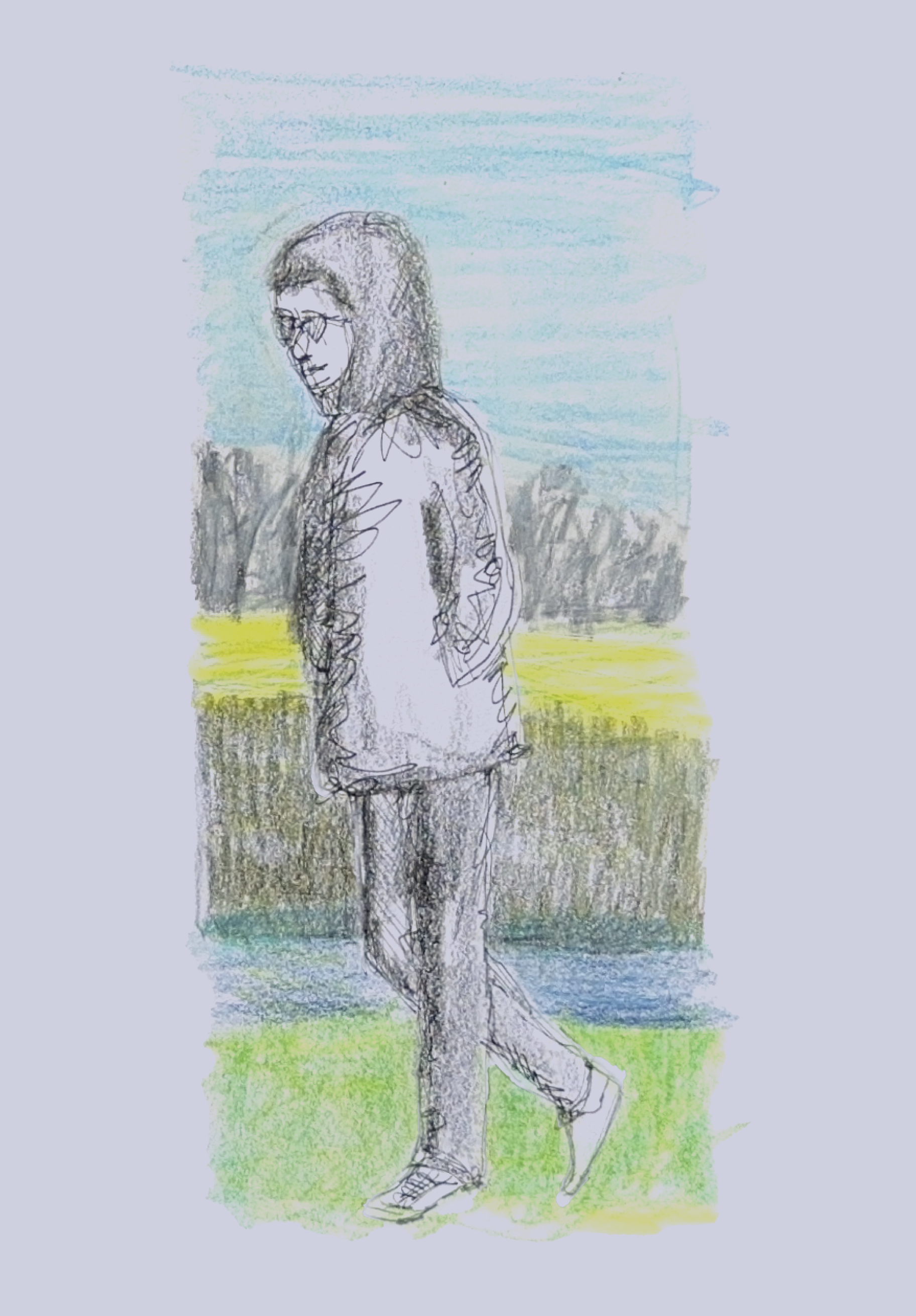
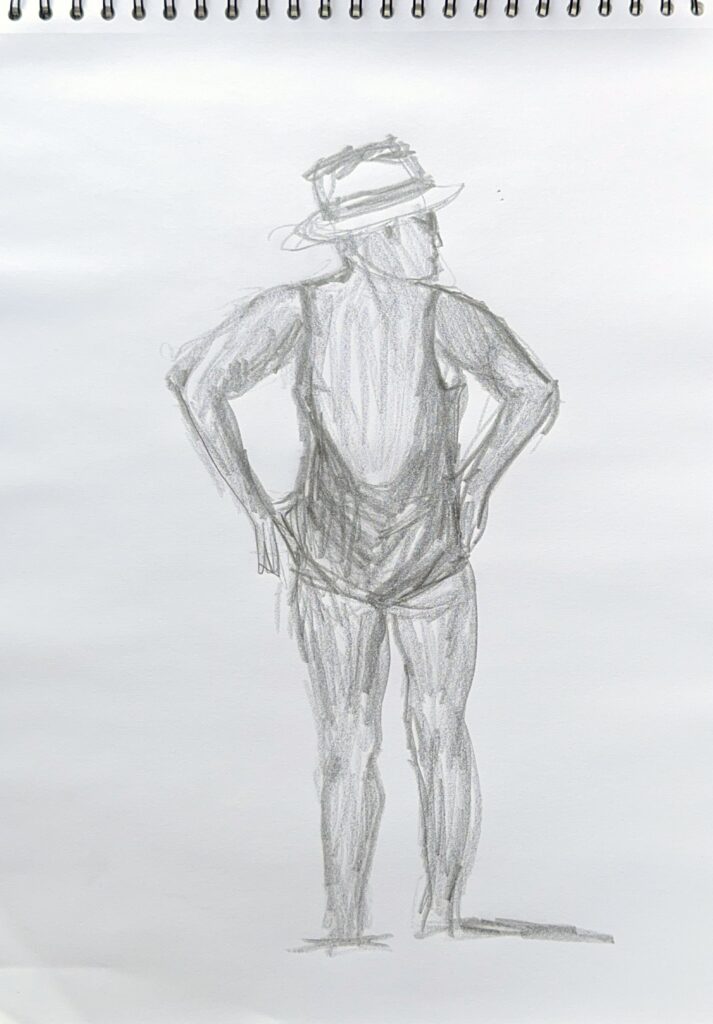
I am not sure my drawings became more fluent in a linear way but I noticed that different materials either helped me or worked against me. I felt less fluent with the ink pen (Figure study #10) and most fluent with the graphite pencil (e.g., Figure study #9 is my favourite even if the lines are not accurate). Figure study #16 is also OK, although it was not a moving figure so I’m not quite sure it qualifies!
Revisiting my sketches later on, I realised I actually hadn’t practiced drawing many moving figures (arguably only figure studies #8, 10 and 11 were moving), and all of them were quite stiff. I am not sure what this tells me. I’ve enjoyed drawing Figure study #9 the most, but I realise it was not a moving figure at all! So all in all, although I am quite eager to improve my figure drawings and learn to draw confident lines that capture the essence of a figure, drawing a moving figure may be the most challenging task in figure drawing!