Exercise Prompt
Looking at different art from different eras can be overwhelming. As a practitioner, it is good to develop an understanding about how artists and art works relate to one another. In written art histories this is usually done chronologically. That’s fine, but artists aren’t historians and often cherry pick from all eras - often ignoring or rebelling against the immediate past. Developing a thematic understanding of art practice - that is, one that focuses on similarity without dwelling too much on the perceived narrative of history - is useful. This research task allows you to investigate and show how landscape artists from Dürer onwards inter-relate by making a mind-map. This is a powerful research method/tool that is worth remembering throughout your studies.

You may already be familiar with works by Albrecht Dürer, Rosa Bonheur, Oscar-Claude Monet, Paul Cézanne, Dora Carrington and Helen Frankenthaler.

Look also at work by Joan Eardley, John Virtue, Tacita Dean, Vilja Celmins and other younger artists working today.

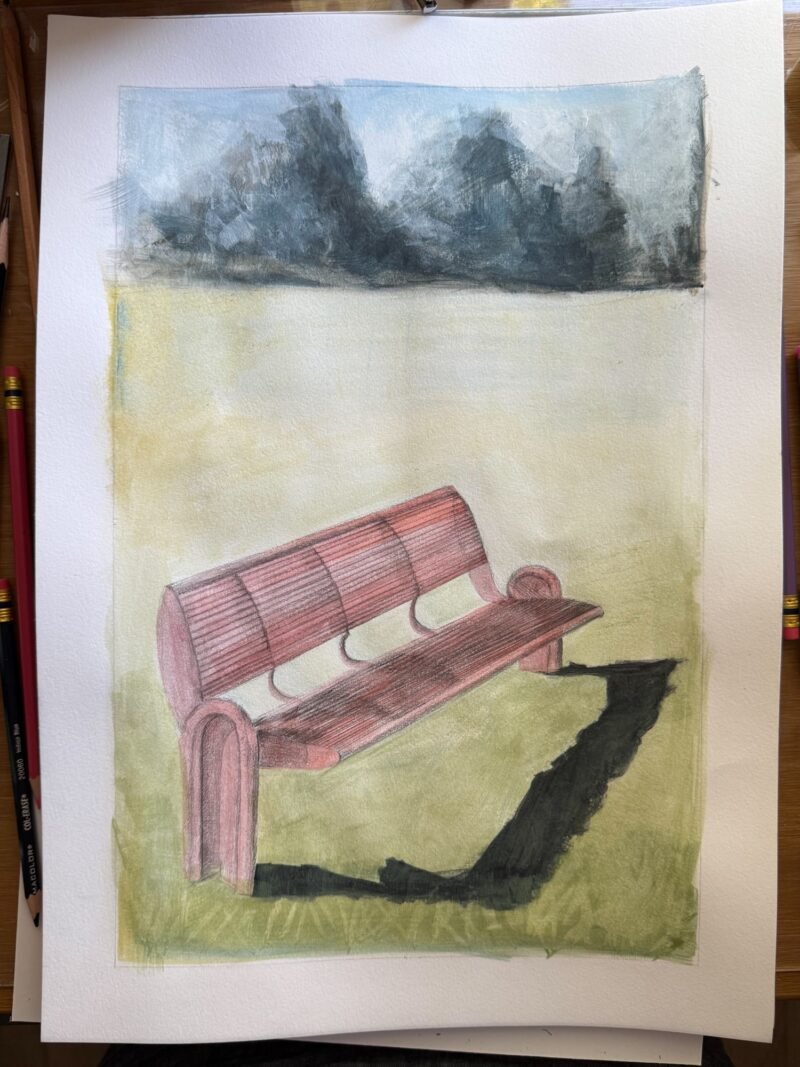
For example, visit Nicholas Herbert’s website, and the series of drawings of the Chiltern Hills in particular.

We often think of the landscape as being rural - the countryside, in other words - but many artists use the urban, or suburban, as their subject. These, too, can be considered part of the landscape tradition. L.S. Lowry’s images of Salford industrial life arguably show a more honest landscape than idealised fields and rivers, as that’s where the mass of people lived at that time. Today we have George Shaw, who shows us the reality of an urban environment and Sarah Woodfine, who takes an imaginative approach to drawing spaces and places.

Research historic and contemporary artists who work in, or represent, the landscape and put their names on post-it notes or index cards. Do your best to find at least twenty artists dating from Dürer to the present day. Now arrange these on a large sheet of paper. Where they go in relation to one another doesn’t matter at the moment, the point is to see the names on a field, rather than on a list.

Start to think about how these artists might be related. What makes them similar? Subject matter? Technique? Use of line? You might, for example, put Brueghel with Lowry as both are concerned with populating the landscape with people while Lowry and Shaw show urban Britain. As you work - making and searching for links - stick the cards down and draw lines between them, connecting people or work you feel belongs together. Write notes on the lines to help you capture the knowledge you’re generating.

Mind-maps are great ways of collecting and collating information that is hard to arrange in list or narrative form. The ‘map’ format - particularly appropriate in a section concerned with landscape - can reveal ‘neighbourhoods’ and connections that might be lost if you undertook a chronological survey of the artists you’ve looked at. It can also reveal gaps in knowledge.
The task
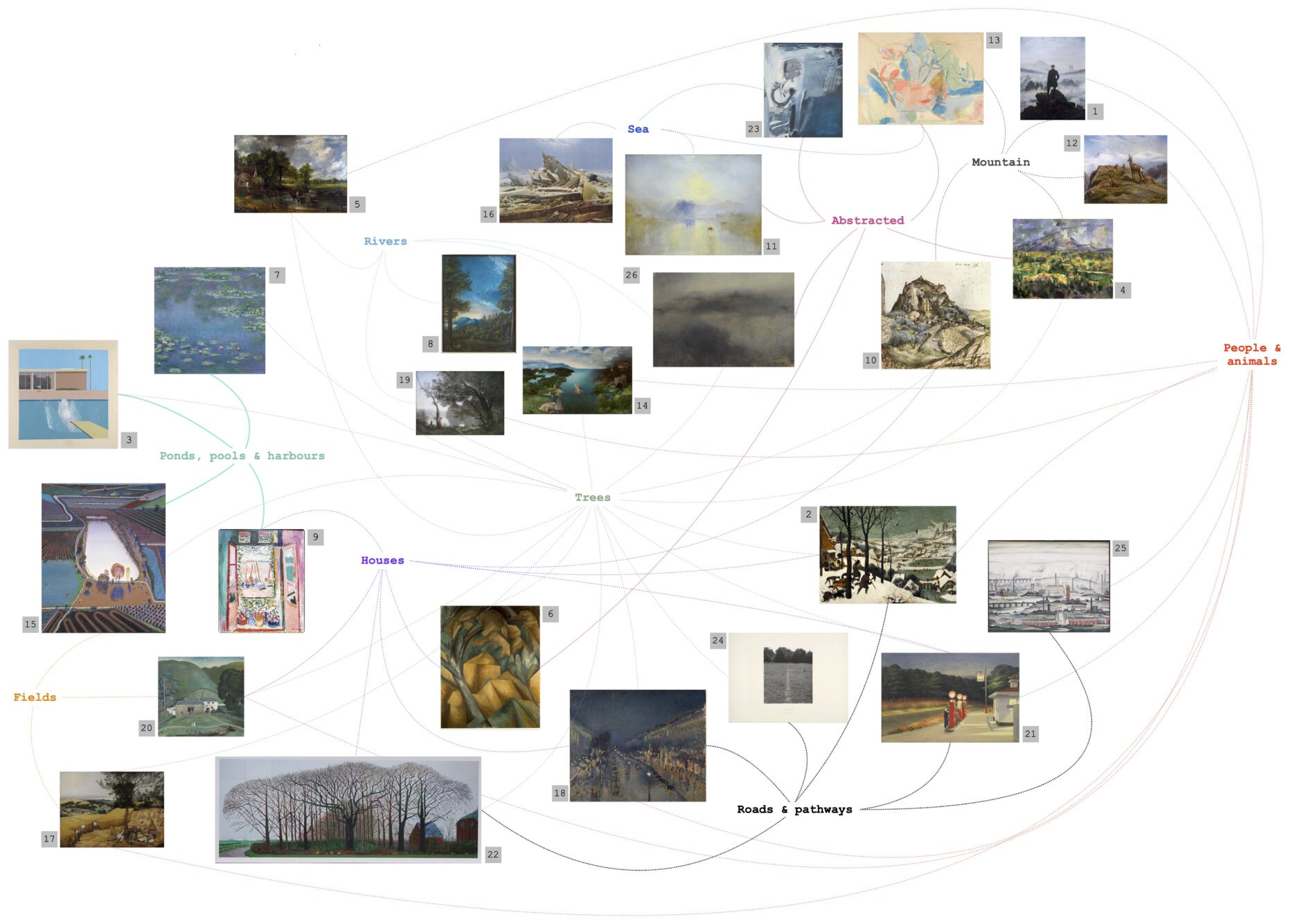
The exercise asked me to research landscape artists from Dürer to the present day, identify at least twenty works, and arrange them into a mind-map organised by thematic connection rather than chronology. The point was to develop a relational understanding of art practice to see how artists across different eras and traditions speak to each other rather than defaulting to a linear historical survey.
What I Did
I assembled 26 works spanning from Altdorfer’s Danube Landscape (c.1522) to Nicholas Herbert’s Landscape L965(2016), organising them around ten thematic clusters: Houses, Ponds, Pools and Harbours, Trees, Rivers, Sea, Mountain, Abstracted, Fields, Roads & Pathways, and People & Animals. I drew connections across clusters rather than within them. Turner’s Norham Castle represents the sea but connects to Frankenthaler’s Mountains and Sea through abstraction. Bruegel’s Hunters in the Snow connects to Lowry’s Industrial Landscape through the relationship between figures and their environment.
The research process itself was generative. Researching Rosa Bonheur, I thought that Chamois could quality as a landscape painting since it was very similar to Friedrich’s Wanderer above the Sea of Fog. The exercise also made me think about the urban and suburban tradition: Hopper’s Gas and Pissarro’s Boulevard Montmartre at Night both sit in Roads & Pathways alongside Lowry. This made me reflect on natural vs. artificial landscapes and led me to include a photograph by Richard Long as a reminder of that.
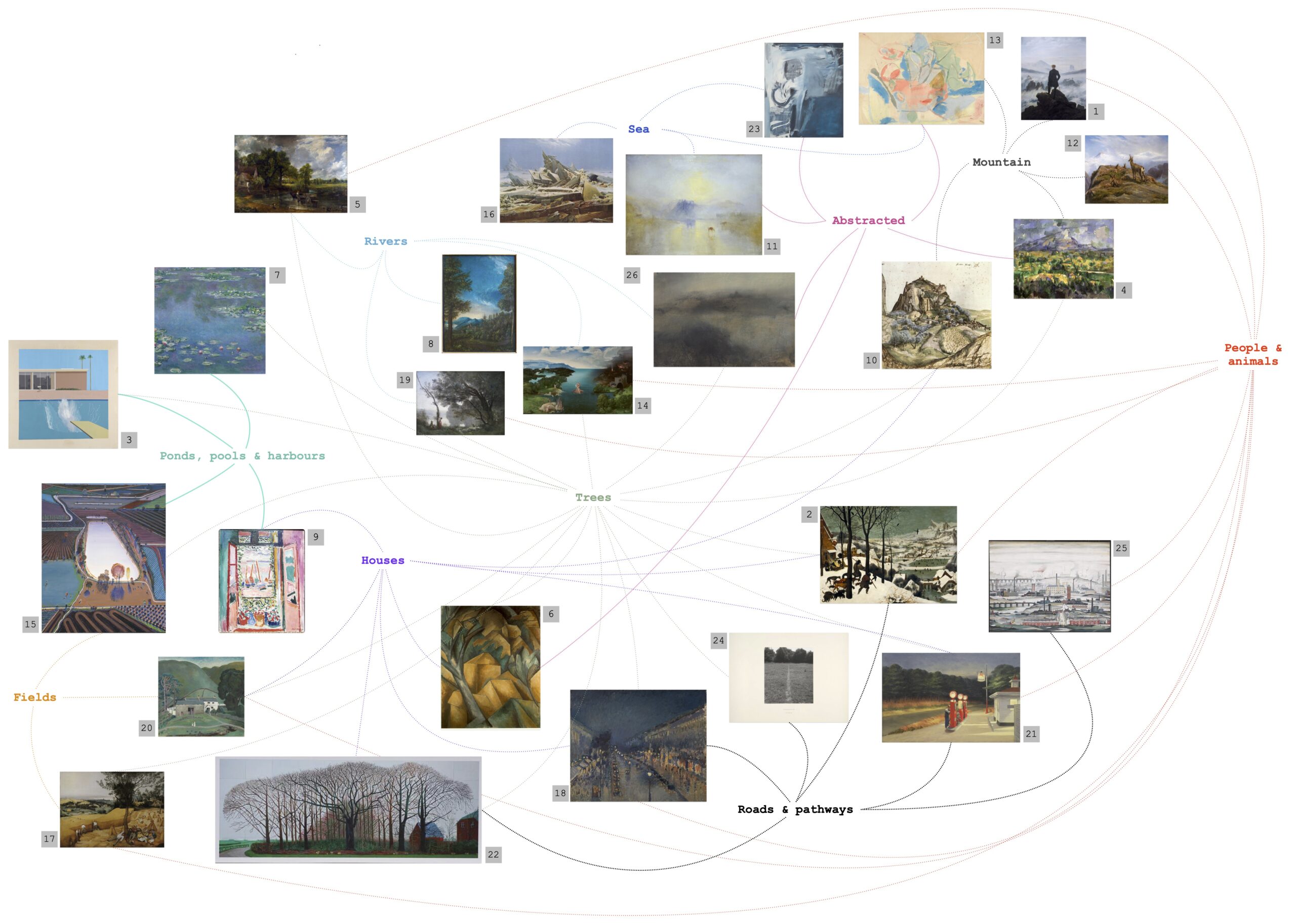
Landscape Mind-Map — Artwork Reference
- Wanderer above the Sea of Fog, Caspar David Friedrich, 1818. Oil on canvas, 94.8 × 74.8 cm. Hamburger Kunsthalle, Hamburg. Image
- The Hunters in the Snow, Pieter Bruegel the Elder, 1565. Oil on panel, 117 × 162 cm. Kunsthistorisches Museum, Vienna. Image
- A Bigger Splash, David Hockney, 1967. Acrylic on canvas, 242.5 × 243.9 cm. Tate Britain, London. Image
- Mont Sainte-Victoire, Paul Cézanne, 1902–06. Oil on canvas, 65 × 81 cm. Philadelphia Museum of Art. Image
- The Hay Wain, John Constable, 1821. Oil on canvas, 130.2 × 185.4 cm. National Gallery, London. Image
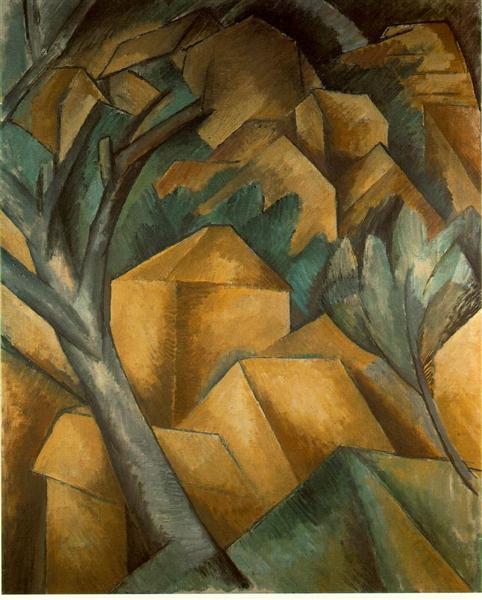
- Houses at L’Estaque, Georges Braque, 1908. Oil on canvas, 73 × 60 cm. Kunstmuseum Bern. Image
- Water Lilies (Agapanthus triptych), Claude Monet, 1915–26. Oil on canvas, each panel approx. 200 × 425 cm. Cleveland Museum of Art / St. Louis Art Museum / Nelson-Atkins Museum. Image
- Danube Landscape near Regensburg, Albrecht Altdorfer, c.1522–25. Oil on panel, 30.5 × 22.2 cm. Alte Pinakothek, Munich. Image
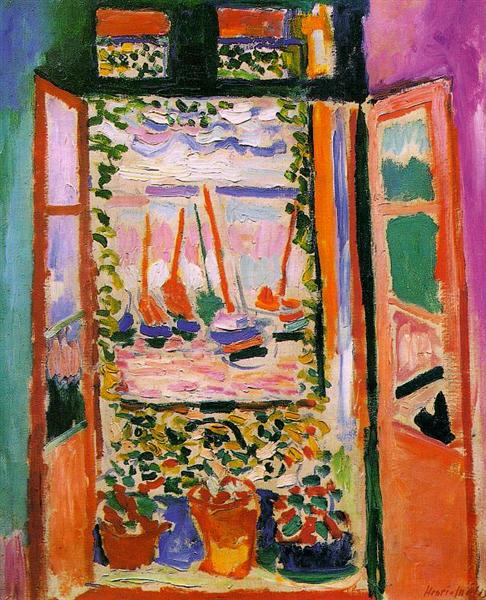
- Open Window, Collioure, Henri Matisse, 1905. Oil on canvas, 55.3 × 46 cm. National Gallery of Art, Washington DC. Image
- View of the Arco Valley, Albrecht Dürer, 1495. Watercolour and gouache, 22.1 × 22.1 cm. Musée du Louvre, Paris. Image
- Norham Castle, Sunrise, J.M.W. Turner, c.1845. Oil on canvas, 90.8 × 121.9 cm. Tate Britain, London. Image
- Chamois, Rosa Bonheur, 1888. Oil on canvas. Nature in Art Museum, Gloucestershire. Image
- Mountains and Sea, Helen Frankenthaler, 1952. Oil and charcoal on canvas, 220 × 297.8 cm. National Gallery of Art, Washington DC. Image
- Landscape with Charon Crossing the Styx, Joachim Patinir, c.1520–24. Oil on panel, 64 × 103 cm. Museo del Prado, Madrid. Image
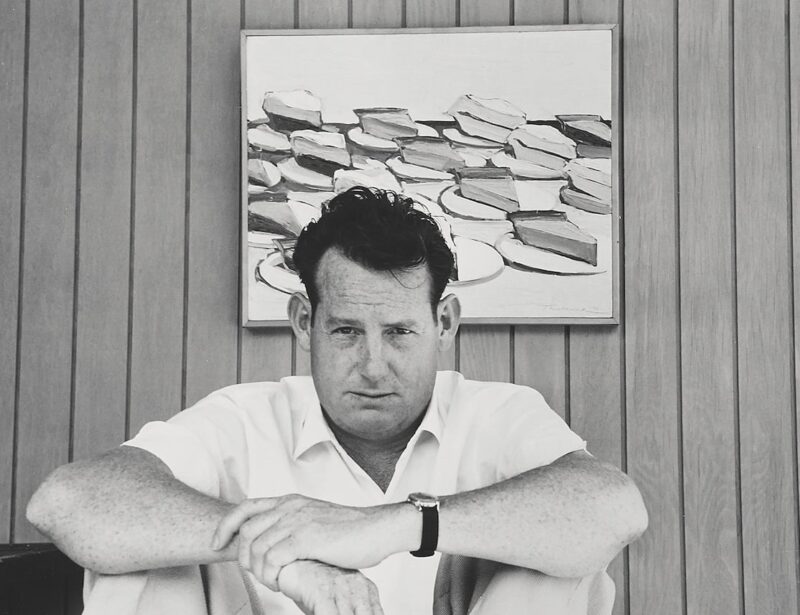
- Ponds and Streams, Wayne Thiebaud, 2001. Oil on canvas, 183 × 152 cm. de Young Museum, San Francisco. Image
- The Sea of Ice (Wreck of Hope), Caspar David Friedrich, 1823–24. Oil on canvas, 96.7 × 126.9 cm. Hamburger Kunsthalle, Hamburg. Image
- The Harvesters, Pieter Bruegel the Elder, 1565. Oil on panel, 119 × 162 cm. Metropolitan Museum of Art, New York. Image
- Boulevard Montmartre at Night, Camille Pissarro, 1897. Oil on canvas, 53.3 × 64.8 cm. National Gallery, London. Image
- Souvenir of Mortefontaine, Camille Corot, 1864. Oil on canvas, 65 × 89 cm. Musée du Louvre, Paris. Image
- Farm at Watendlath, Dora Carrington, 1921. Oil on canvas, 62.2 × 74.9 cm. Tate Britain, London. Image
- Gas, Edward Hopper, 1940. Oil on canvas, 66.7 × 102.2 cm. Museum of Modern Art, New York. Image
- Bigger Trees Near Warter, David Hockney, 2007. Oil on 50 canvases, 457.2 × 1220 cm. Tate Britain, London. Image
- Thermal, Peter Lanyon, 1960. Oil on canvas, 152.4 × 91.4 cm. Tate Britain, London. Image
- A Line Made by Walking, Richard Long, 1967. Photograph, 37.5 × 32.4 cm. Tate Britain, London. Image
- Industrial Landscape, L.S. Lowry, 1955. Oil on canvas, 114.9 × 154.9 cm. Tate Britain, London. Image
- Landscape L965, Nicholas Herbert, 2016–19. Graphite, colour pencil, soluble crayon, acrylic and pastel on paper, 20 × 15 cm. Artist’s collection. Image
Reflections
The map works well at connecting across eras. I focused on subject matter and it made me reconsider what a landscape painting can be and what it can contain (or not). It was interesting to realise how the elements could be introduced in different ways (water for example) and the man-made vs. natural aspects of landscaping. It will remain a useful point of reference for the future.
I couldn’t fit in all the artists and note that I still need to explore work by Joan Eardley, John Virtue, George Shaw and Sarah Woodfine. Some of my “clusters” were thinner than others (e.g., the People & Animals category). I could also revisit this to create another map with the same artworks but focussing instead on technique or the use of lines.



_-_Google_Art_Project.jpg)

.jpg)