Exercise prompt
“Source imagery can come from anywhere, although I'm still hooked on Dürer's Apocalypse woodcuts for the way he uses line so inventively to describe dragons and demons, patches of grass and cloudbursts. I also have a repertoire of figurative images that I'm using at the moment - little blobby angels, hearts, pandas . I used to think I could only use something once, but I'm now realising that some of the ways I use paint, and some of the images I've come up with, are my own personal building blocks, and that each painting develops the theme further.”

Fiona Rae in The Observer (20th September 2009).

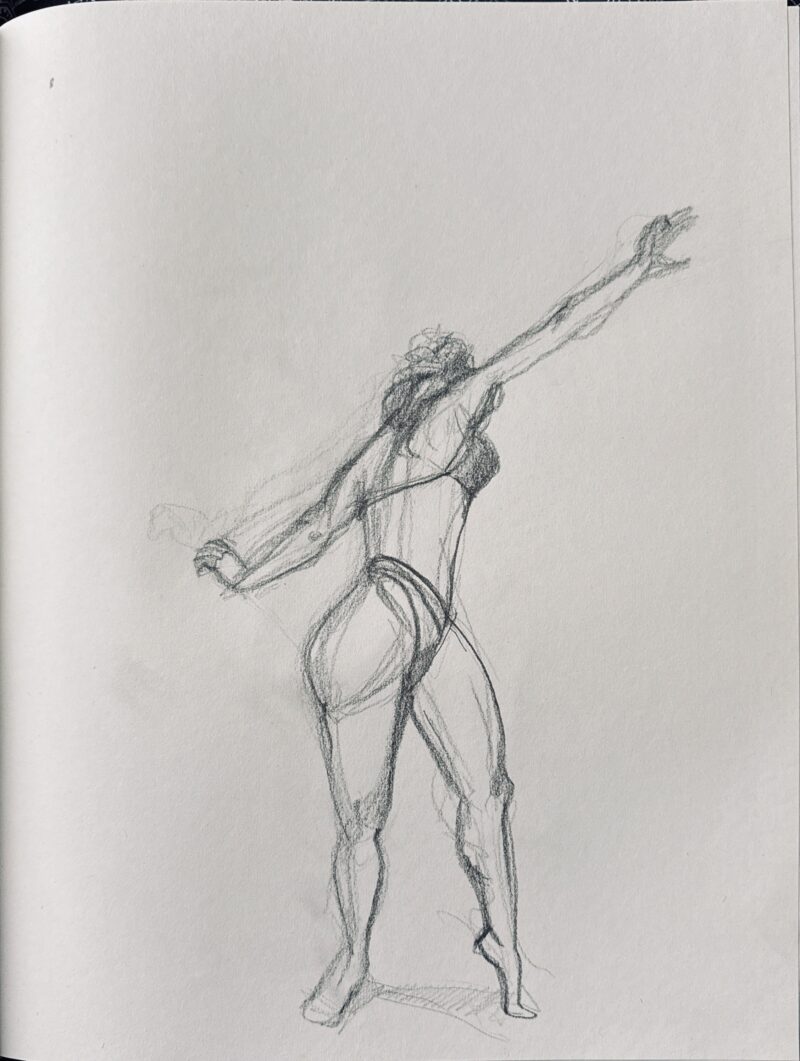
Ideas for paintings can be generated in all kinds of ways, from walking and sketching in the landscape, to observing the angular moves of a contemporary dancer. The gathering stage can be fun and inventive - it is a time to be receptive and curious.

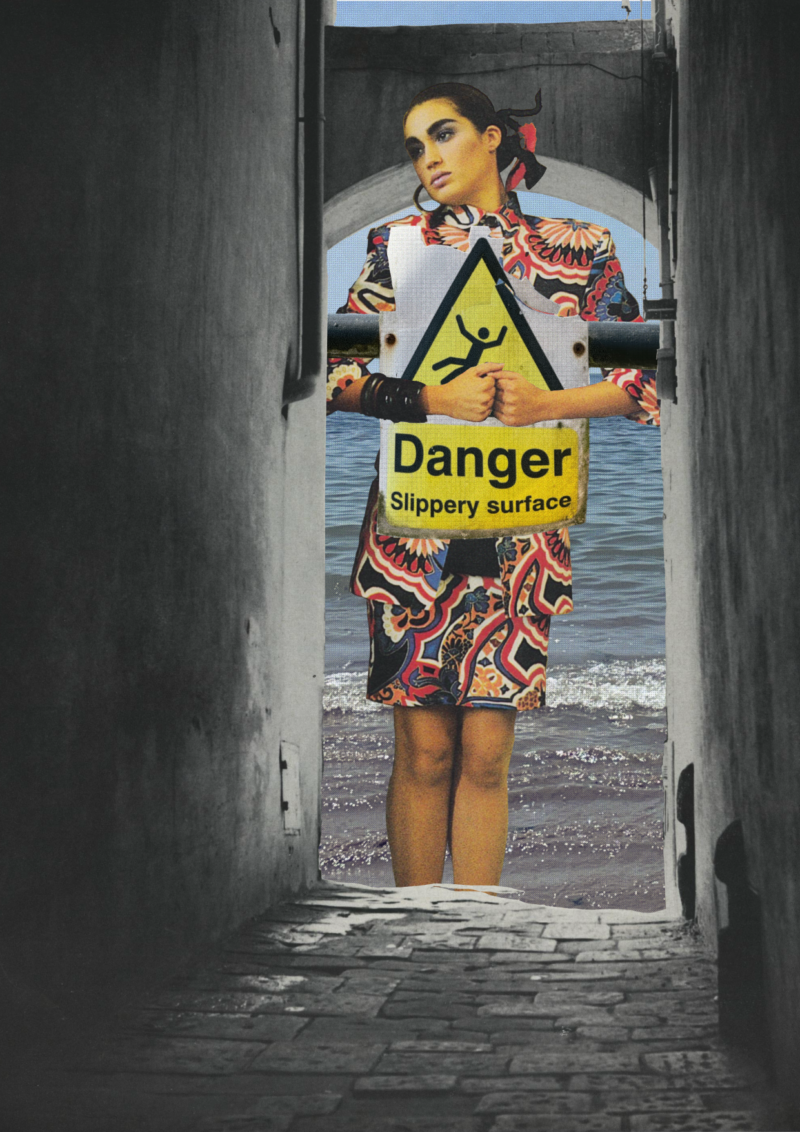
Looking at your immediate environment without disregarding the seemingly mundane or incidental can be a good starting point. Observing the everyday things, the conversations you encounter, and the gestures people use can be one way in - or perhaps that familiar walk taken more slowly, really noticing the movement of shadows and reflections.

It is a time to be open to anything that could trigger the creative process, and it might not even be immediately apparent as to why and how this could happen. That is why it is important to respond to the world around you with awareness and curiosity - you never know what might find its way into a painting at some point in the future.

This project guides you through different ways of gathering visual information and contextual research. Alongside the exercises, keep working in your sketchbook - responding to anything you find interesting or engaging. This will all support and enhance your creative journey.

Quick Interior Study

Walk around an interior space looking at corners, the movement of light and odd shadows. Notice sounds and reach out to touch surfaces and different textures. It could be the rooms of a house, or it could be a caravan or garden shed. Take some time to really notice the feel of the place.

You are going to respond to it by making a series of quick studies in fluid media.

Method
- Take 8 or 10 sheets of A4 paper - or work in a sketchbook.
- Use ink or watercolour in any colour - or a combination of two or three colours.

Working quickly, make a series of studies of different sections of your interior. You might like to get close up to a messy arrangement of objects on a table, or suggest the shadows and organic forms of a large plant in a corner. What kind of marks might you use to reflect your feelings about the place? Don’t worry about adding too much detail and aim to spend 20 - 30 mins per sketch.

Reflection
How did the mark making change and develop as you progressed? Did you find yourself working more quickly as you became more familiar with your subject?

Make notes about the experience in your learning log. You are beginning to gather processes, subjects and materials that could be used in future work, so start to get in the habit of reflecting on what you found useful and interesting - or what you found challenging. This is all important to your learning.
The task
The exercise calls for a shift in attention. Before I pick up a brush or pen, I need to spend time inhabiting a space differently — walking around it, noticing corners, the way light moves, the odd shadows. I’m invited not to just look, but to connect to the place through all my senses, listening to the sound, reaching out to touch surfaces, notice texture and atmosphere. I picked my studio / lounge / home office. The point is to really feel the place, not just see it.
Then I need to respond to it by making a series of quick studies in fluid media — 8 to 10 sketches on A4 sheets (or in a sketchbook), using ink or watercolour in one colour or a combination of two or three. Each sketch should take around 20–30 minutes, and I should resist the urge to overwork them or add too much detail. The subjects can vary: a cluttered table, shadows cast by a large plant, a corner where light behaves strangely. The key question I’m holding throughout is: what kind of marks reflect how I feel about this place?
Study 1
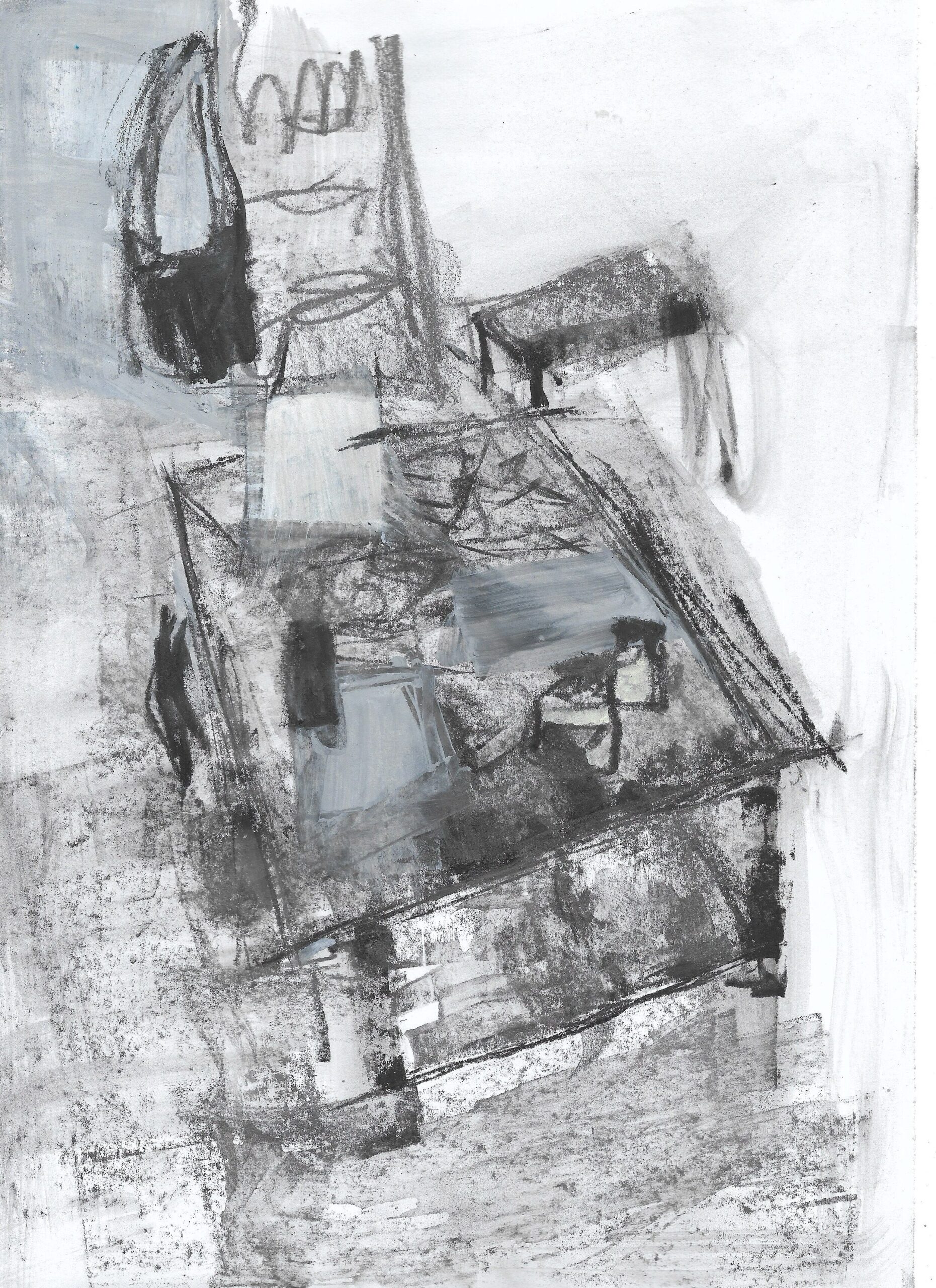
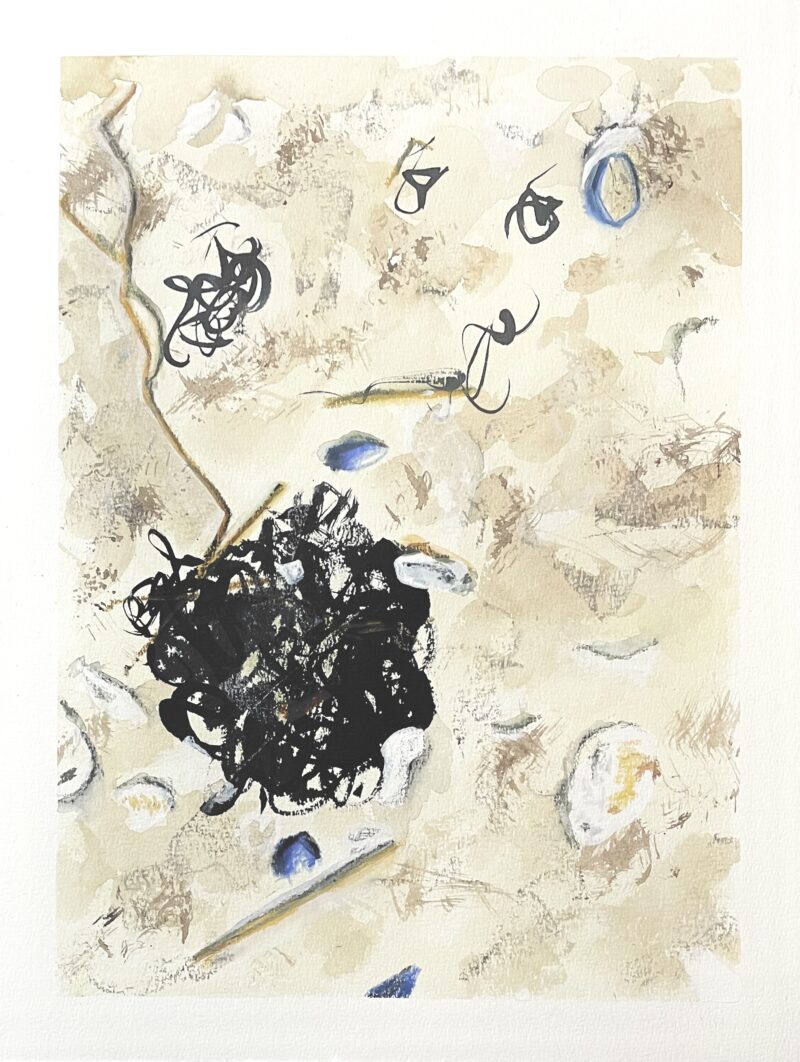
I feel a little angry and oppressed! The room is tiny and it’s over-crowded with stuff. Books, art materials, traces of art-making (mine and my daughter’s). I should feel happy about the place but truth is the mess is shouting at me everywhere, like a thousand pricks. I have a Chinese ink set somewhere but I can’t find it. Instead I found a set of three Art Graf blocks I had never opened. It was quite fun to use. Especially the black ‘black’. The white got muddied straight away so in the end I used a posca pen and acrylic ink to lighten some areas. I tried to squint but I felt comfortable and lacking skills at taking the gist. I am trying to be restrained but I’m making too many marks, too fast. I felt twenty minutes was a long time to be doing this and not overdo it. For sketch two, I might make it a little more fun and constrained. Twenty minutes of looking, and a loose mark every minute.
A few hours later, I came back to the drawing after it had dried and flattened to scan it. Now I quite like it! I like the textured look which conveys the mess without showing it. I can see every little bit I saw when drawing it. I know what they are but the end result is also interesting in itself. It’s interesting how I tend to come to art with a negative, frustrated energy but return to it with completely different eyes.
Study 2
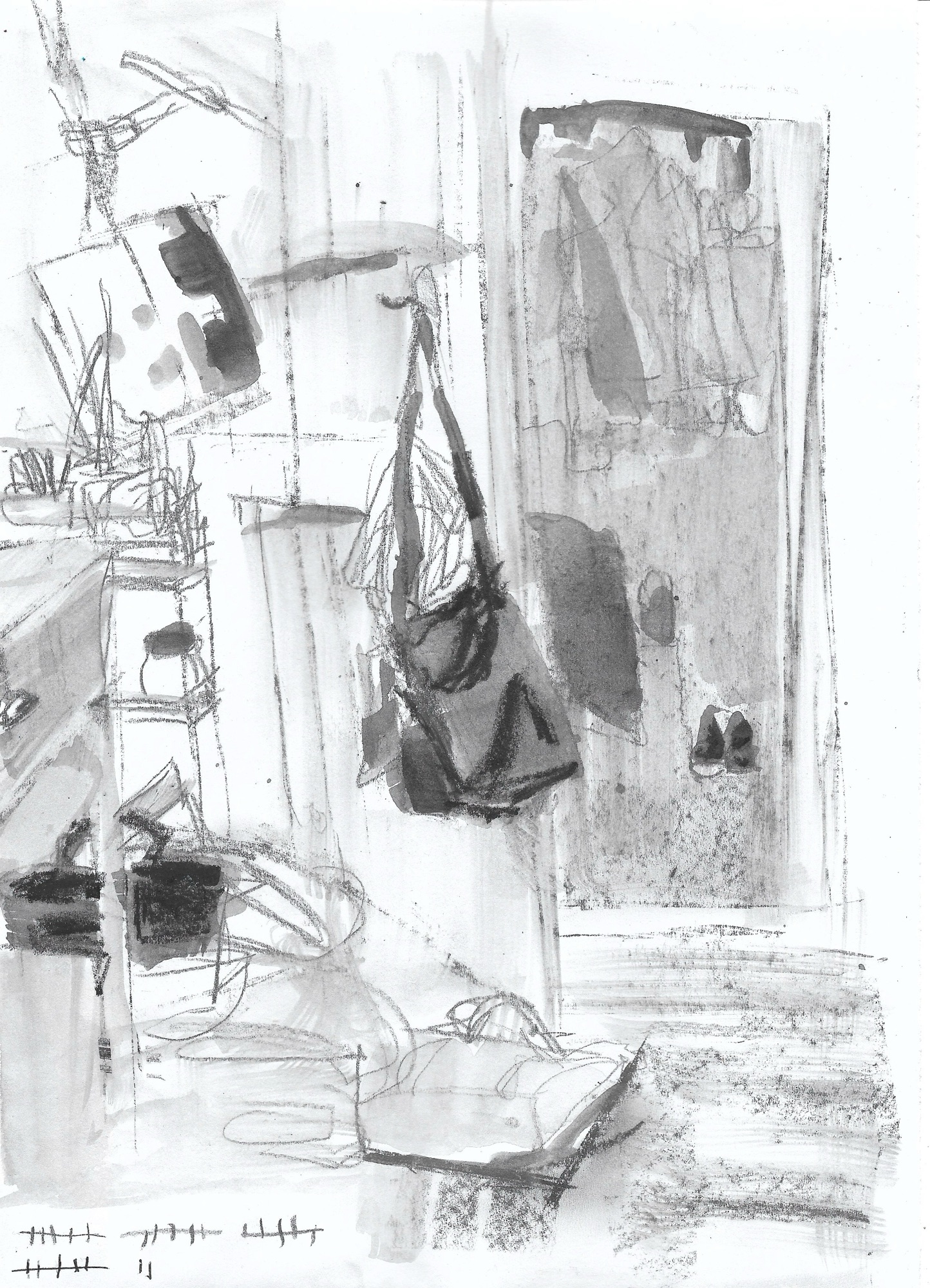
I tried using a 1-minute alarm and recorded each time I reset it. So this was 22 minutes. I enjoy the looseness of it but at the same time I can tell what I see and what I record is not quite accurate. I quite like the finished image. I’m not sure what it is teaching me. I’m guessing to practice recording values and that I need to tidy this room! Still, I’m enjoying this and using the art Graf pavers as well.
Study 3
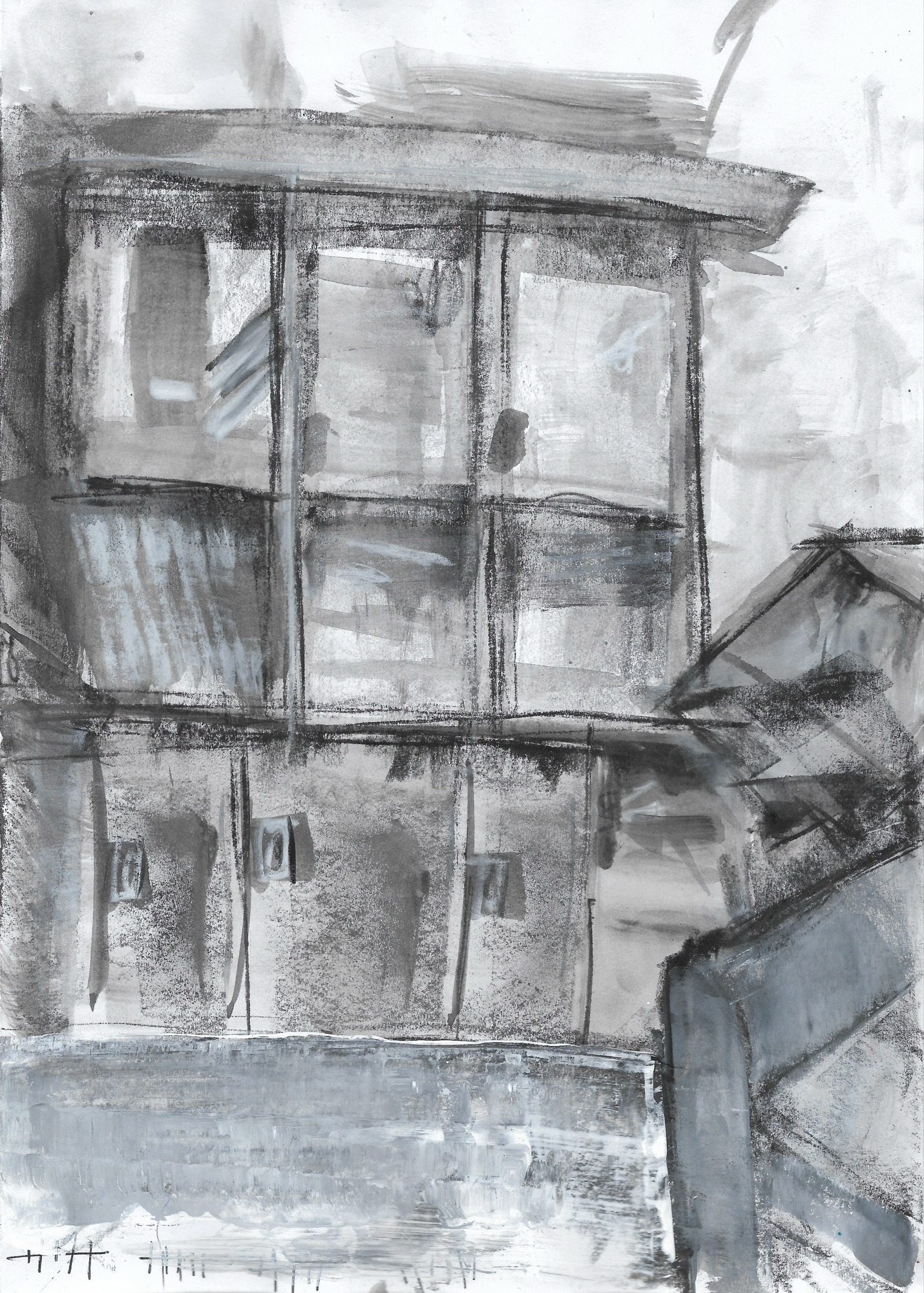
Same practice but in the evening. The lighting was from the ceiling. The perspective is all wrong but this doesn’t bother me so much, I’m not a big fan of realistic perspective. What bothers me more is that my sideboard looks like a building and the floor doesn’t look like a floor so it is not clear that this is an interior study. On second look I think having some of perspective lines would have helped. I might try it again next. Perhaps bring in some colour. This is all a bit dark!
Study 4
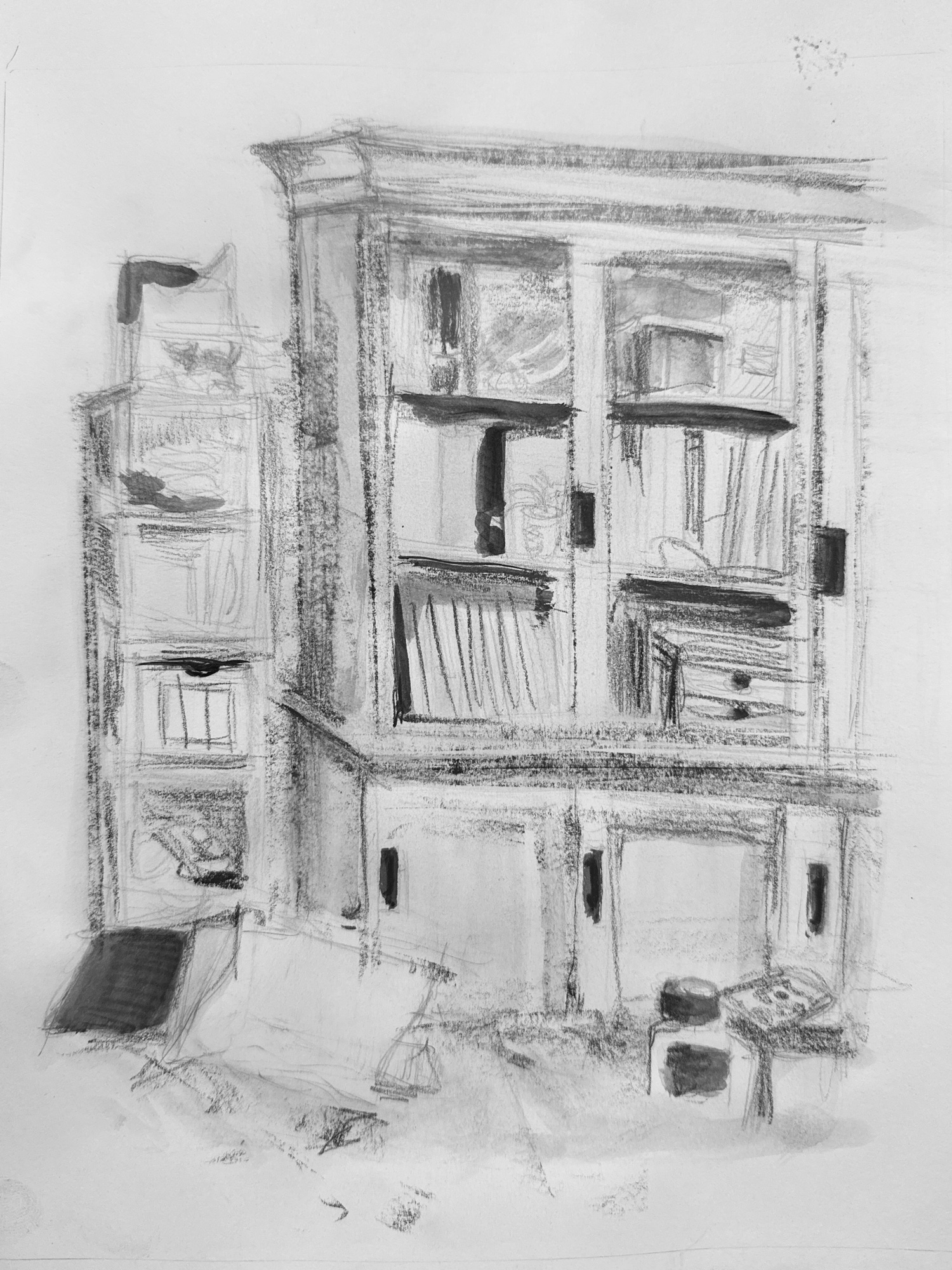
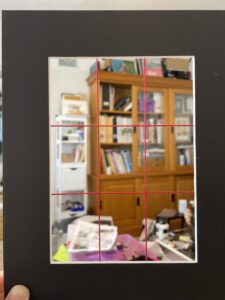
Looking back at Study no. 3, I felt I wanted to better convey the idea that this was a piece of furniture rather than a building. It occurred to me that I needed to better convey the perspective. So I made a little viewfinder with pieces of red embroidery thread to help me frame the scene.
I am not sure I’m succeeded in communicating the feeling of the place. I can feel the mess and the oppression. The more I draw it, the more I want to tidy up! I get bogged down by it not “looking right” and somehow I feel the earlier studies were freer. The more I repeat this, the more stiff I feel I become. I’ll try to change medium for the next study.
Study 5
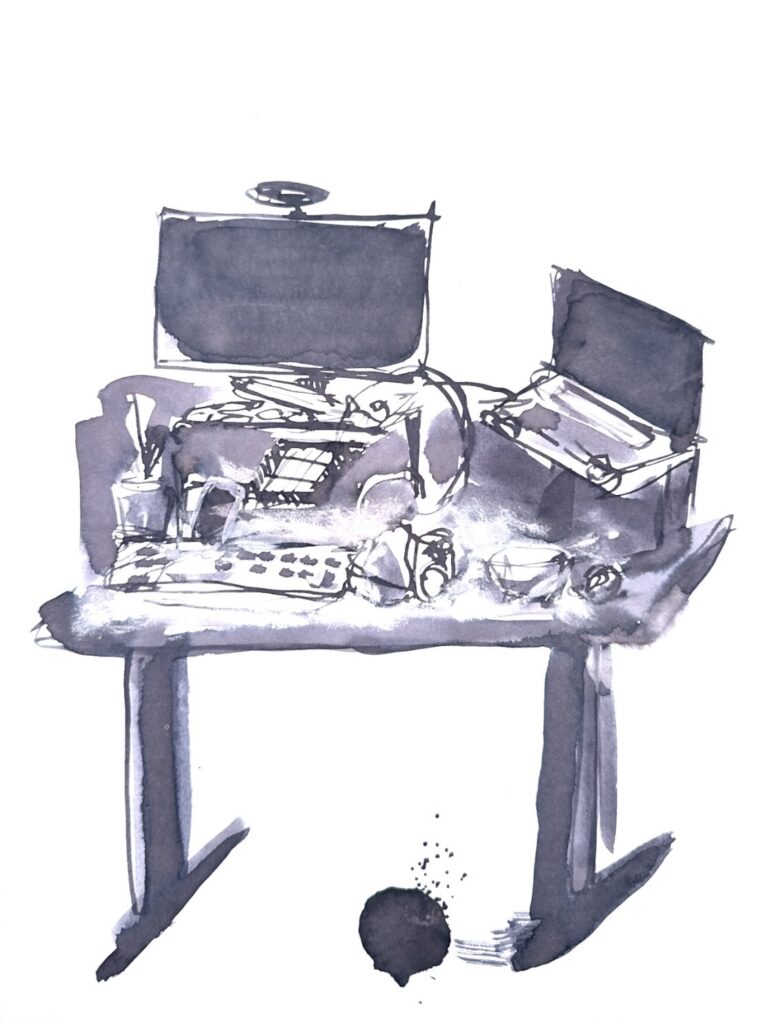
For this study, I picked a different point of view, a different subject, and a different medium. I used Sumi ink and a bamboo brush and pen. It was a little precarious (sitting on the sofa, drawing and inking on a board) and there was a spill but I quite liked it in the end, as a trace of the process! Hopefully the mess of my home office desk is also showing. Using a looser tool made me less anxious to get it accurate and tried to focus on the bold-loose angles of the triad! I ran out of time to create the full room. I edited the picture in Lightroom to keep true to the contrast and improve the presentation by removing the paper warps. I find it psychologically difficult to make studies on high quality materials.
Conclusions
The main challenge was to frame the chaos and tame my mind looking at it. I suppose I started from a challenging place since it was so cluttered. What I realised however, is that I could use this as an input for and taking in the light and dark spots. It was useful to use the Graf Art blocks to help me get the scene in as opposed to a precise graphite pencil which would have led me to overprecise work.
I like them all in the end although possibly no. 2 is my favourite. It was the right level of tension. It’s as if I need to feel a little frustrated but not too much to get something more interesting. Being calm and in control gets boring (although I get satisfaction from the end result!). Being loose and in semi-control seems to be a sweet spot!