Exercise Brief
Aim
This experiment with a fluid line drawing will give you a chance to explore process and materiality, working quickly and intuitively.

Method
Take 20 or more sheets of paper all of the same size, A4 or similar. If possible, pin all 20 pieces of paper up on the wall or lay them out on the floor (to avoid dripping) so you can reach them all.

Make up a pot of liquid paint. You can use tube watercolour, acrylic paint or ink extended with water and you can select any colour. Choose a pencil or pastel to provide a ‘counterpoint’.

Choose a time when you have the mental space to be more reflective. You might be particularly relaxed or, conversely, your mind might be spinning in slip gear. Choose a time when you have something, or a set of things, you would like to think about.

Make a drawing on each piece of paper in rapid succession, even continuing a line between sheets, if useful. Allow your hand to respond quickly to your passing thoughts; draw whatever comes easiest, even if it feels as if you are using symbols or pictographs.

Come to the drawings fresh after a day or two. Sit with them and reflect on them. Make brief notes in your learning log.

Use your counterpoint dry media, if you feel it is appropriate, to respond to your initial drawings.

Reflection
Did you find that the pace of your fluid line stayed the same, or did you change it? How far did the liquid pool, drip or splatter? Did the inkiness of the paint pull you to write? What, if any, were the impulses that directed you to use your counterpoint medium? Make notes on these points, and any others that strike you, in your learning log.
I experimented with fluid line drawings to explore process and materiality, working quickly and intuitively.
This was a useful approach to encourage me to just “do” first and think later. This doesn’t come easy. I’m a thinker. I look and I wonder. I read and I wonder. I get lost in my own thoughts, often. Fast brain, they call it.
Nevertheless I tried to make without thinking at first and just let my brush wander on the paper. I notice things as I do so. I find the A4 size constraining now. I like to work on A2 or A1. I enjoy the lines but so much so I overdo it. It gets too busy but if I stop early I feel the fun is over too soon. I’m quite fast, too fast perhaps, but if I slow down I lose my lines, I like them flowing and energetic.
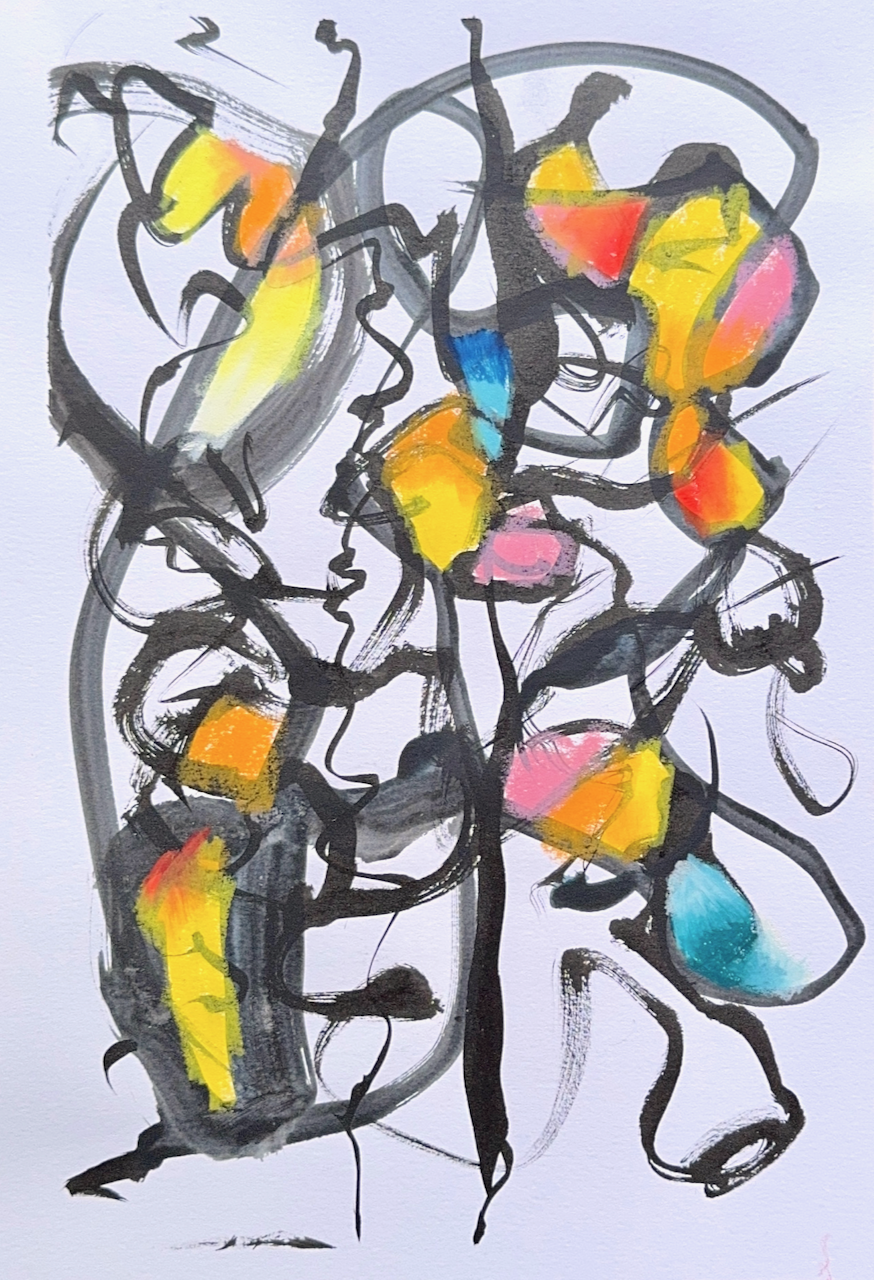
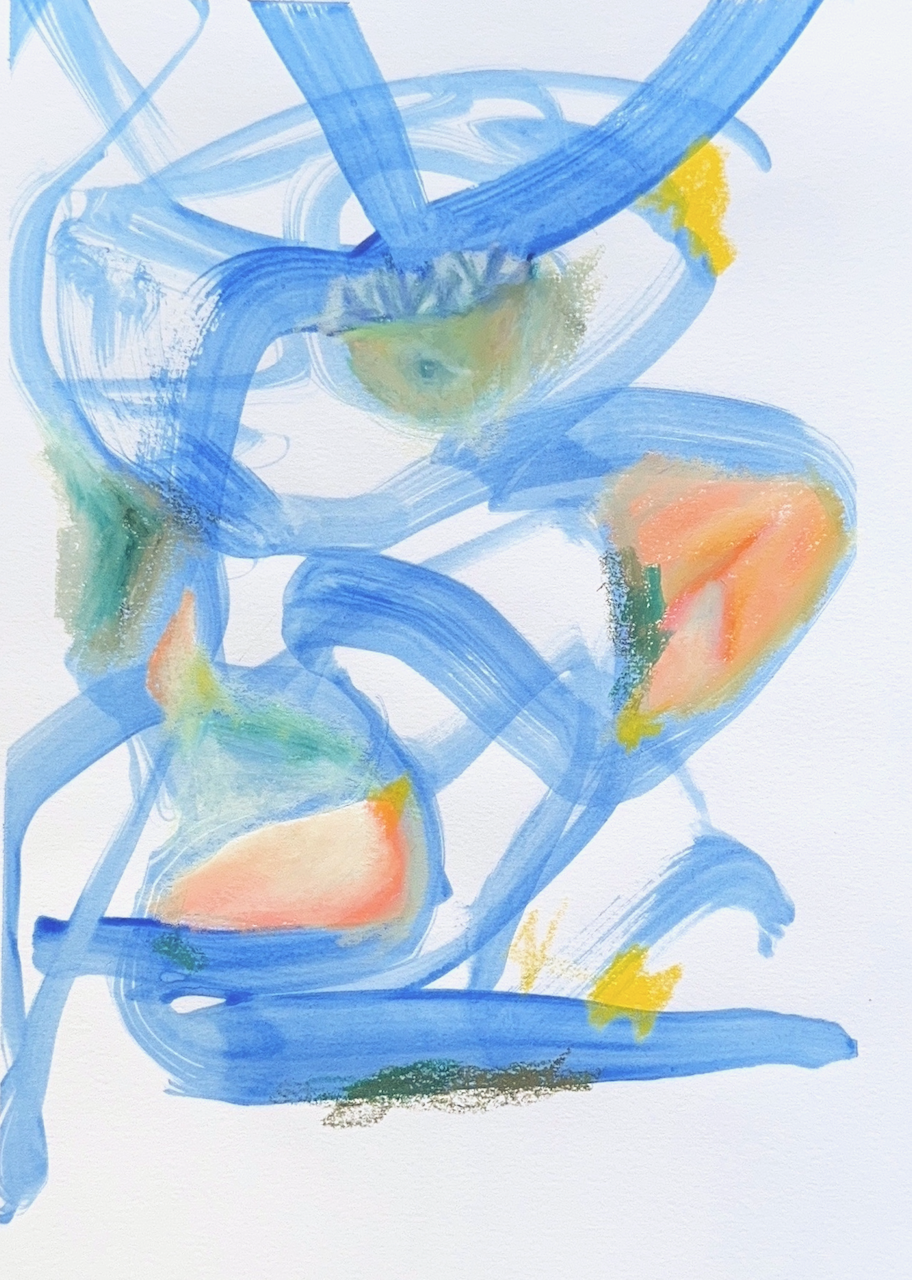
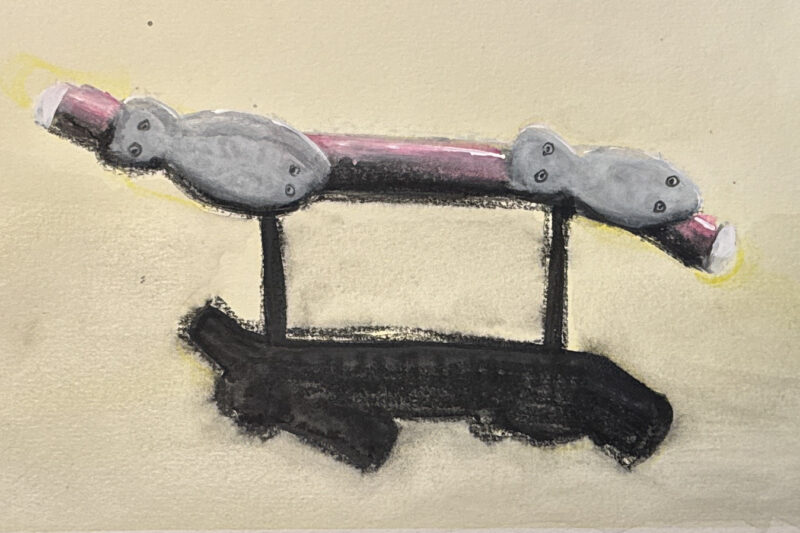
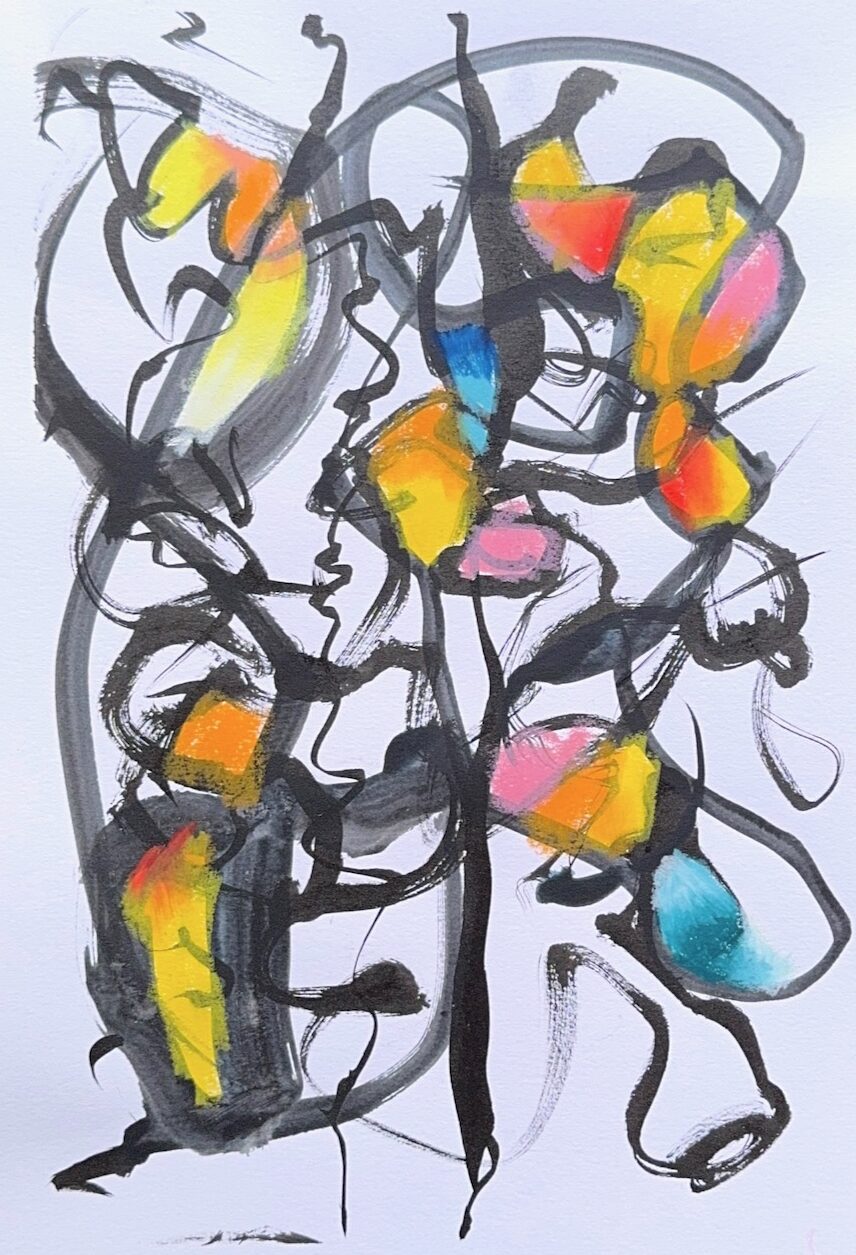
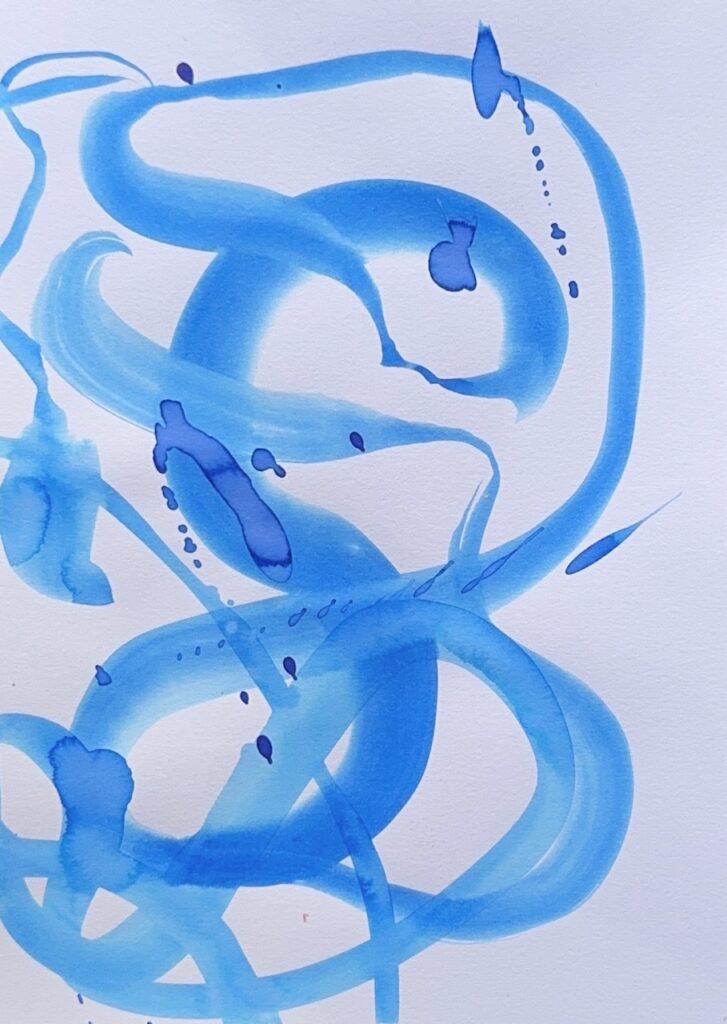
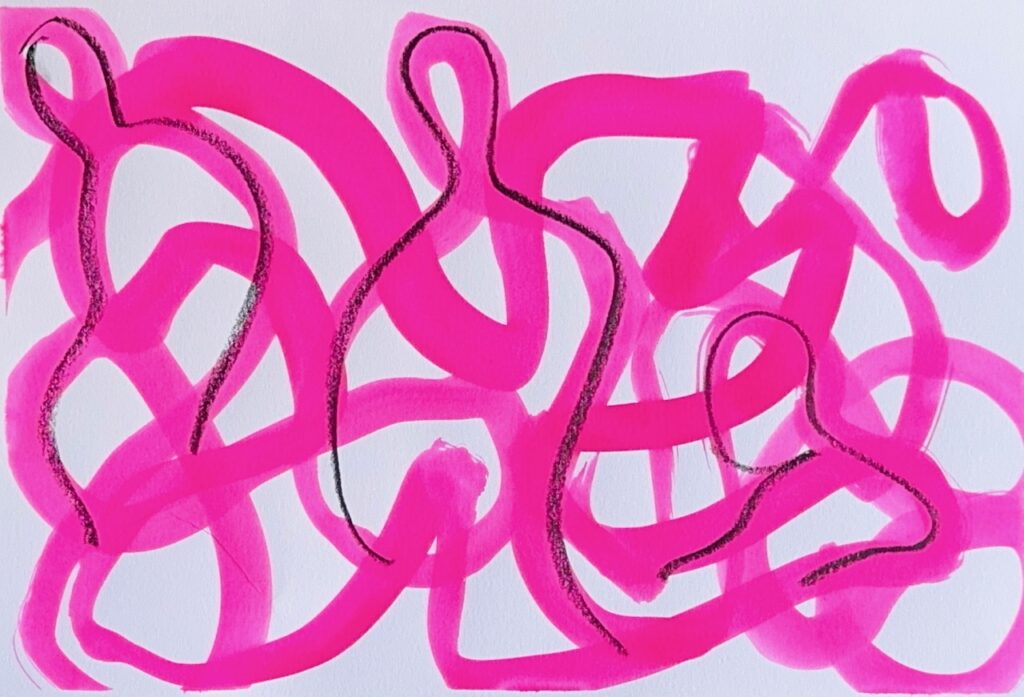
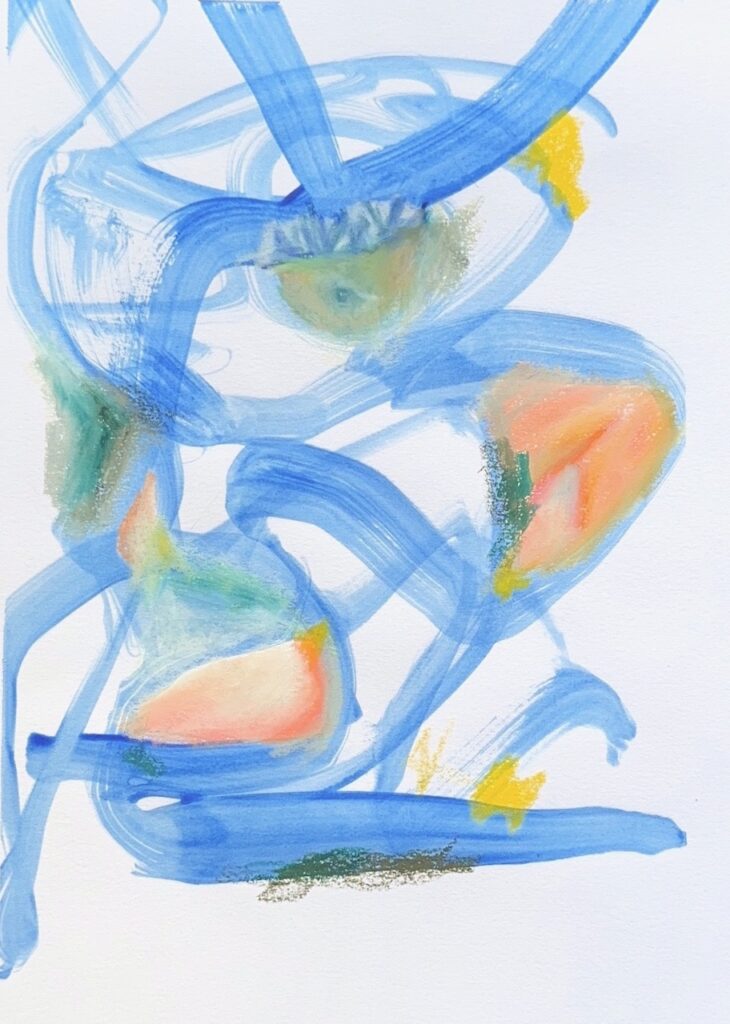
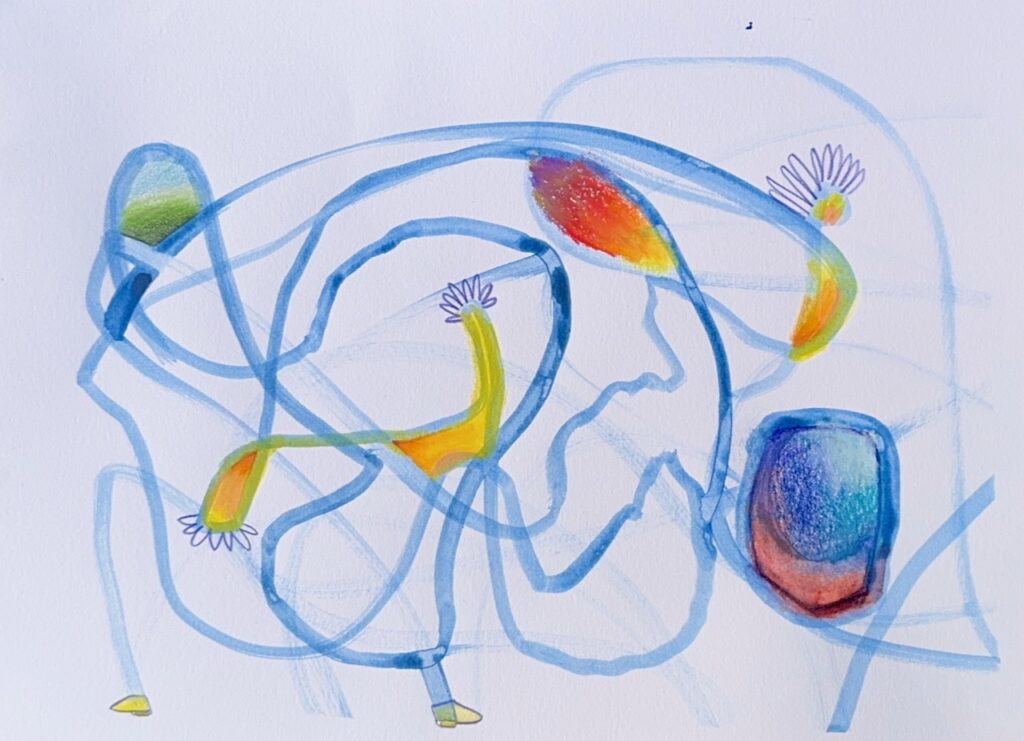
I “completed” about twenty drawings through this process. Sometimes there was splatter, sometimes the lines were fluid, sometimes they were ragged. I used different media: acrylic and water, ink. I also enjoyed using charcoal over the pink neon ink.
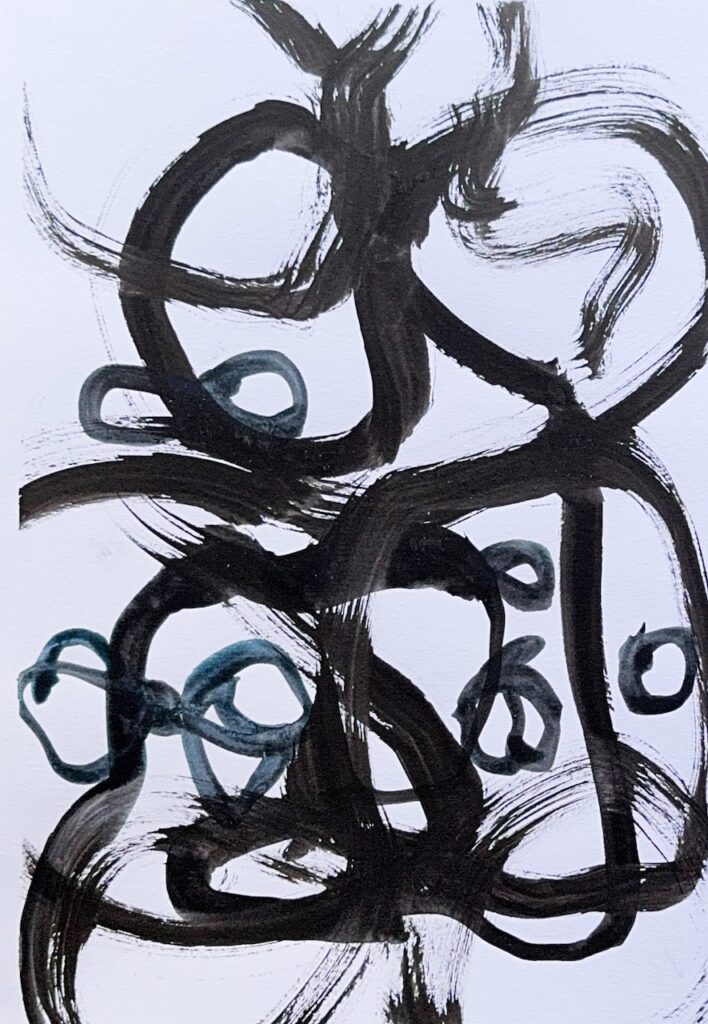
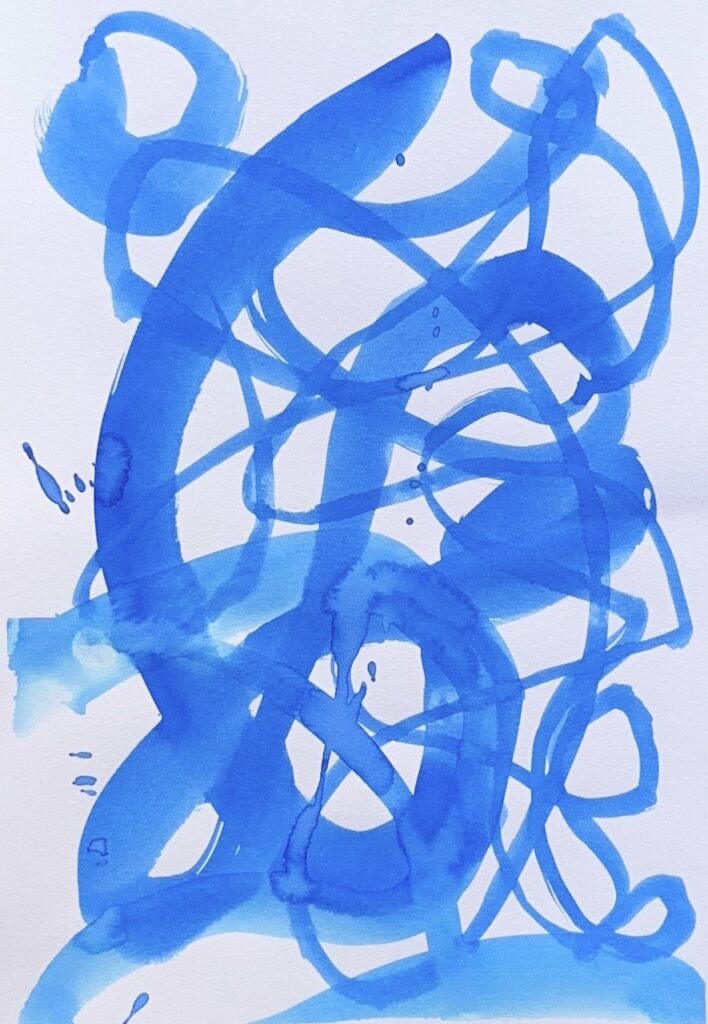
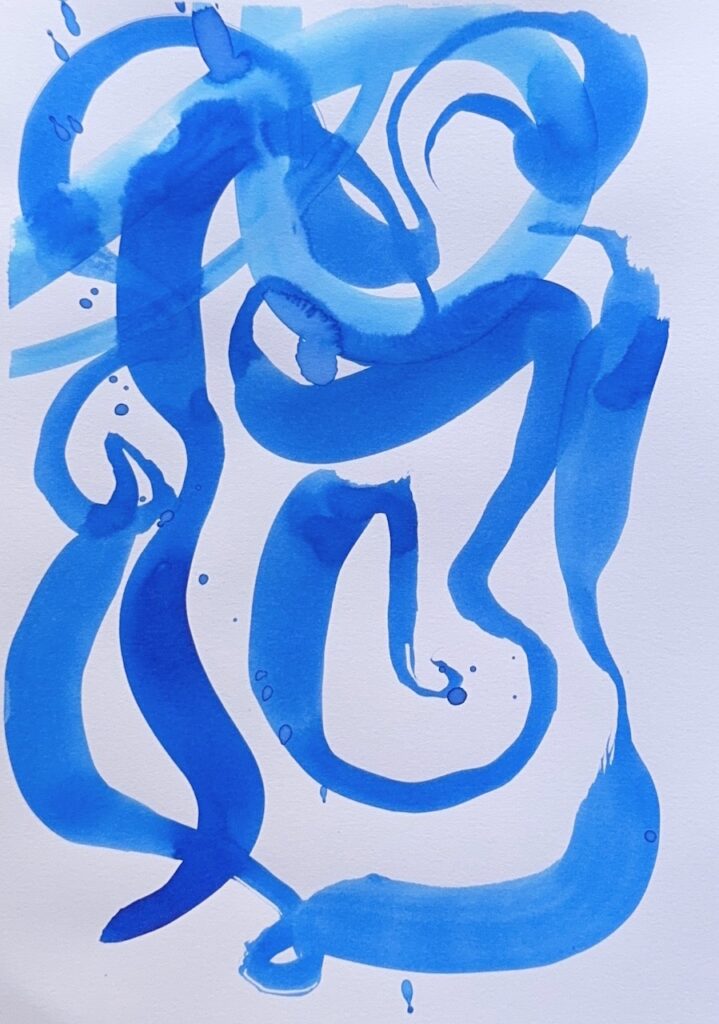
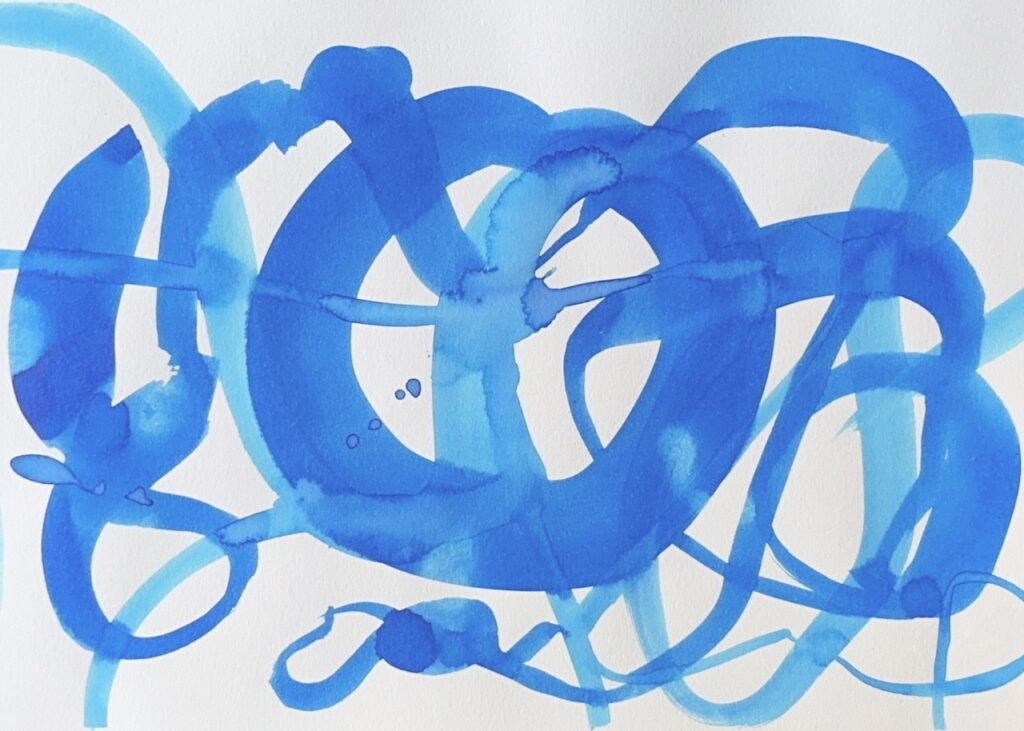
Sometimes I was tempted to create something graphic and vaguely recognisable, especially when using black ink. I was reminded of Basquiat.
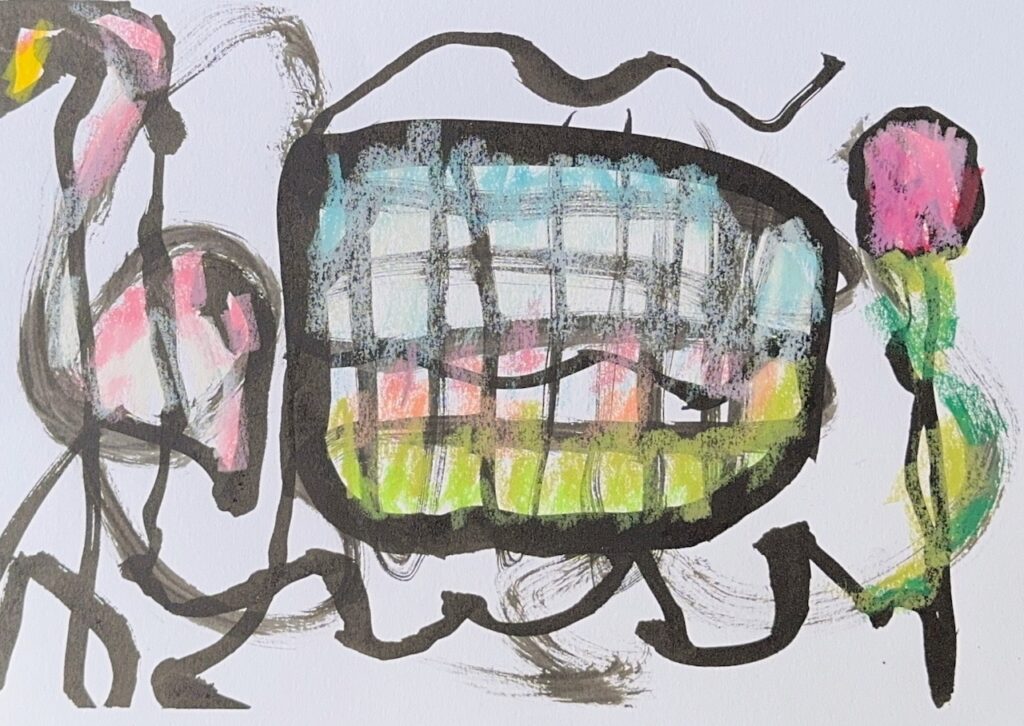
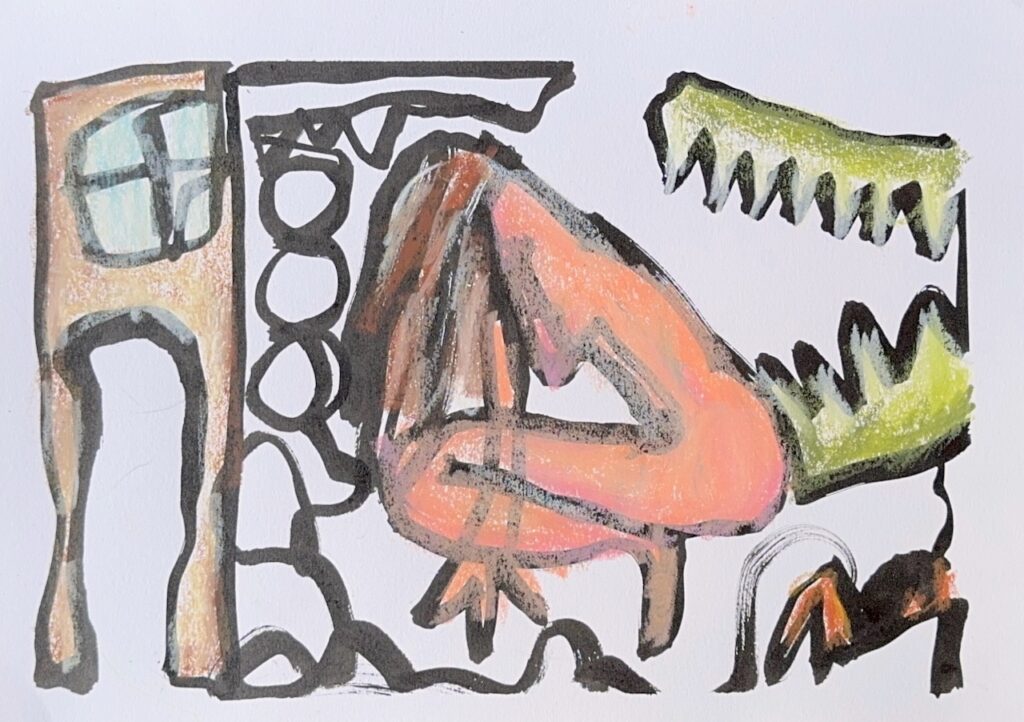
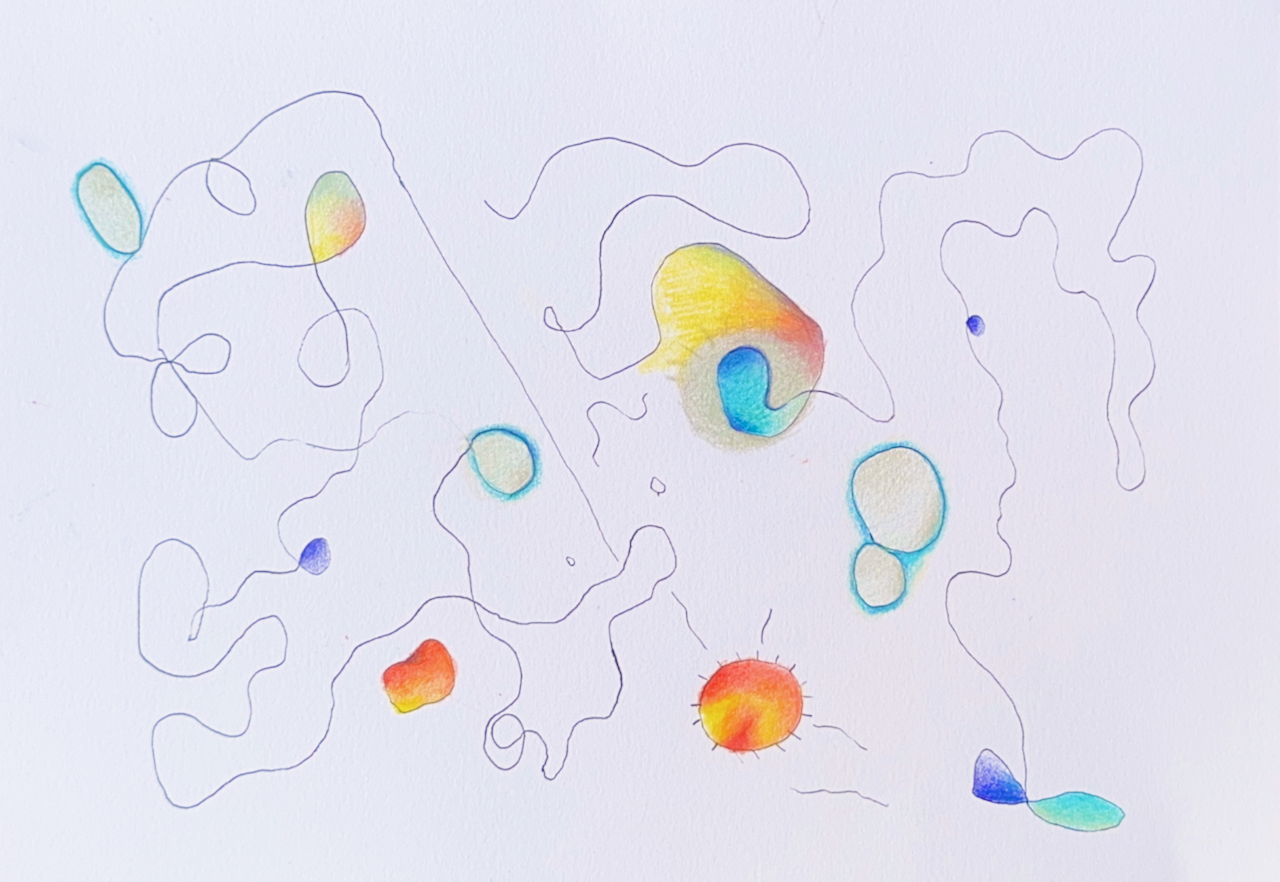
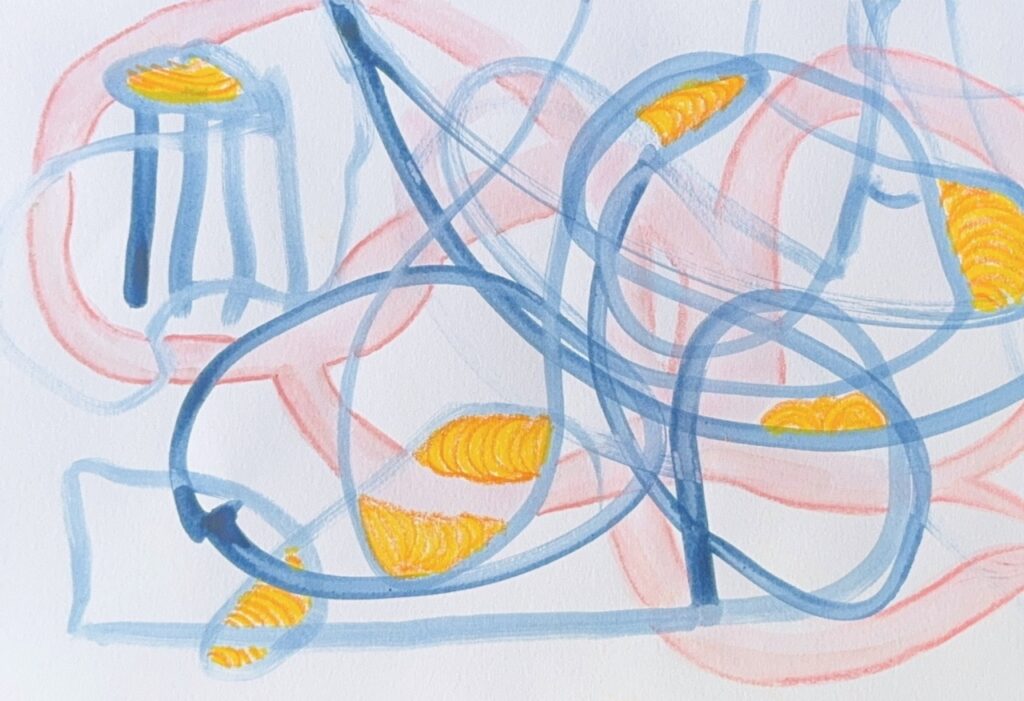
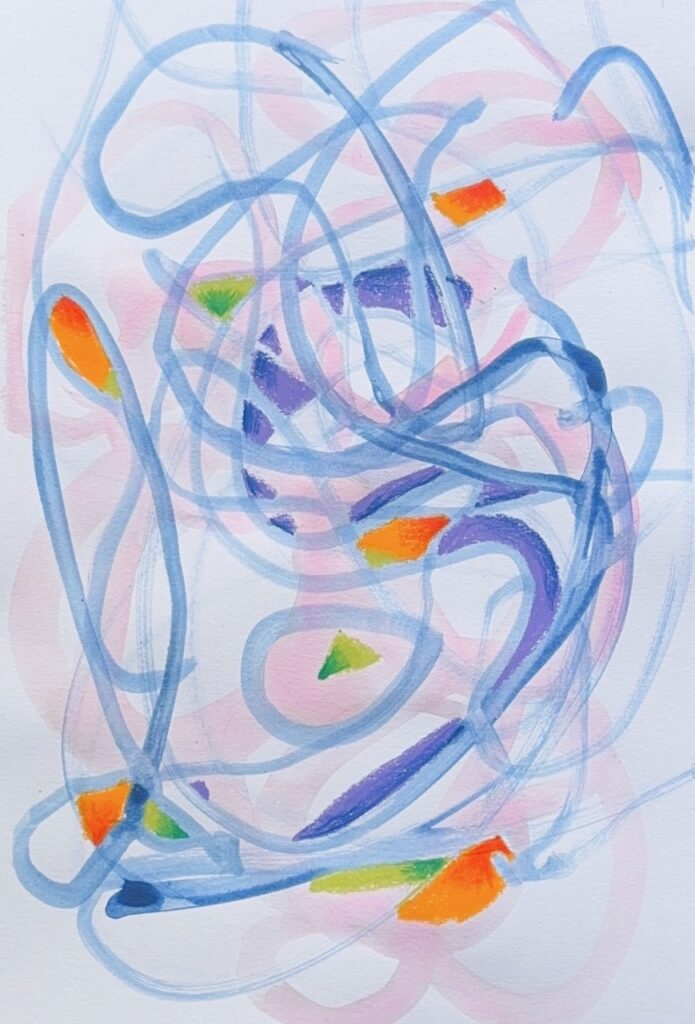
Other times I just enjoyed “taking them for a walk”. I was reminded of Paul Klee or Matisse. For these drawings, I used an ink pen. This was my favourite to react to with the neocolor. I liked the contrast between the thin lines and the softness of the crayons.
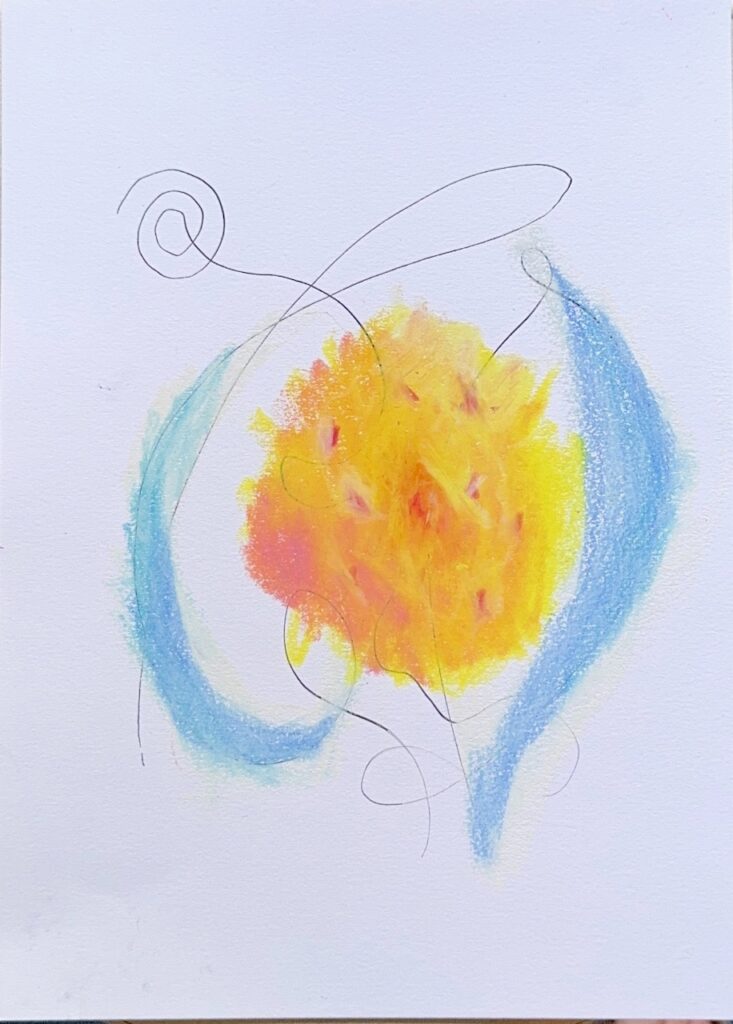
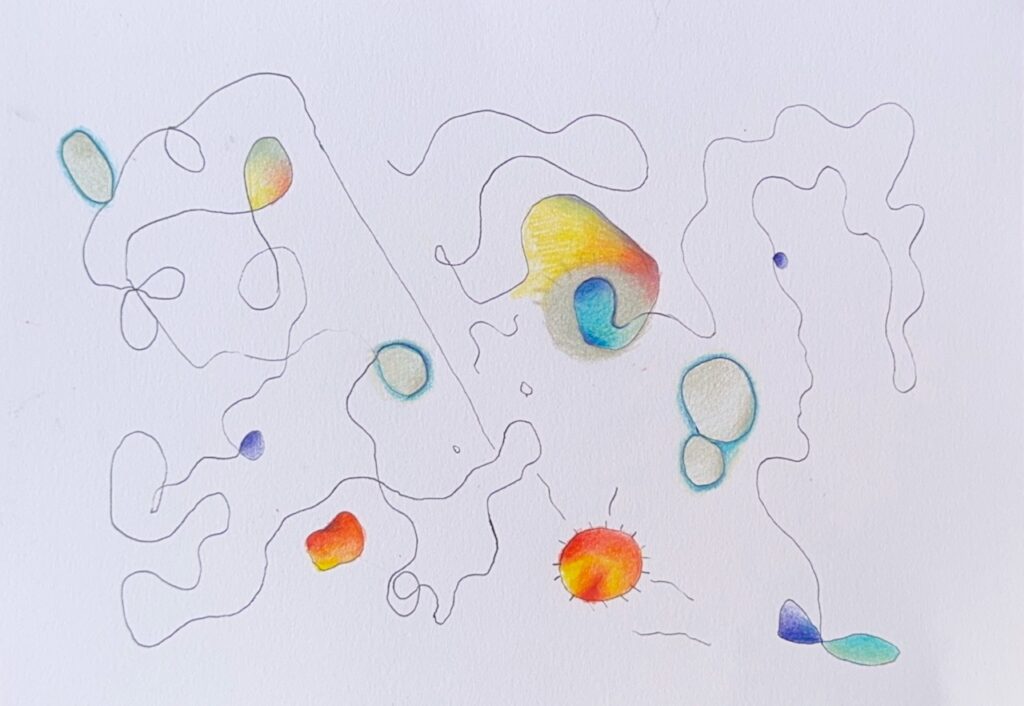
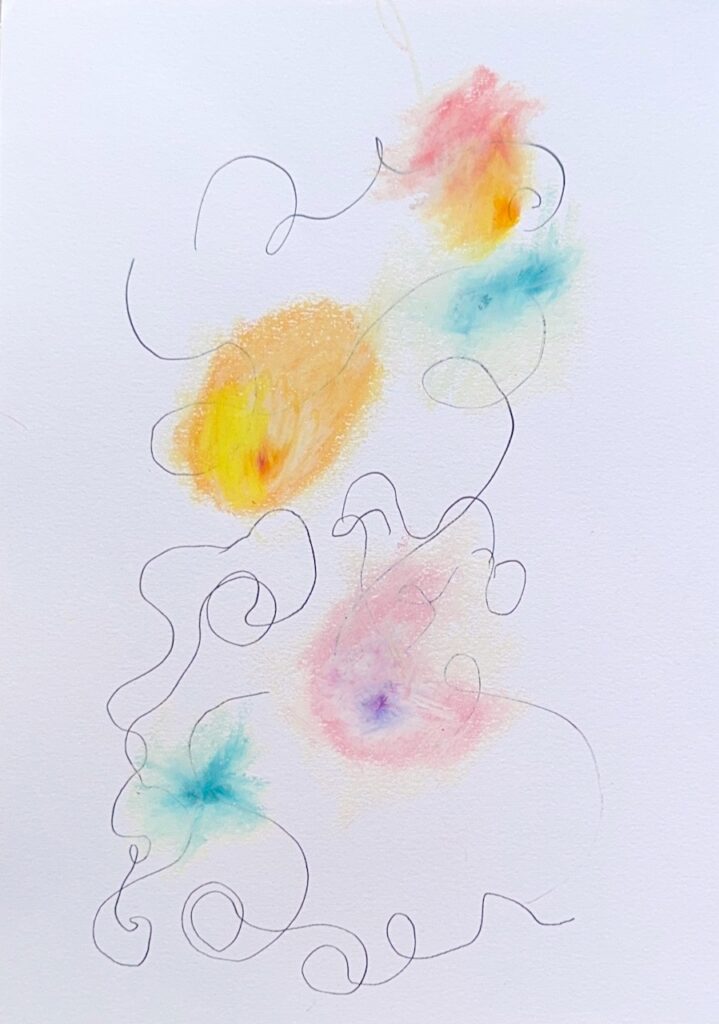
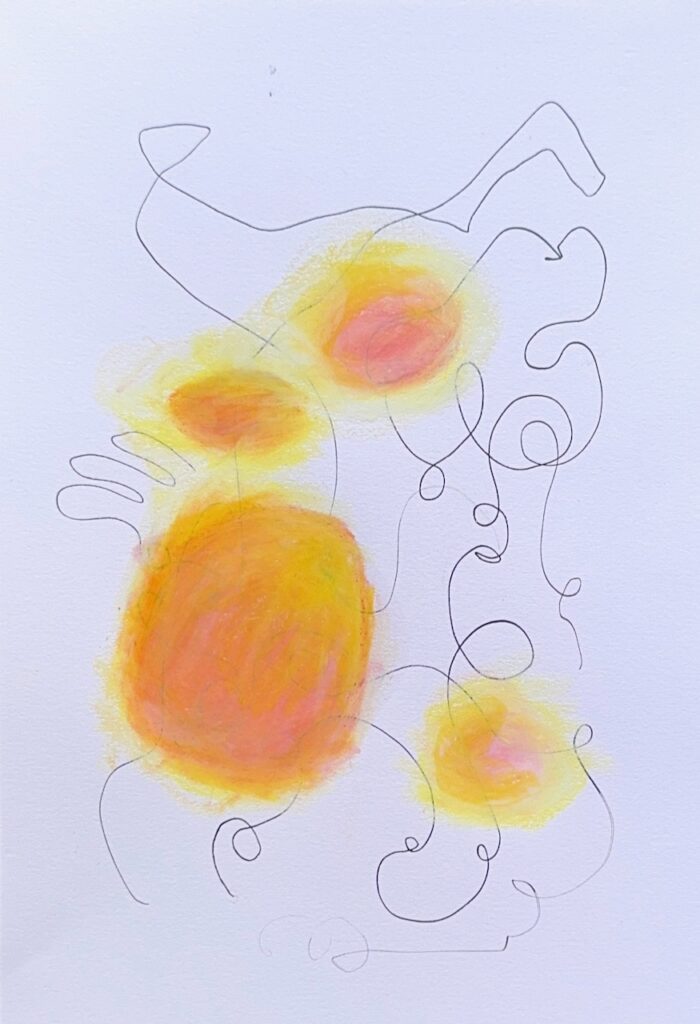
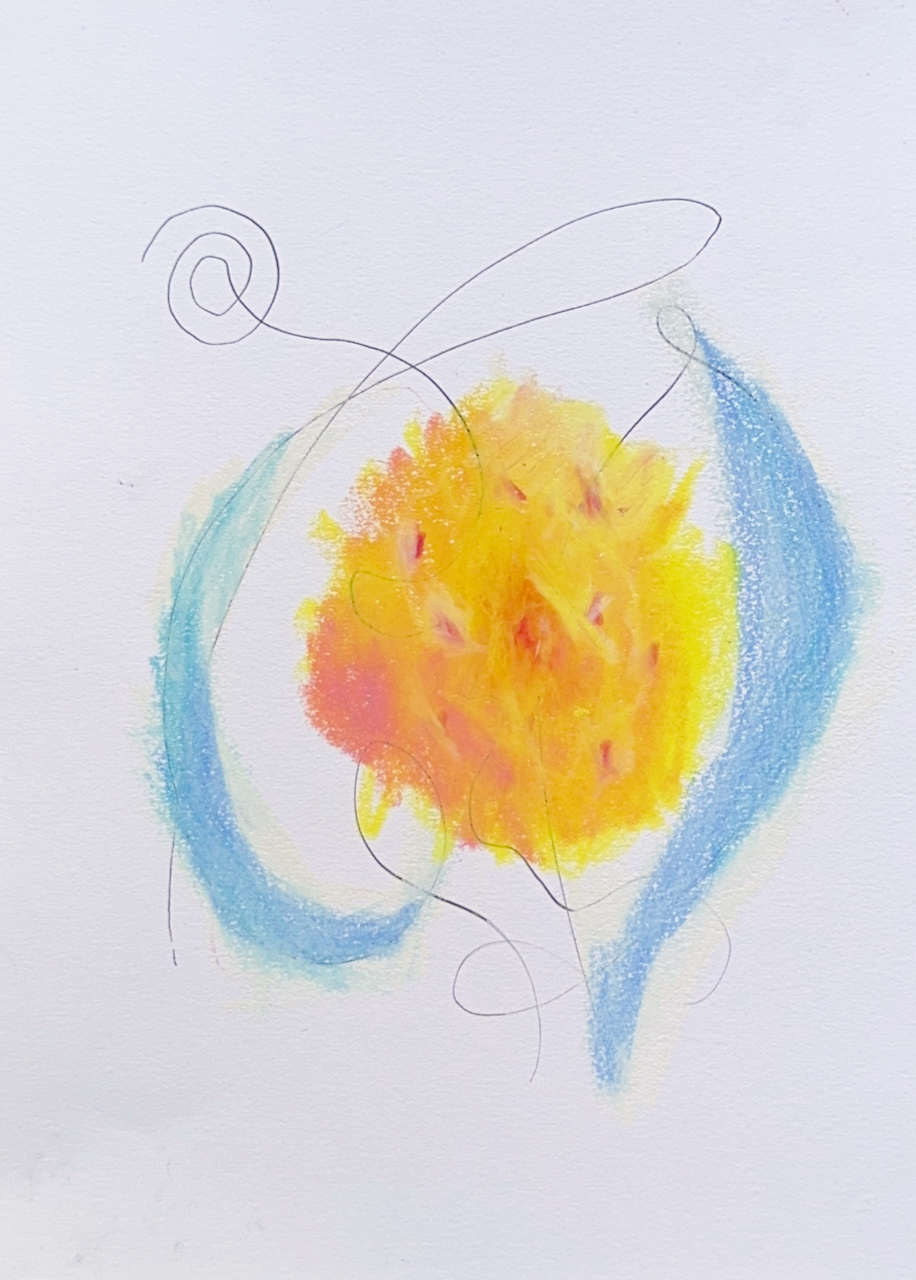
I like bright colours too. So when the prompt asks me to “react” to the lines with dry media, I went for my neocolor II crayons. I enjoy their materiality, I enjoy layering them. At first I was hardly using them but then I realised the fun comes when you blend them. Again I’m quite fast. I like to blend the colours and create forms. I like to play with similar colours and think about how they interact with each others and how I can place them around to create something harmonious.
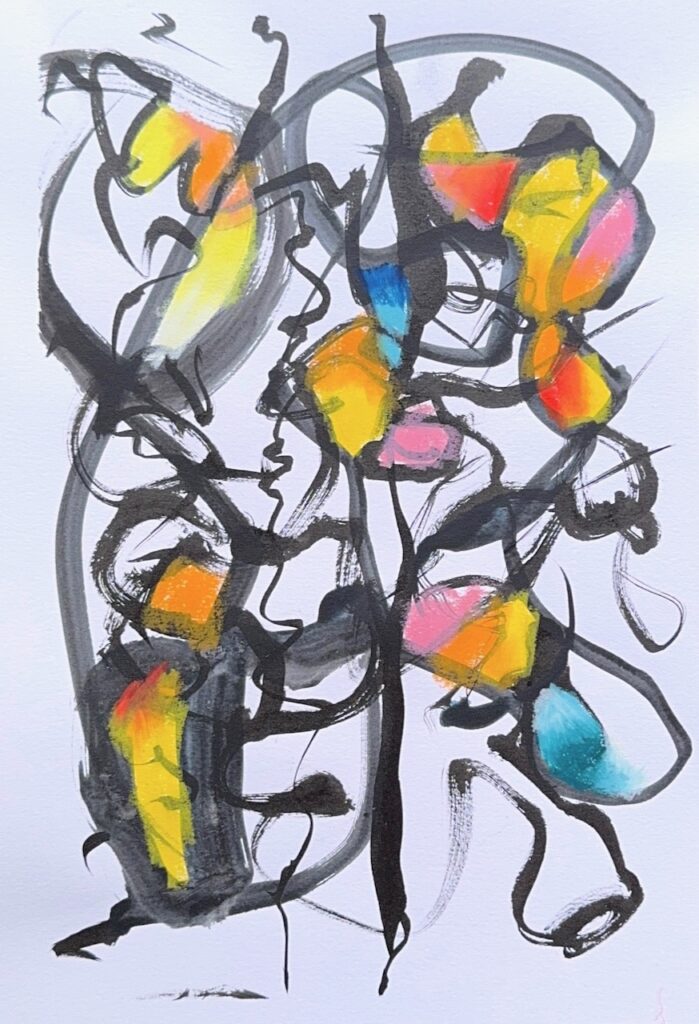
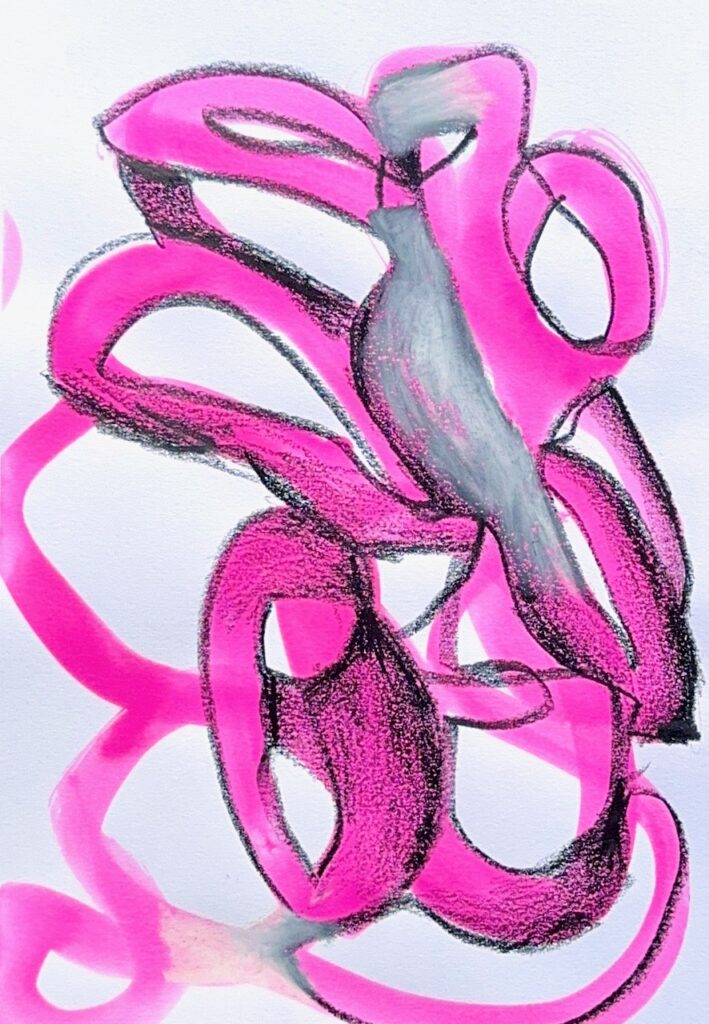
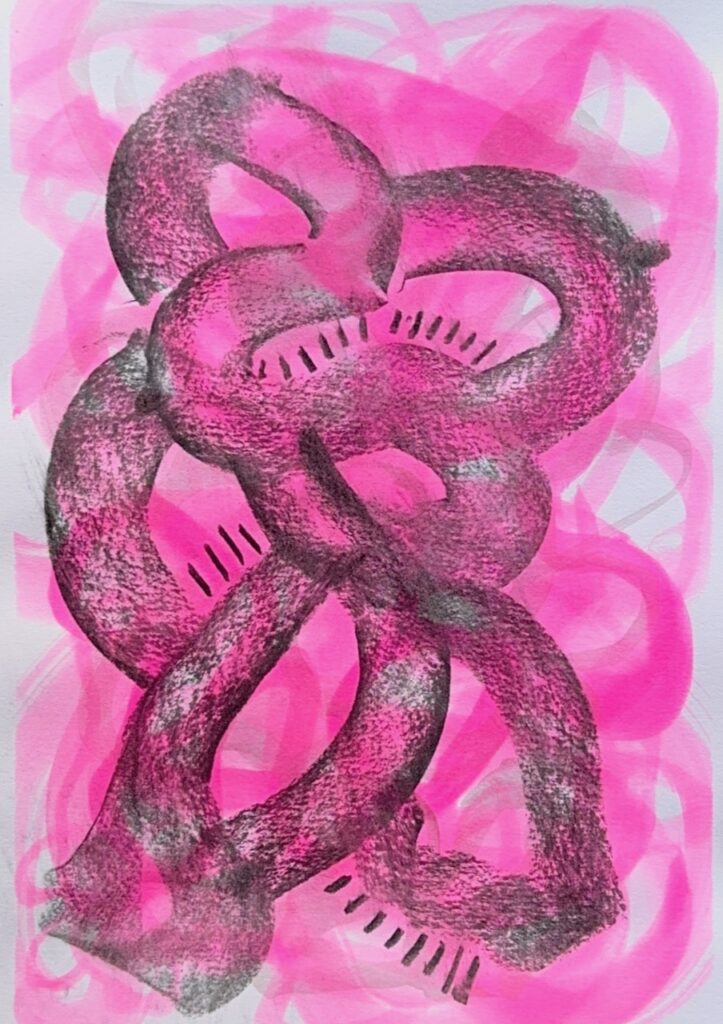
Concluding thoughts
In conclusion, I enjoyed experimenting in that exercise. I am not confident I produced anything of value but I guess the process was more important than the outcome here. My analytical (scientist?) mind can’t help but thinking it’s intuitive but it also feels somewhat devoid of meaning: they are not “about” anything, and I look at them and can’t help asking: so what?
I know achieving a meaningful outcome wasn’t the aim. Somehow experimenting for its own sake makes me uncomfortable. But perhaps I need to learn to sit with this feeling a little more. I did enjoy the process of making those drawings and picking the colours as I reacted to the lines. I also enjoy drawing in a loose way. I find it freeing. So perhaps I can take these simply for that they are: process experiments to let me explore what I enjoy making. And, even though the final outcome carries no meaning, they carry the trace of my mark-making. They provide me with clues about the “how” I like to work even if the “what” is undefined. And even so they are meaningless, I did find some of the outcomes pleasing or at least, interesting, to look at.