Brief
Aim
Now is your opportunity to reflect on all the work you have completed for this section and to make two new drawings that explore composition in different ways. Think about what you have found interesting and enjoyed exploring.

You might want to look at your collages and consider developing some of those ideas further. Or perhaps the cropping exercise inspired you to experiment with this method in new work. Spend time looking at all of your drawings and experiments to get a good sense of what is working and what you would like to develop.

Method
You can use a combination of media, or select one media for each piece,  but try something that you haven’t fully explored yet. Work on any scale, but think about what would be suitable for your materials. So for instance, broad sweeps with charcoal or an expressive brush mark won’t work so well on a small scale. You might decide to incorporate collage which would also work well on larger sheets of paper.

Make each drawing quite different, compositionally. For instance, you might want to describe an open drawer of randomly arranged objects for one study. Another might be a view from the window, looking out across fields.

Aim to spend approximately 2 hours for each piece, but longer if you need to. As with all other exercises, if you are enjoying it, make one or two more. You might also find it helpful to make some quick sketchbook studies of ideas that you haven’t yet fully explored but could return to.

Reflection
What have you learned throughout project 5 in terms of planning a composition? Think about what has worked for you and the processes you might want to continue to develop during the course. Make any reflections in your learning log.
Drawing #1
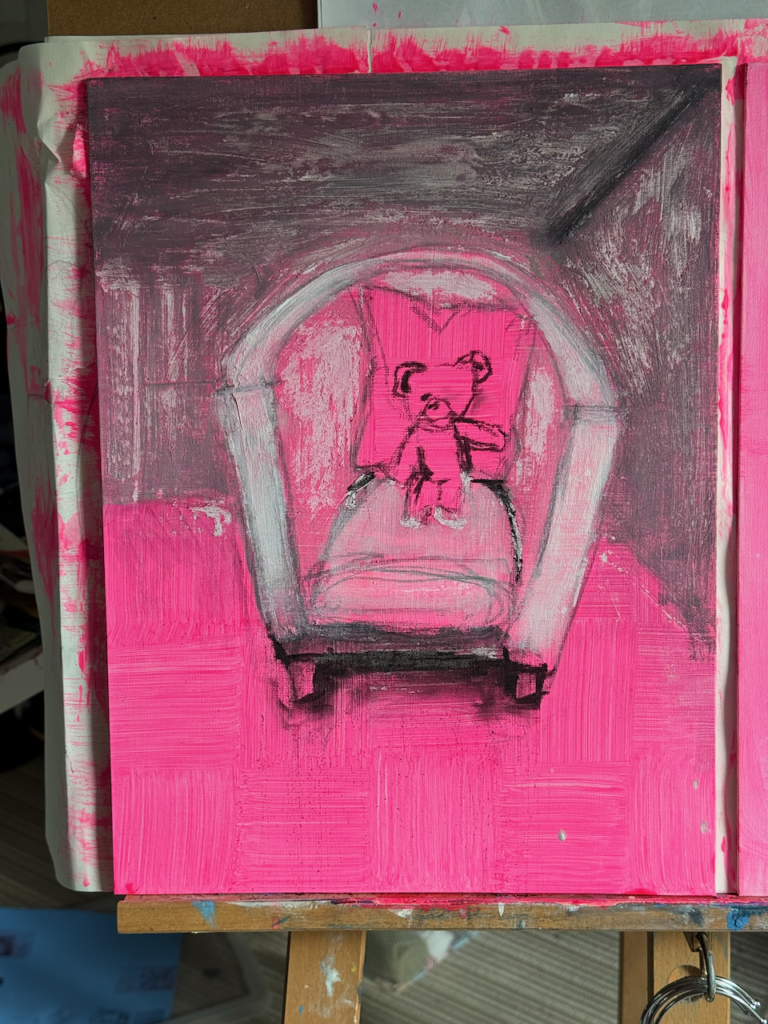
After 30 minutes, I had the composition sketched. I used charcoal and white ink on a fluorescent pink ground on a A3 size canvas board I had prepared a few days earlier. This is not high quality paint and the ground paint started to lift off in places. I decided to keep going and see where I could push this within 2 hours.
I decided to paint the bear again to continue exploring repetition.
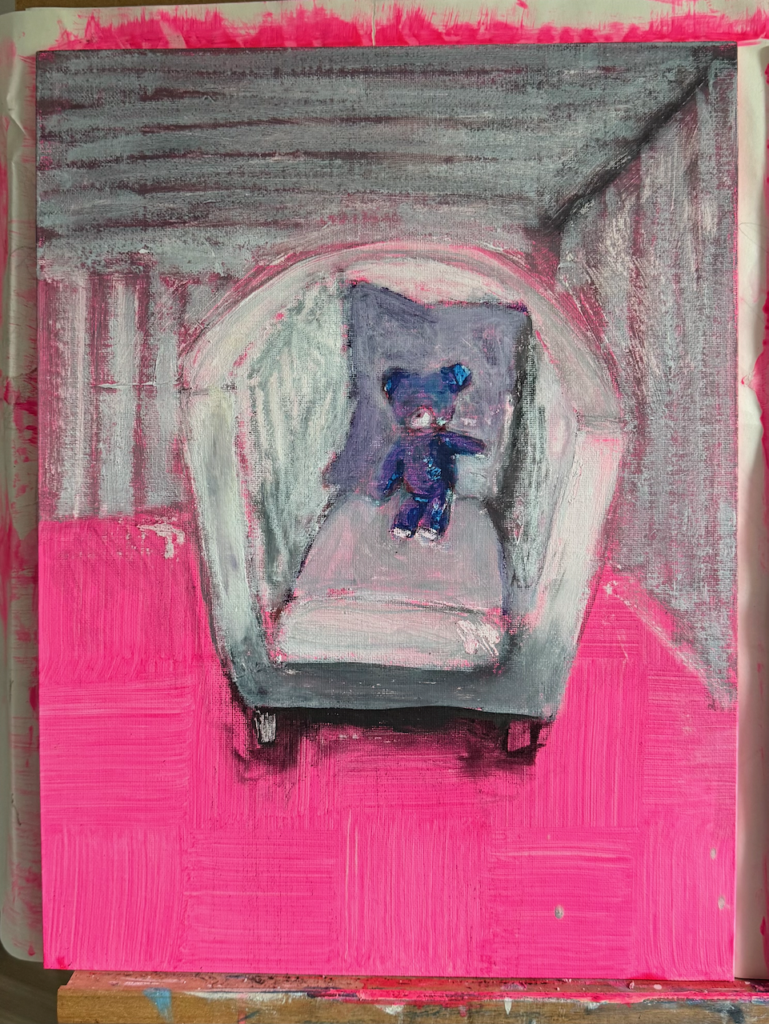
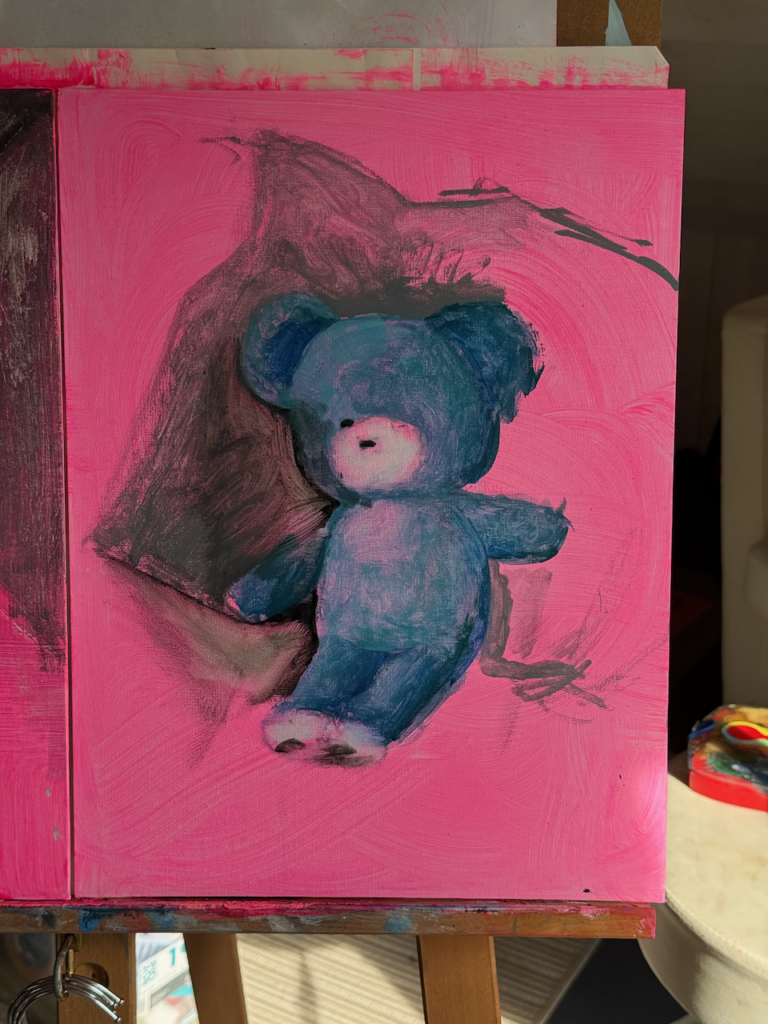
After 60 minutes. During the second session, I decided to use gouache for the bear. I chose a blue green to complement the pink. I tried to provide a sense of space through my mark making to anchor the armchair in space. I was hunting light and shadows, keeping in mind that I could keep my drawing loose and return to areas later by adding layers.
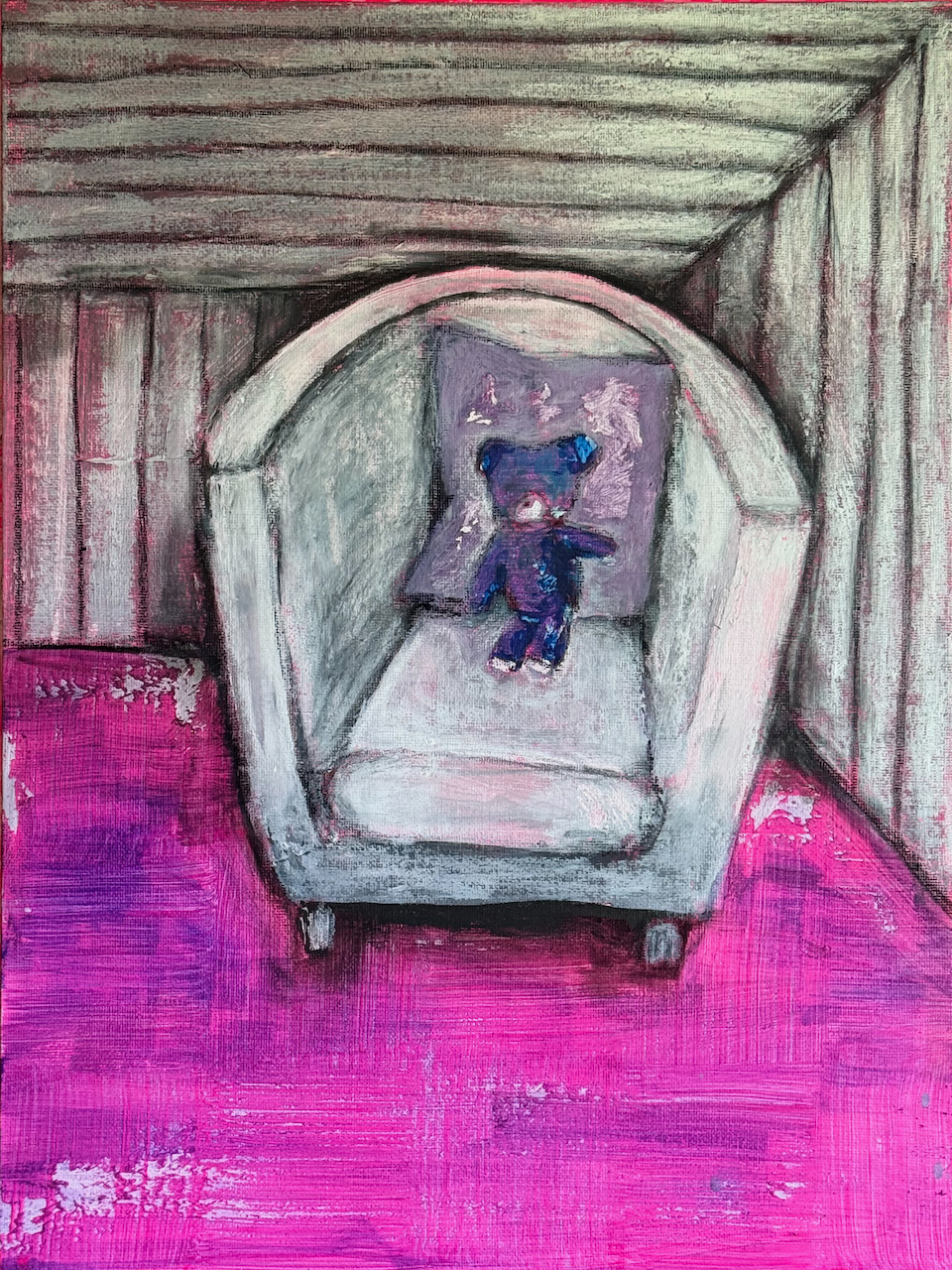
I had to stop after 90 minutes because the ground was too disturbed but it became part of the piece, adding texture and conveying a sense of time passing which is the story behind this little bear.
Drawing #2
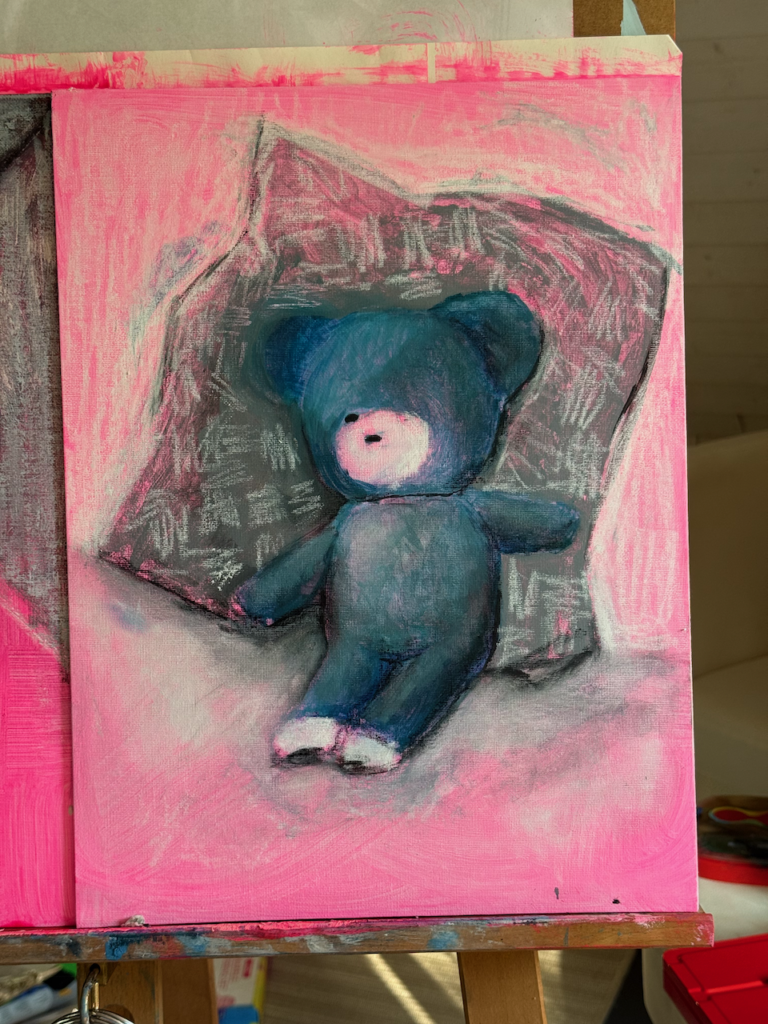
The second drawing I stayed with the same subject but I zoomed in the bear. I used gouache rather than ink and it seemed to react better with the acrylic ground.
I was interested in shadows and light and noticing how sometimes form comes from what I do “outside” the subject as much as what I do “inside” it.
60 minutes. I started to play with texture and realised I naturally mix between crayons, brush, fingers, tissue paper. It’s all very intuitive but I enjoy “getting lost” in the process. I’m also building upon what I learnt from Peter Doig’s approach, where I can take something from life (I had the same bear sitting on the same armchair as a reference throughout) but create several versions from the same “source image”.
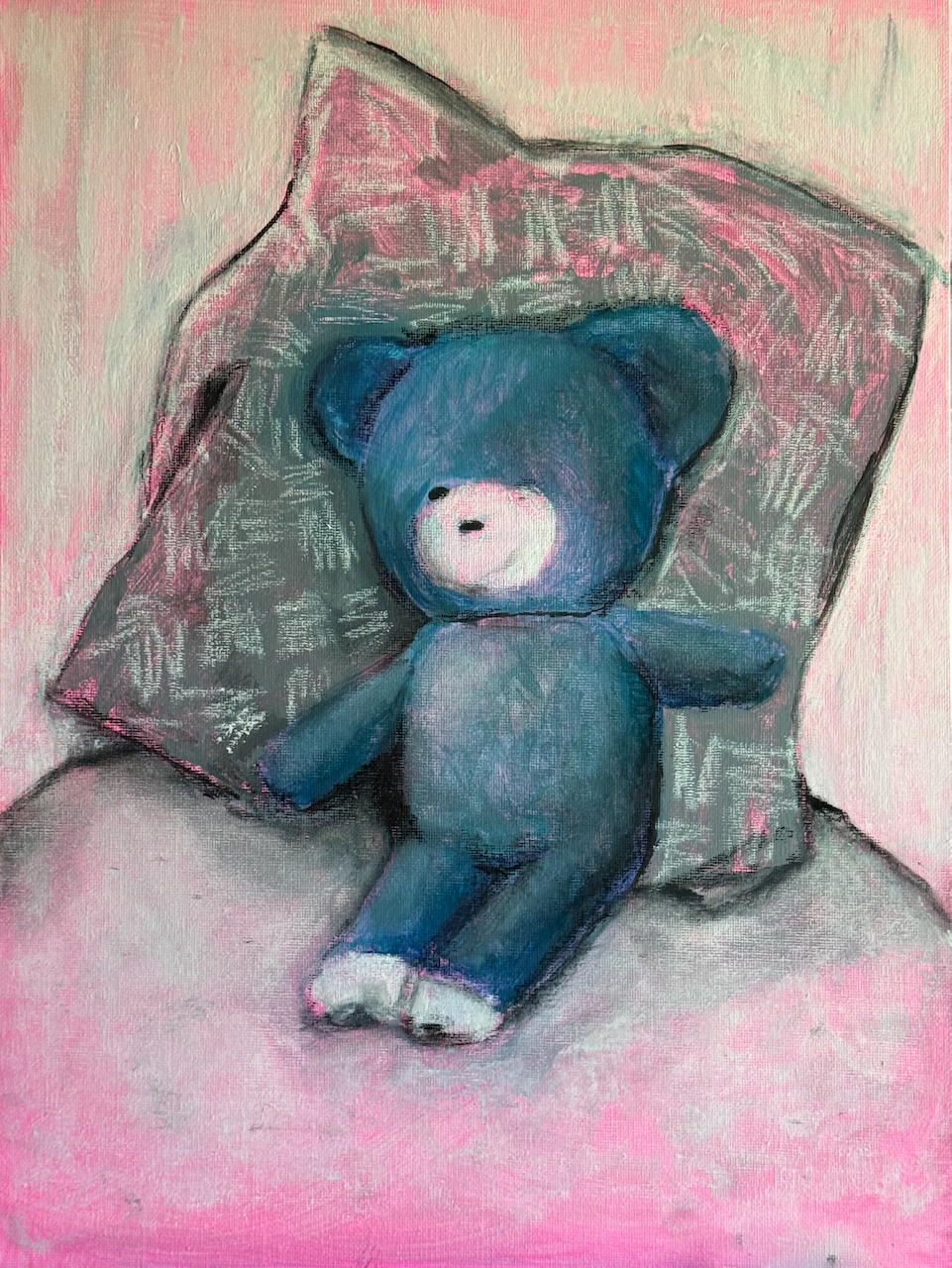
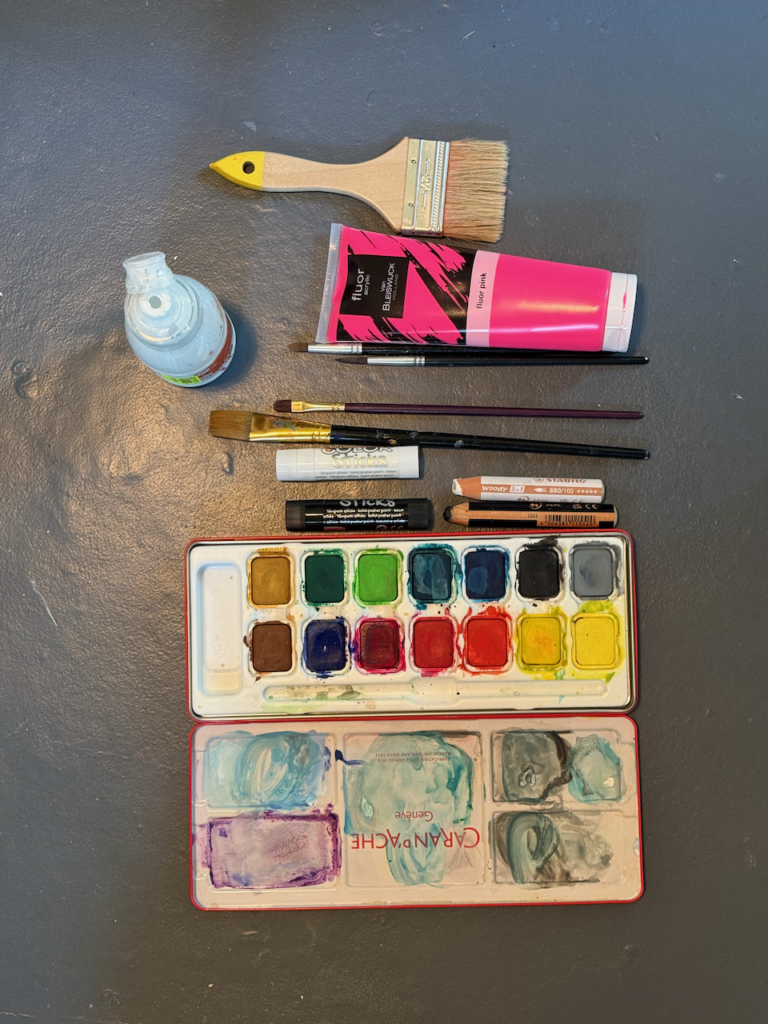
I was quite pleased with the final “drawing-painting.” I find the picture interesting to look at. I was a little bit limited by my materials but also enjoyed the constraint. Midway through I realised I was missing my white gouache and that led me to search for other white materials and to find my paint sticks and stabilo crayons. I also realised I enjoy using my hand in close proximity with the ground, using a stabilo crayon, or a rag. Even with the gouache I used the brush but also enjoyed smudging it with my fingers. I nearly reached out to my Neocolour crayons but decided against it as I had already used quite a range of materials!
Additional drawings
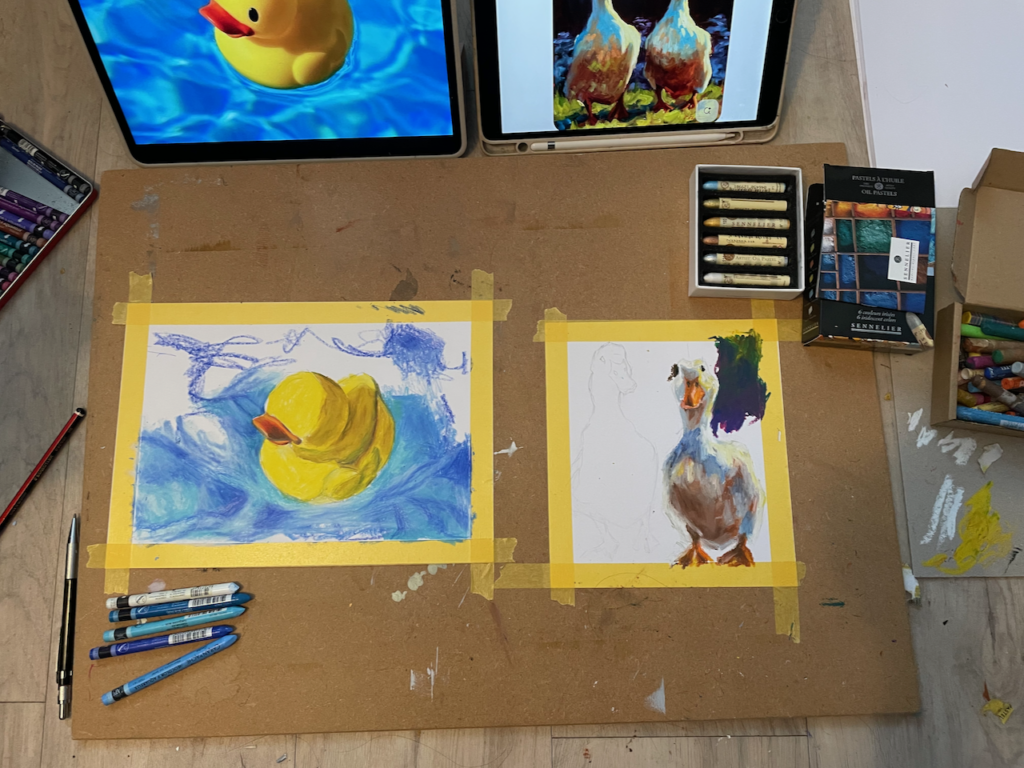
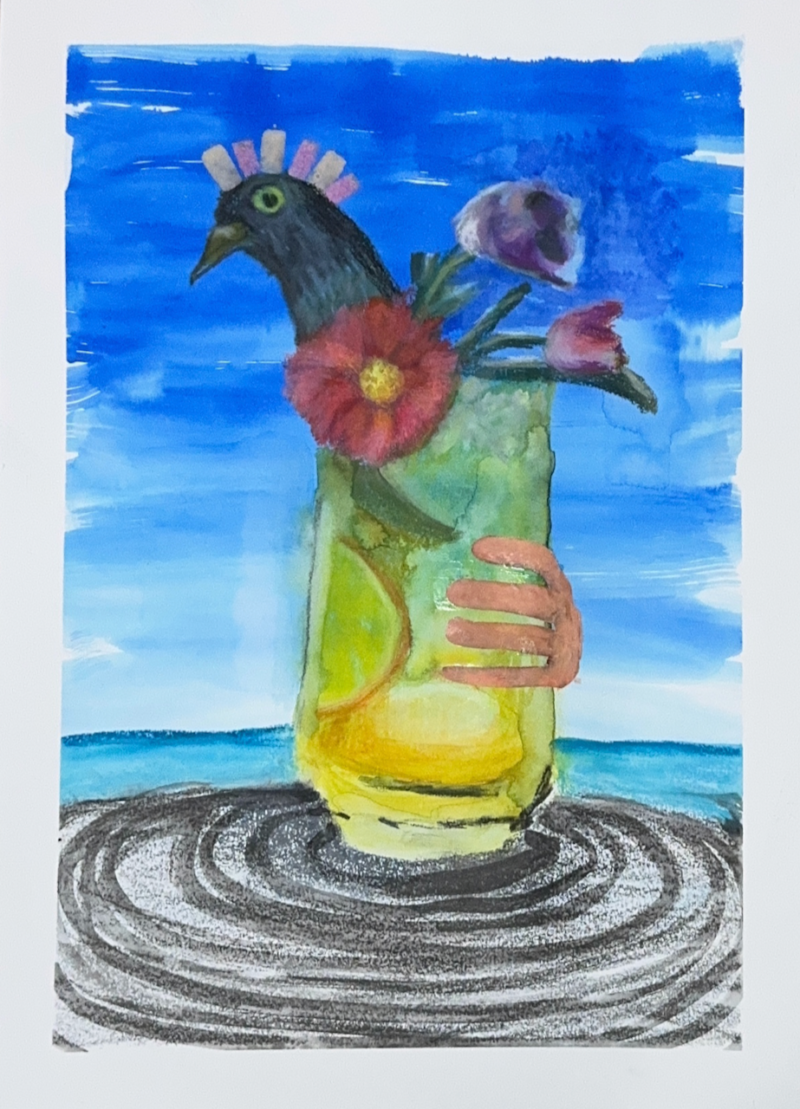
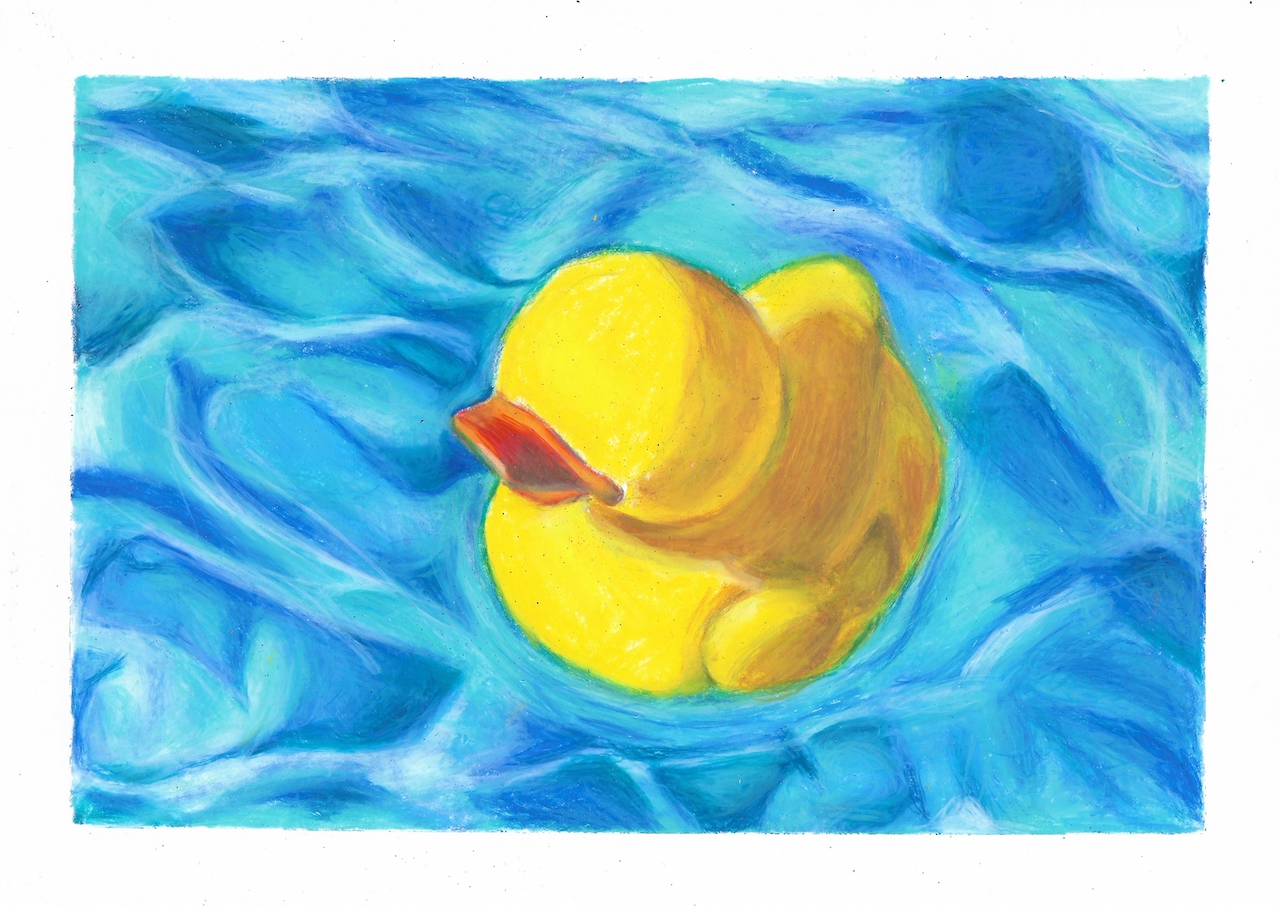
This drawing was drawn from a photo reference but I am including it here because it illustrates my biggest insight through this project, I think. Namely that I have more freedom than I thought to go beyond the reference. The duck is also another motif that I keep returning to. This one was done only with the neocolor crayons. I enjoy the materiality of layering and blending the colours. I worked on this side by side with my daughter which was also a sweet memory!
Reflections
I feel I have learned a lot throughout project 5 in terms of planning a composition. The project has expanded my concept of what planning means and made me realise I can plan through making. The composition is not simply something I plan “ahead” but rather something I can work through from different angles (literally and metaphorically), different processes, different materials. I now think the composition is not merely about how elements are displayed on the page. It’s bigger and encompasses the materials, the mood, the subject, the references and exploring how these may be brought together, altered, repeated, revisited.
I also realised I think a lot about the what (what will I paint and why) but found that this is something I can explore through the making of the work. Despite all the thinking, when I switch back to making mode, I can be quite surprised by my choices. There has been no figure drawing and instead I have reverted back to themes that hover around childhood. I’m not sure what to make of this but I think this is something I might want to continue to develop during the course.