Exercise Brief
Aim
In project three you explored fluidity to suggest form. In this exercise, you will try to link mark making and movement to some idea of construction. You are constructing a drawing using marks which have a direct correlation to the structure of the actual object you are observing. Enjoy that and use it to push the paint around.

Method
Spend time seeking out a subject matter that has plenty of strong directional lines, for example:

the legs of a pier
a building site
trees
kitchen stools
bean canes in a garden
branches
power cables
a spider’s web
alliums in the garden, or in a vase

Look through your sketchbook. Is there anything that you have enjoyed drawing that could fit the bill here?

Make some charcoal drawings in your sketchbook, or on loose sheets, to develop your knowledge of the structure of your subject. Focus on trying to capture the underlying engineering and the power of the angles and lines.

Prime some cardboard, or paper stretched onto board. What colour will you use?

Work simply with one colour and white paint to carve out your image onto your paper. Let the colour cut into the white and vice versa. Work wet-on-wet and be conscious of your own physical movements and how they operate with the way your eyes move across the subject.

Reflection
Make notes in your learning log about how the paint reacted to you drawing into it. What do you think this does to the finished drawing and the way it is read? What would happen if you played with this notion of constructing a drawing? How would a spidery drawing of a building, or a drawing of lace made with sheet steel, operate? Did you subvert these relationships in your own drawings for this exercise?

Do take time to unpack an exercise and a piece of contextual study and gain purchase on it from your own perspective. Degree level study is about criticality. What kind of marks would be appropriate for you? Do you need to find marks that are even more powerful – explosively destructive, perhaps? Or would you prefer to find a quieter mark, wiping softly at something.
Preliminary sketches
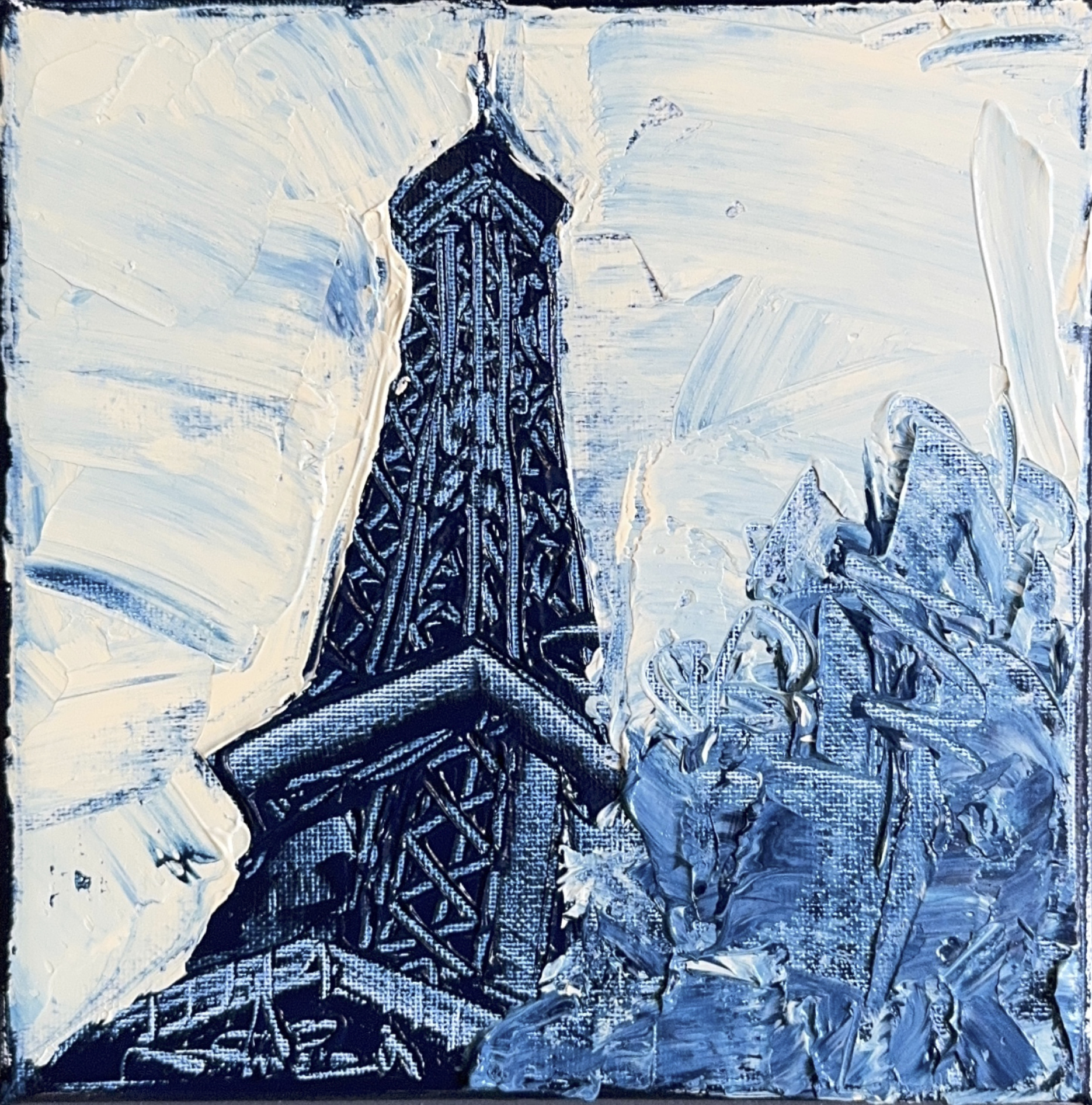
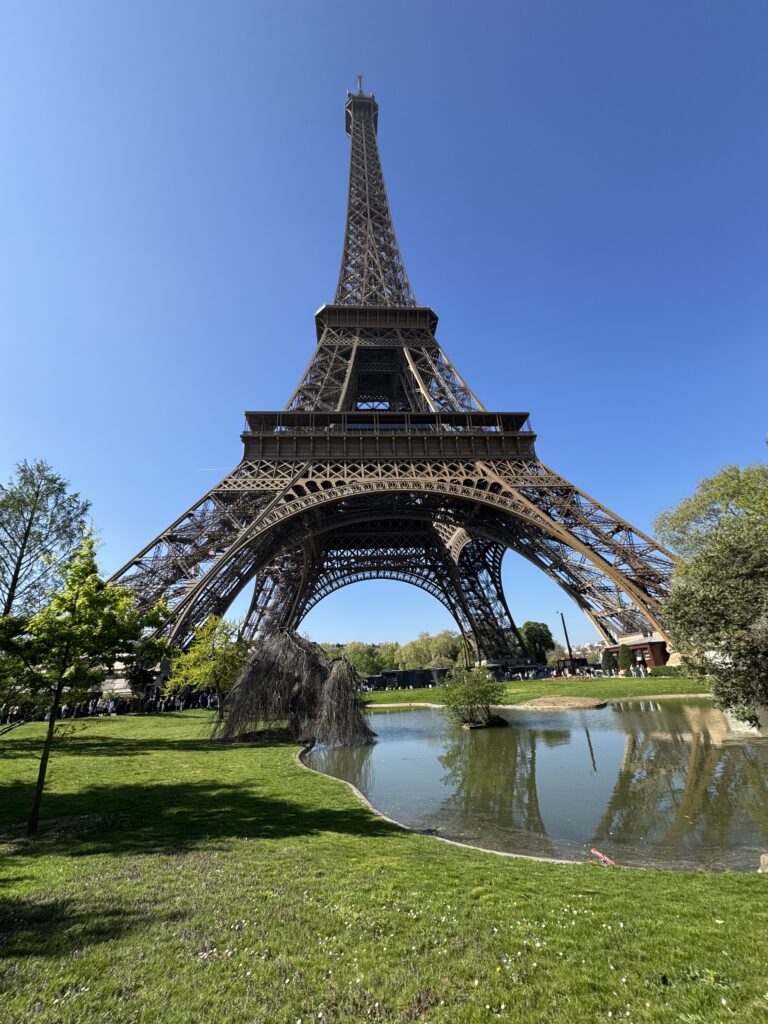
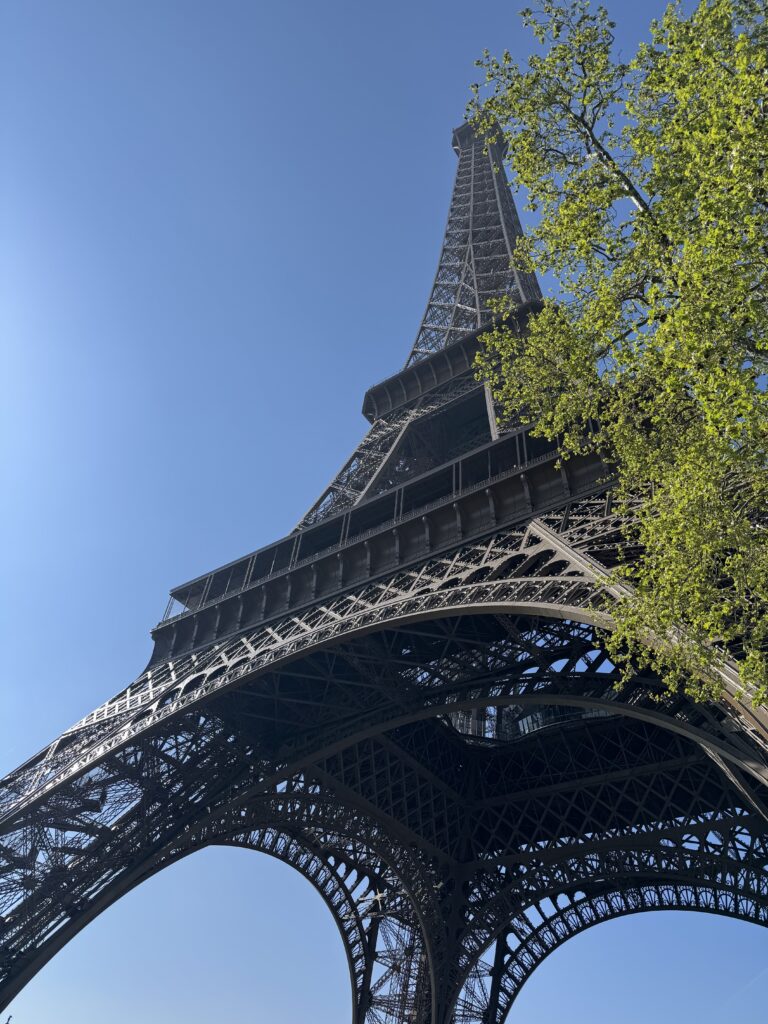
For this exercise I chose the Eiffel Tower as my subject, a structure built entirely from directional lines, cross-bracing, angles, the engineering made visible. Looking at the reference photograph I had taken when we visited Paris for my fiftieth birthday last April, I noticed something that changed how I approached this work: the structure itself was the lighter value. It was the shadows around and behind it that defined it. I couldn’t draw the lattice with a dark mark because the lattice wasn’t dark. I needed to find a way to draw light.
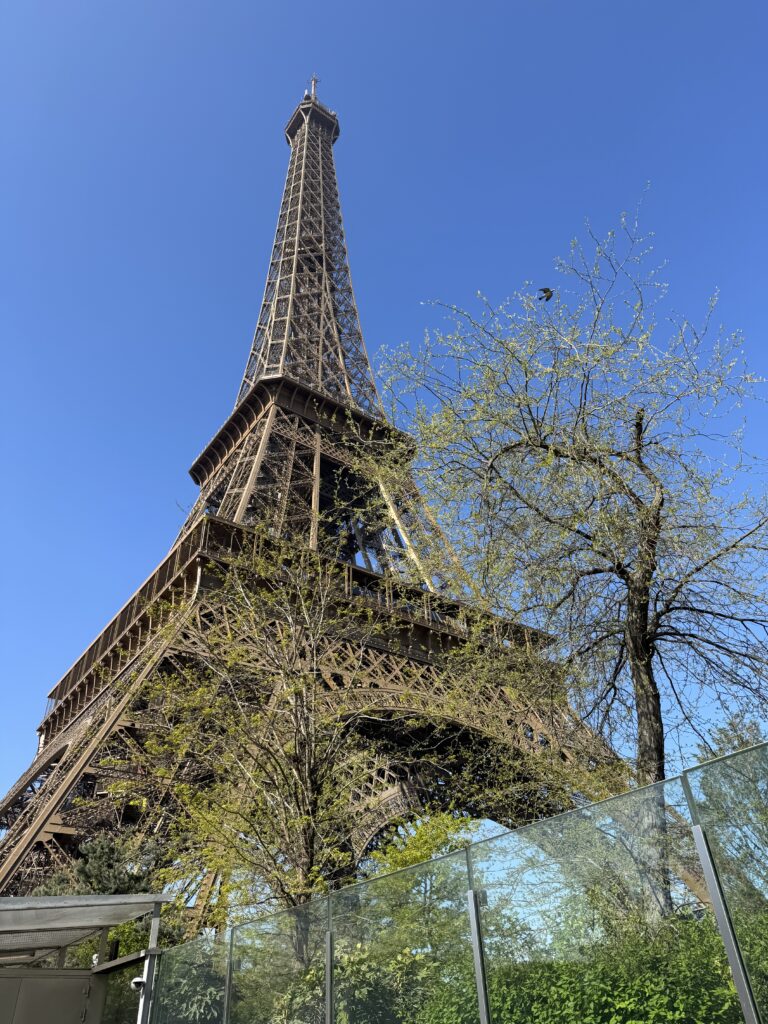
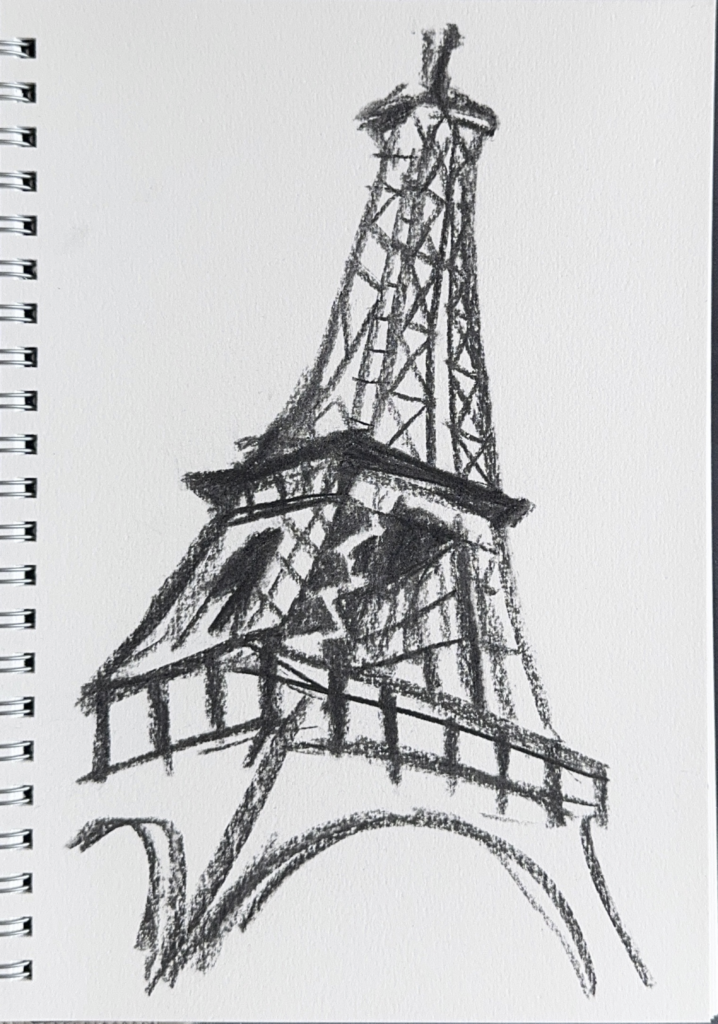
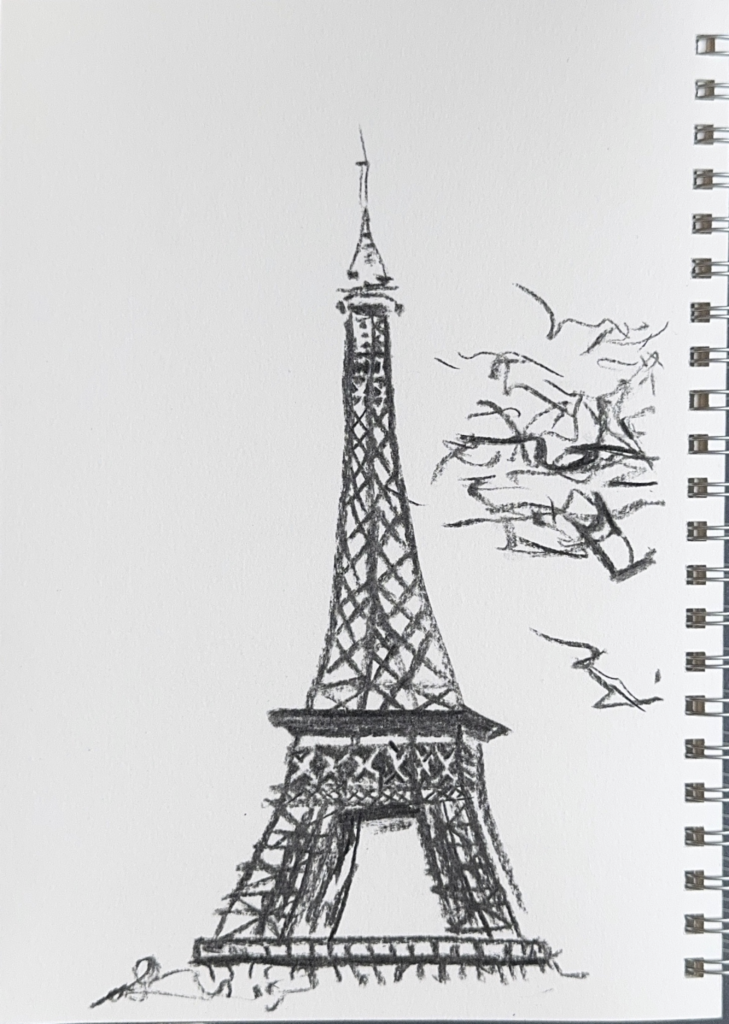
This reminded me of scratchcards, where you work into a dark surface to reveal what’s underneath. I covered the canvas in a thick layer of Payne’s grey and used the back of a brush to scratch the structure out, drawing the lines by removing paint rather than adding it. For the horizontal platforms, I needed a wider edge, so I switched to a palette knife. The tool change was dictated by the subject’s logic, not a prior decision.
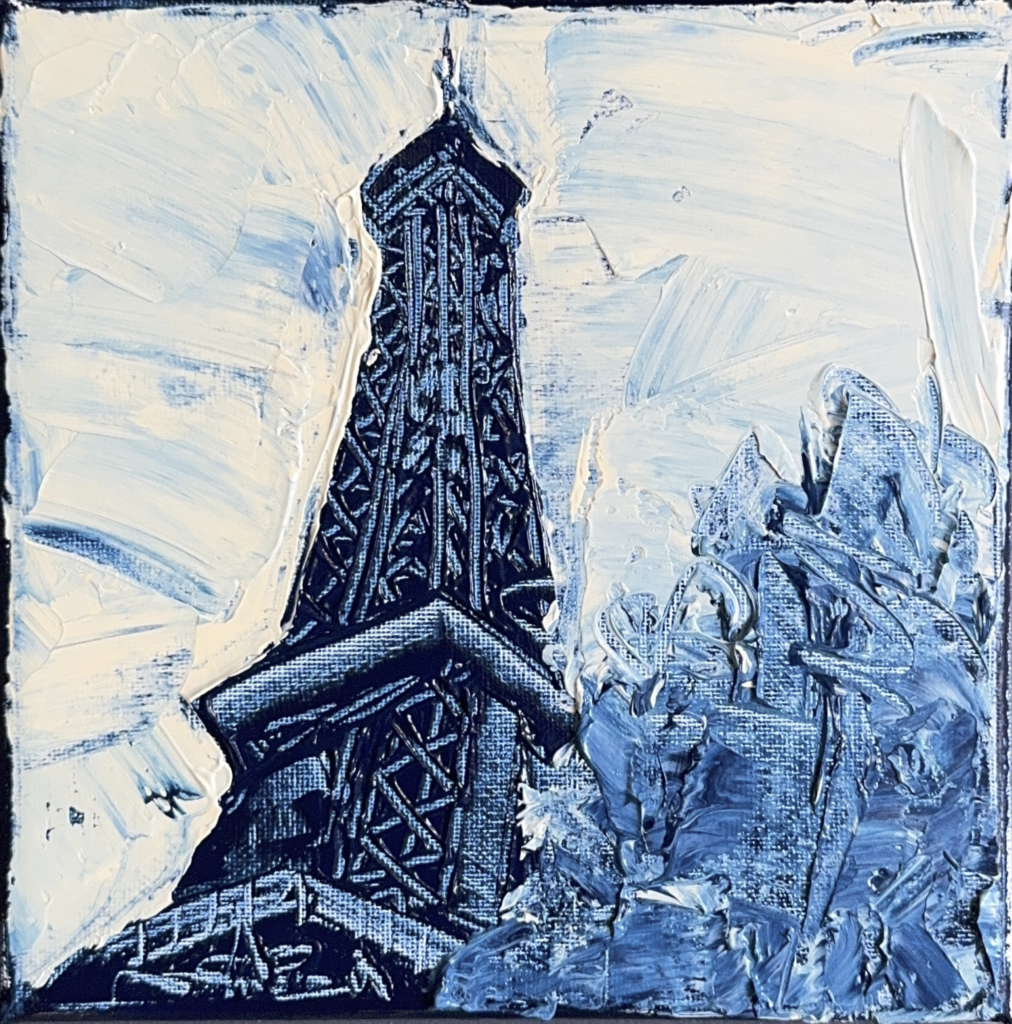
The trees from the original photograph were still there in my composition, and once the palette knife was in my hand and there was thick Buff Titanium on the canvas, I found I could recreate their organic quality through broad gestural sweeps. Two different mark languages in the same image: incised and structural for the tower, smeared and fluid for the foliage. The brief asks whether you subverted the relationship between mark and subject. I didn’t, quite. The steel stayed rigid and the organic stayed fluid. But the process itself was inverted: I drew light with dark, and built structure through absence.
The piece is small, 20x20cm. I find myself wondering what would happen at larger scale, where the physical gesture would have to involve the whole arm rather than the wrist. That question feels connected to my research log on Franz Kline, and the relationship between bodily movement and mark. In fact, I was thinking there is scope to abstract the tower structure further rather than aiming to draw it figuratively.