Brief
In 2014, OCA drawing student Paul Grady made a series of drawings called 12 Months’ Hard Labour for which he made a drawing every day using a variety of highly labour-intensive techniques. Look at the examples on the next pages and notice how the subject matter is very slight and how that operates with the enormity of the effort put into the drawings’ production. This project also highlights the importance and potential value of spending time working rigorously on the application of drawing.

Aim
Spending time making a drawing can shift the way you think and feel. Careful observation of tonal variation and detailed articulation of lines and angles mean that you are spending much longer than normal looking at an object. Equally, employing labour-intensive techniques such as hatching, or shading large areas, gives you time within a drawing where your thoughts can wander and movement might become less conscious. These methods also leave evidence of time spent embedded in the drawing for viewers to pick up on. How might you use that in a drawing? For example, could it lead to a drawing feeling authoritative, contemplative, intimate or commanding – or dislocate its interpretation in other ways?

Method
Research drawing methods that take time to use and appeal to you, for example hatching, shading, using small media to make big drawings, scale drawing, hyperrealism, etc.

Choose a subject for your drawing that might benefit from having time spent in either of the two directions suggested:

From the viewer’s perspective. For example, a minutely detailed drawing of a piece of discarded fruit peel might set up an interesting relationship. Equally, an eight-foot high drawing of a two-year-old child might shift its interpretation.

For yourself. Choose something that you would like to spend time coaxing into being and thinking about. You might spend time creating a hyperrealistic portrait of someone you love, or carefully using a pin to scratch the face off a politician you don’t like. It may well be that the labour becomes the subject and you have simply decided to shade an entire sheet of lining paper with a ballpoint pen.

Reflection
Make notes in your learning log about what happened when you made a drawing that took time and labour to produce.
Slow drawing methods
I found several drawing approaches whose value comes from the time it takes to apply them, building images from many small, deliberate decisions.
Hatching, cross-hatching and contour hatching
I really like this method of creating form, shadow, distance, texture and even movement with different lines, changing curvature, thickness, spacing, length. I’ve seen Albrecht Dürer’s Young Hare in the Albertina Museum in Vienna a few years back and was taken aback. I think I’m fascinated by the focus and attention required to complete pieces like this. I was similarly impressed by Lucian Freud’s Portrait of Christian Berard which was exhibited as part of the National Portrait Gallery exhibition Drawing into Painting last year.
Interesting tutorials and prompts include Jackson’s Art Prompts Course: The Fundamentals of Drawing, Alphonso Dunn’s YouTube pen and ink playlist and the Met graphite techniques page.
Metalpoint (silverpoint)
I discovered this technique through my research. A silver metal stylus drawn over a prepared ground. Erasing is damaging so it requires commitment and patience. Apparently preparing the surface takes days as well.
I found useful resources for future references at the Met’s Metalpoint materials and techniques, Lauren Amalia Redding’s review of a chalk ground for silverpoint. I like the feeling of sgraffito on paint and this may be interesting to try. I don’t have the materials to hand however.
Hyperrealism in graphite
I know of Vija Celmins’ drawings from my Foundation course. I found an interesting article by Amanda Hunter Johnson about her technique based on deliberate mark-making, experimenting with different grades of graphite pencils from hard H to soft B grades, and explicit rules such as no erasing among others or moving from the lower right towards the upper left. I also found a comprehensive learning resource from the National Galleries of Scotland.
Celmins explained her work as “re-describing” the image ― working from a photograph and re-inventing it mark by mark in another medium.
I also discovered the work of Emme Towers-Evans through an interview on Jackson’s Art Blog. Like Celmin, photographs play a crucial role in her practice as well as zoom lenses. I found her work fascinating. I’m both attracted and deterred by the industrious process that underpins this work. Also I’m more fascinated by the drawings of Lucian Freud or Domenico Gnoli where the attention to details and careful labour are apparent but the resulting image is not so directly looking like a photograph.
Grids and incremental scale drawing
Chuck Close’s Robert/104,072 (1973–74) at MoMA is built from one dot in each of 104,072 grid squares, each square revisited about ten times on average, over fourteen months. Close said, “No work of art was ever made without a process.” I found a grid self-portrait lesson plan from the Buffalo AKG Art museum based on his work. I’ve always wondered how this gets done but I suppose there are now many tools which can be used for pixelisation.
Labour and time
I approached this in a slightly different way. I had already completed two slow reflective drawings earlier in the module. I enjoyed working on them but I think also they lack energy and feel constrained, or restrained.
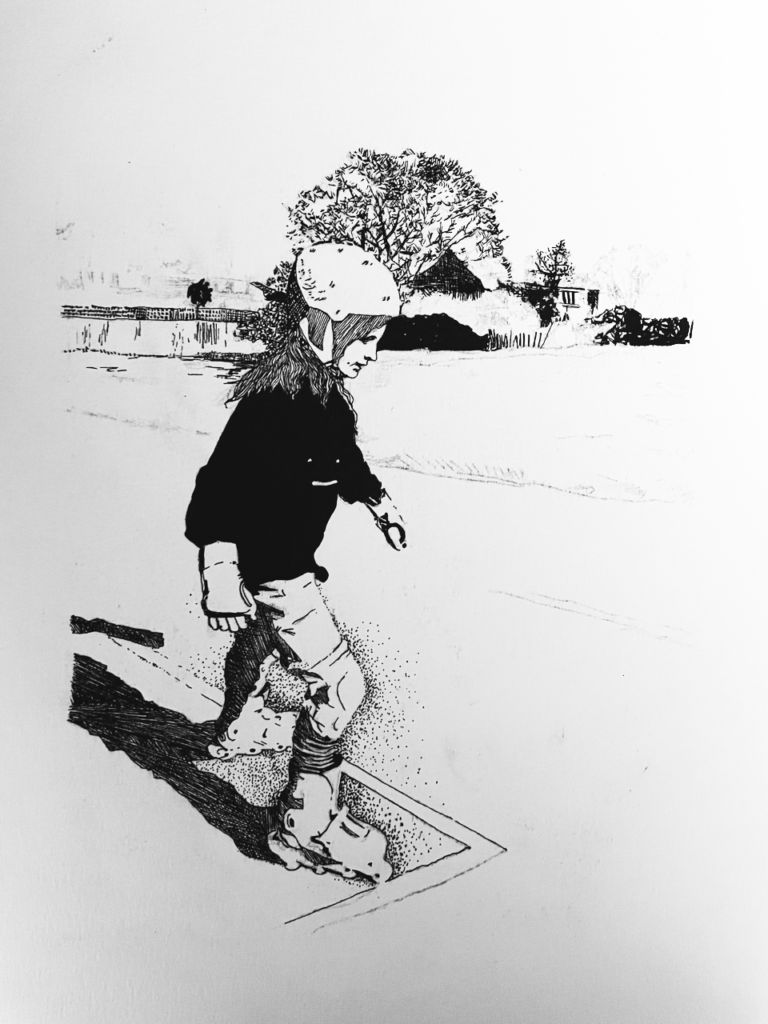

I was more interested in the idea of repetition. I can (with some difficulty) get to hyper focus on a piece and develop it over several hours and days. I seem to struggle more when it comes to revisit past works, or follow the same pattern or approach over several pieces. I attempted to do this in two exercises: The 303030 sketchbook challenge and 12 mini artist portraits.
303030 Sketchbook Challenge
This is a social media challenge which invites artists to join in and follow open prompts to create 30 sketchbook pieces completed in 30 minutes over 30 days.


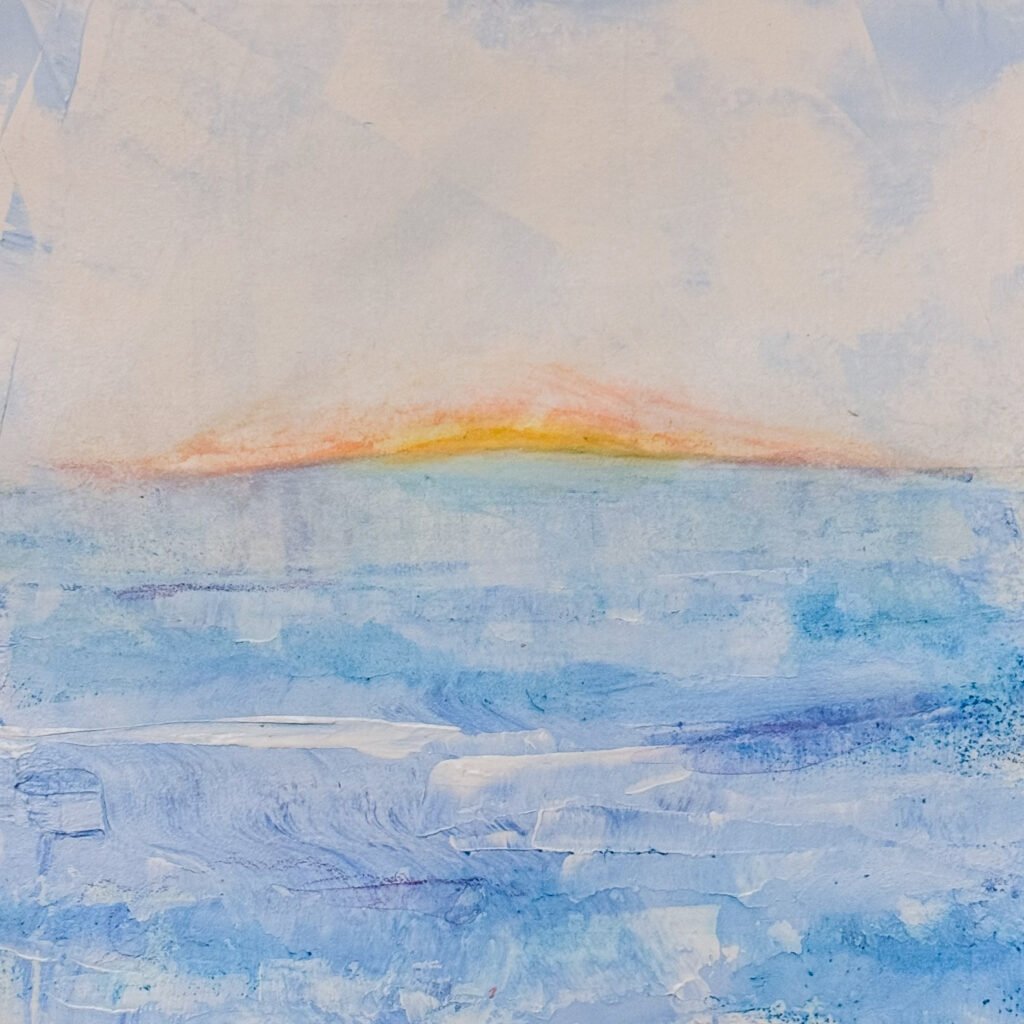
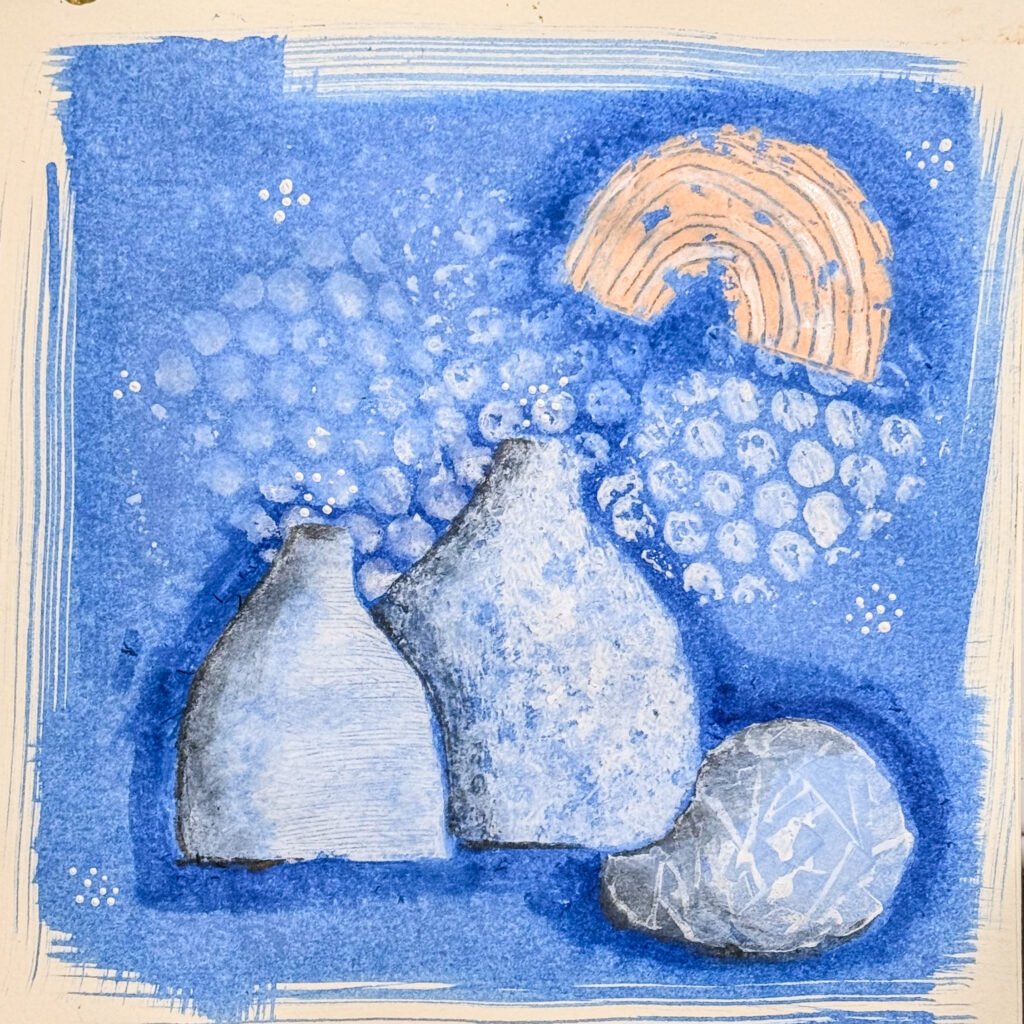
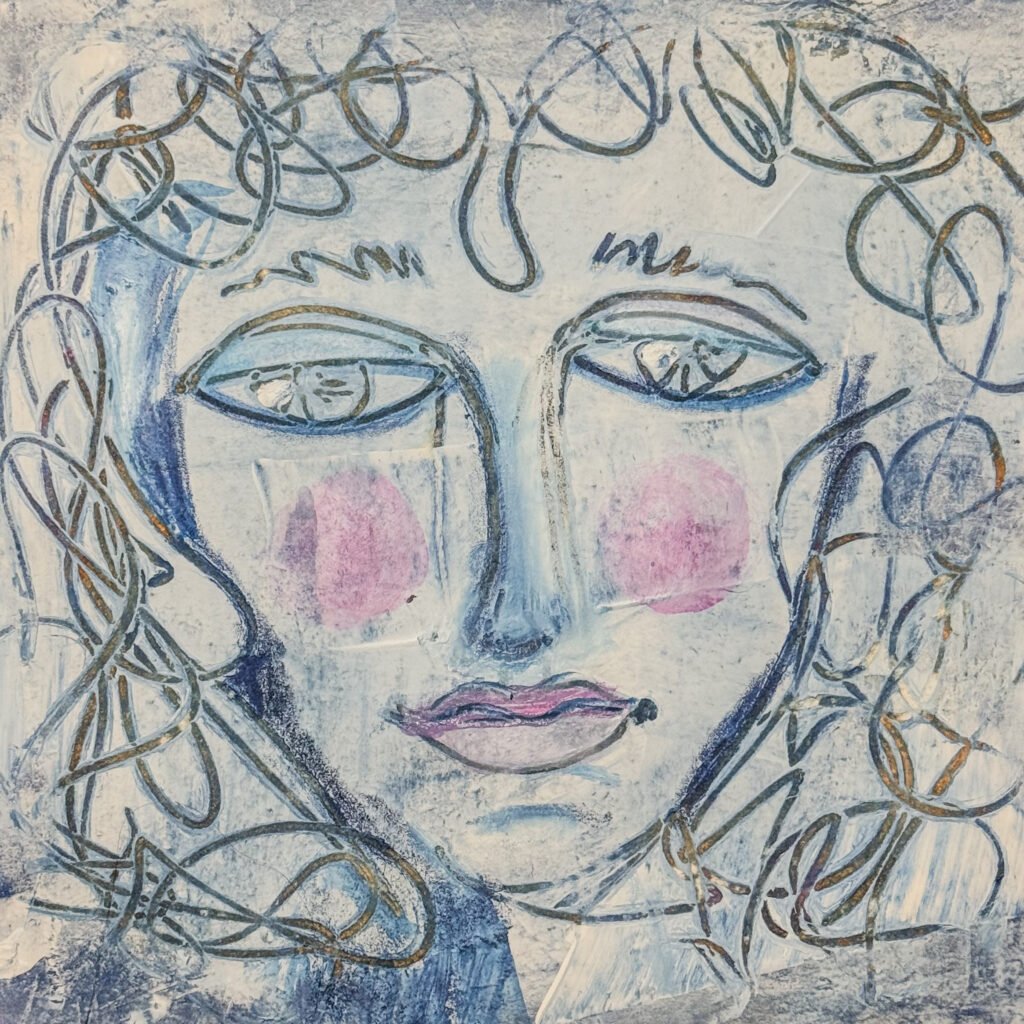
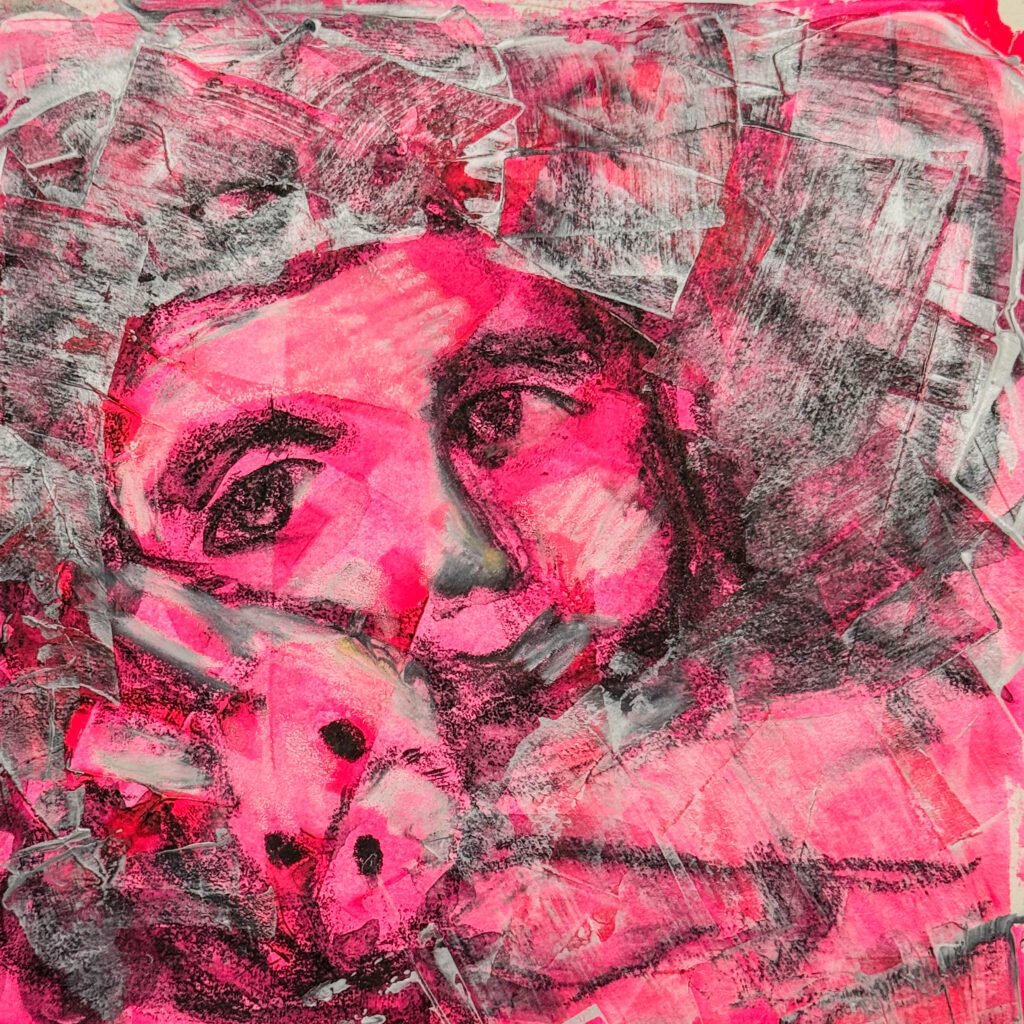
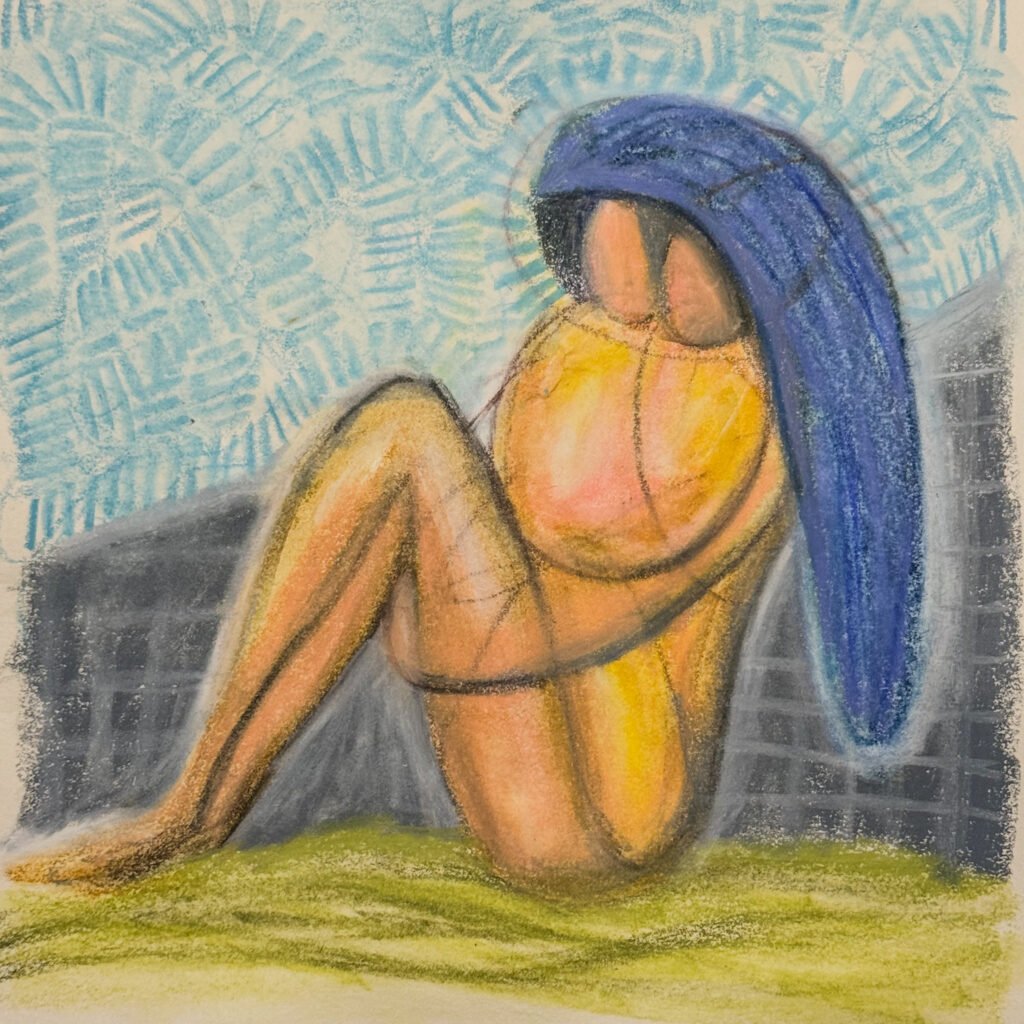
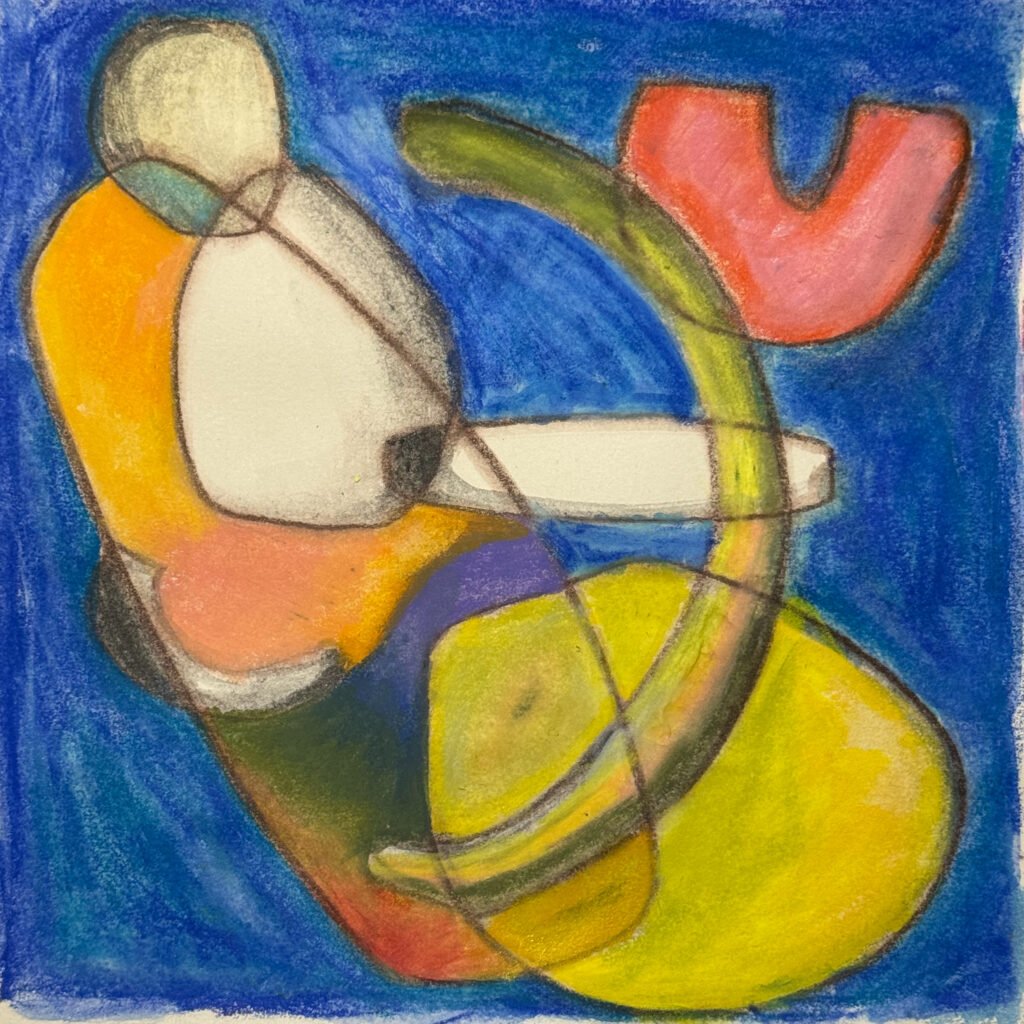
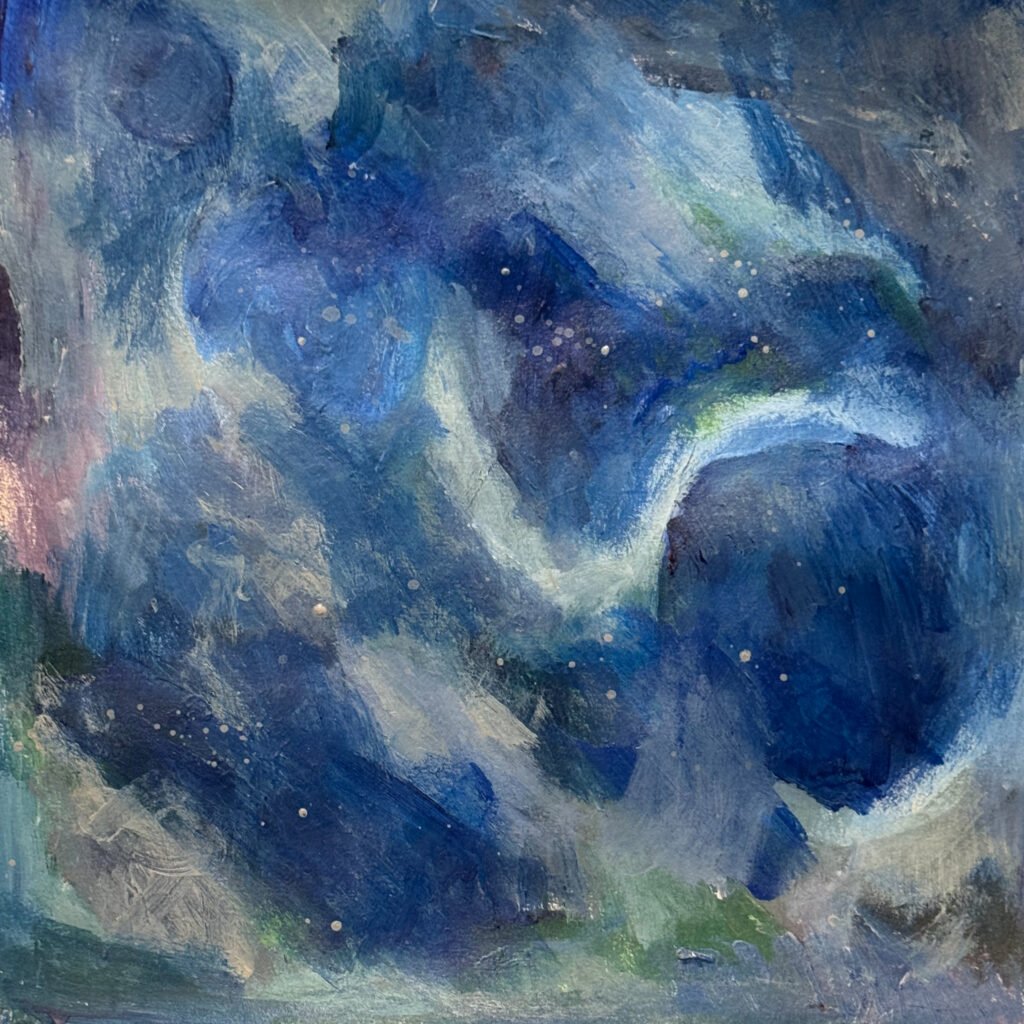
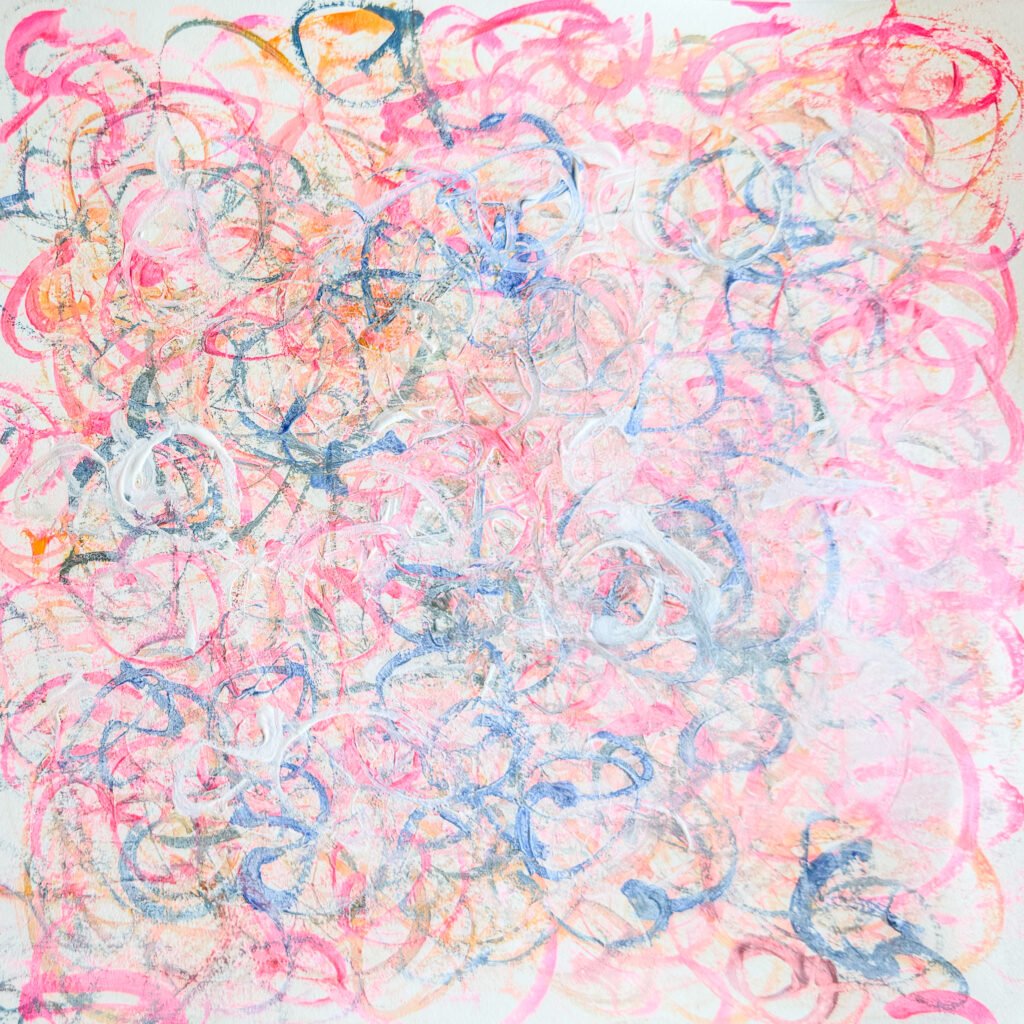
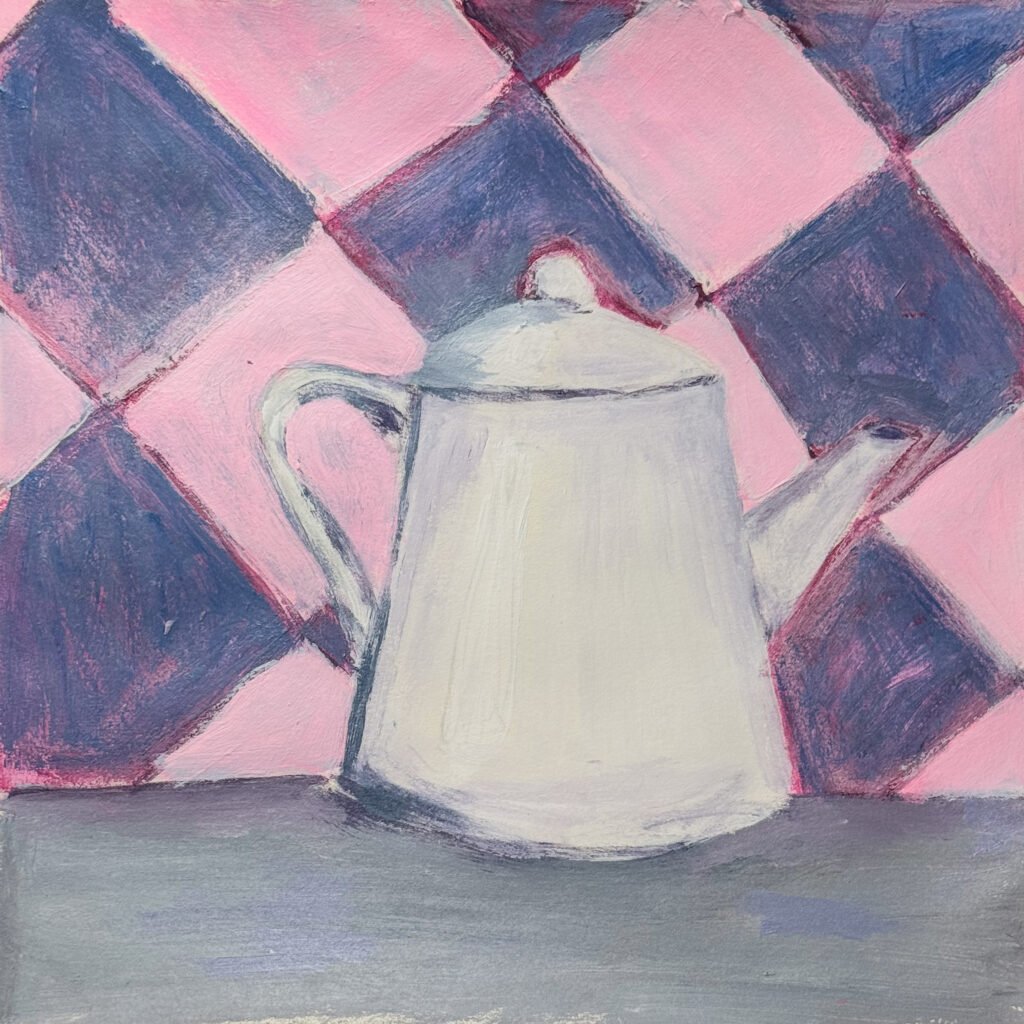
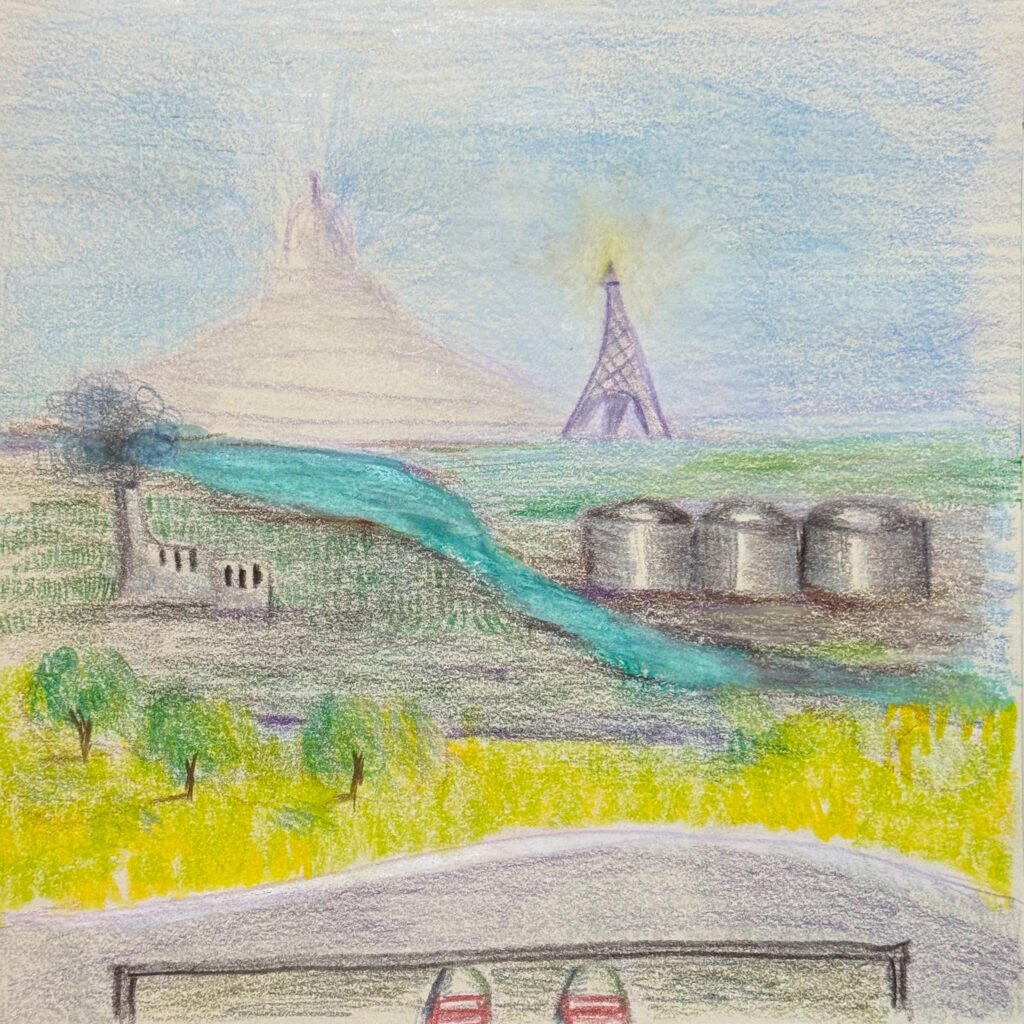
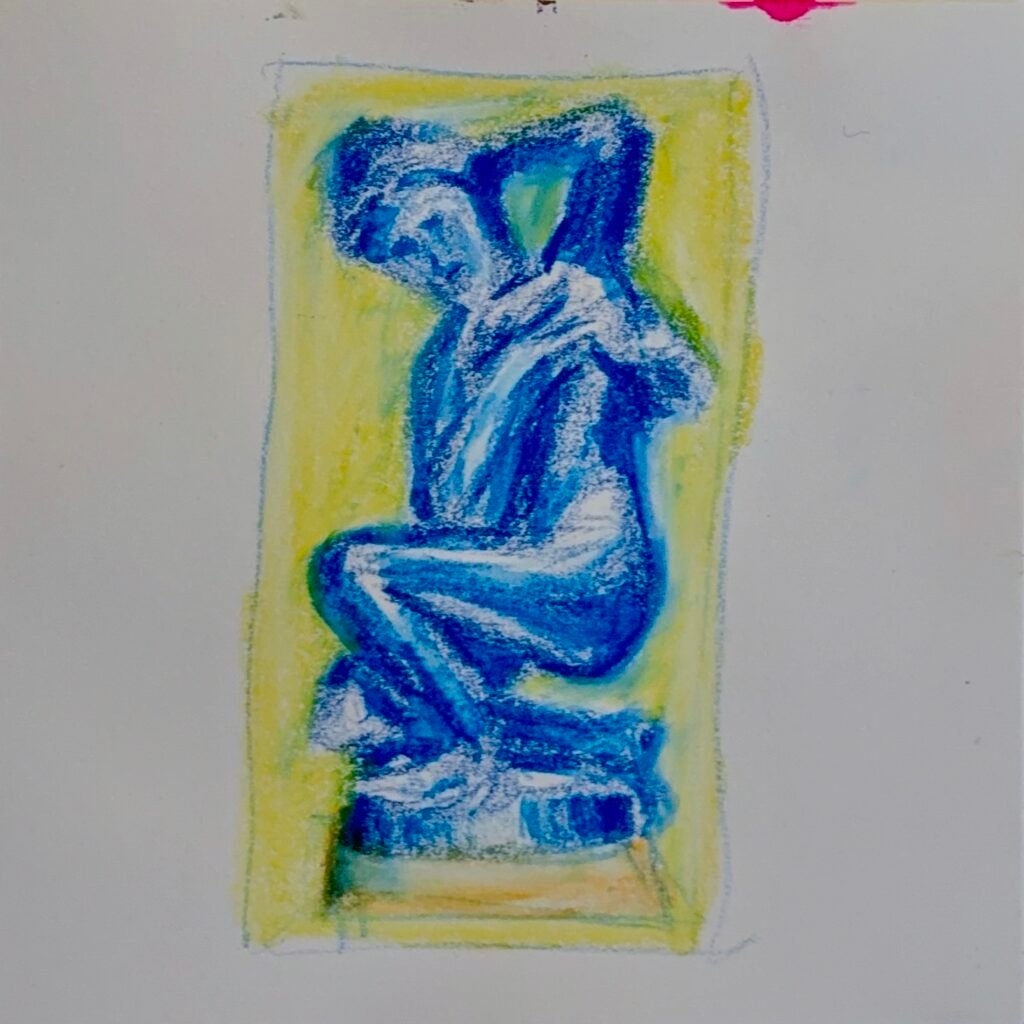
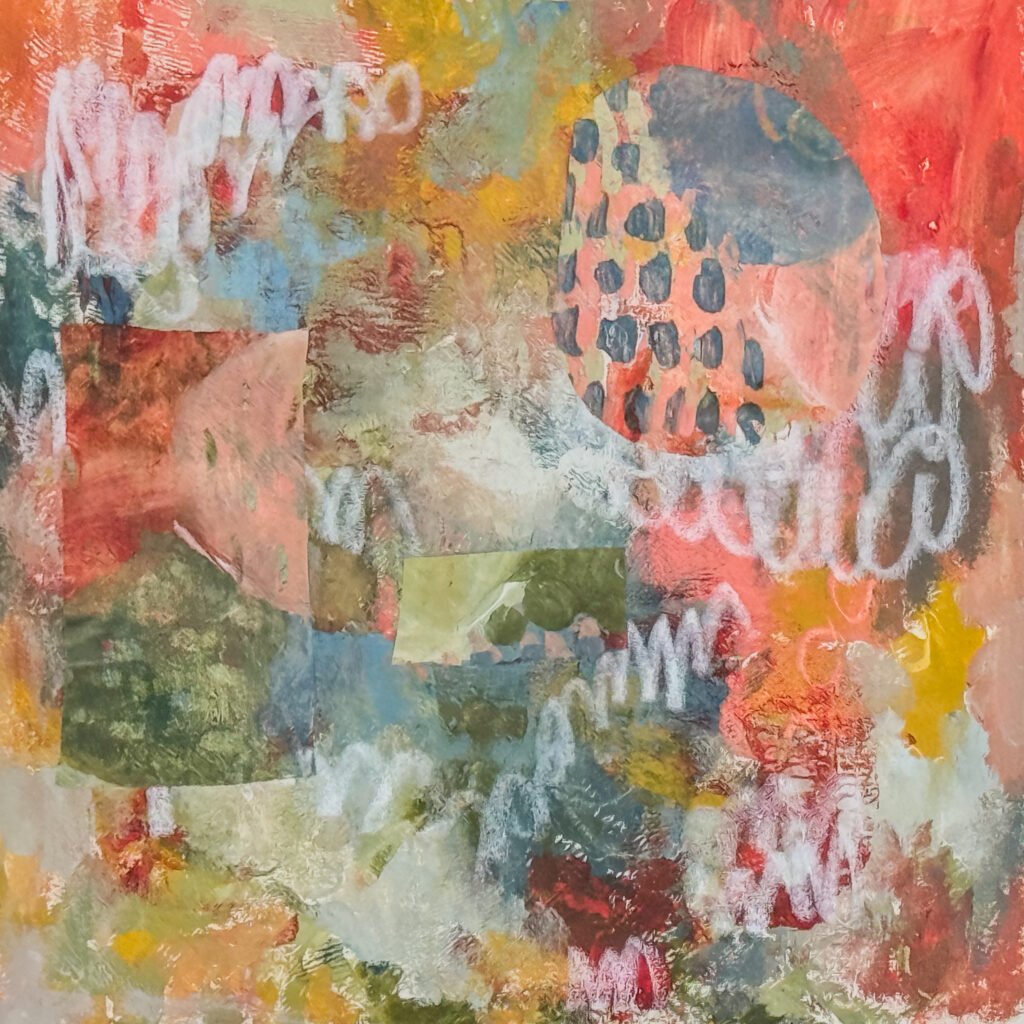
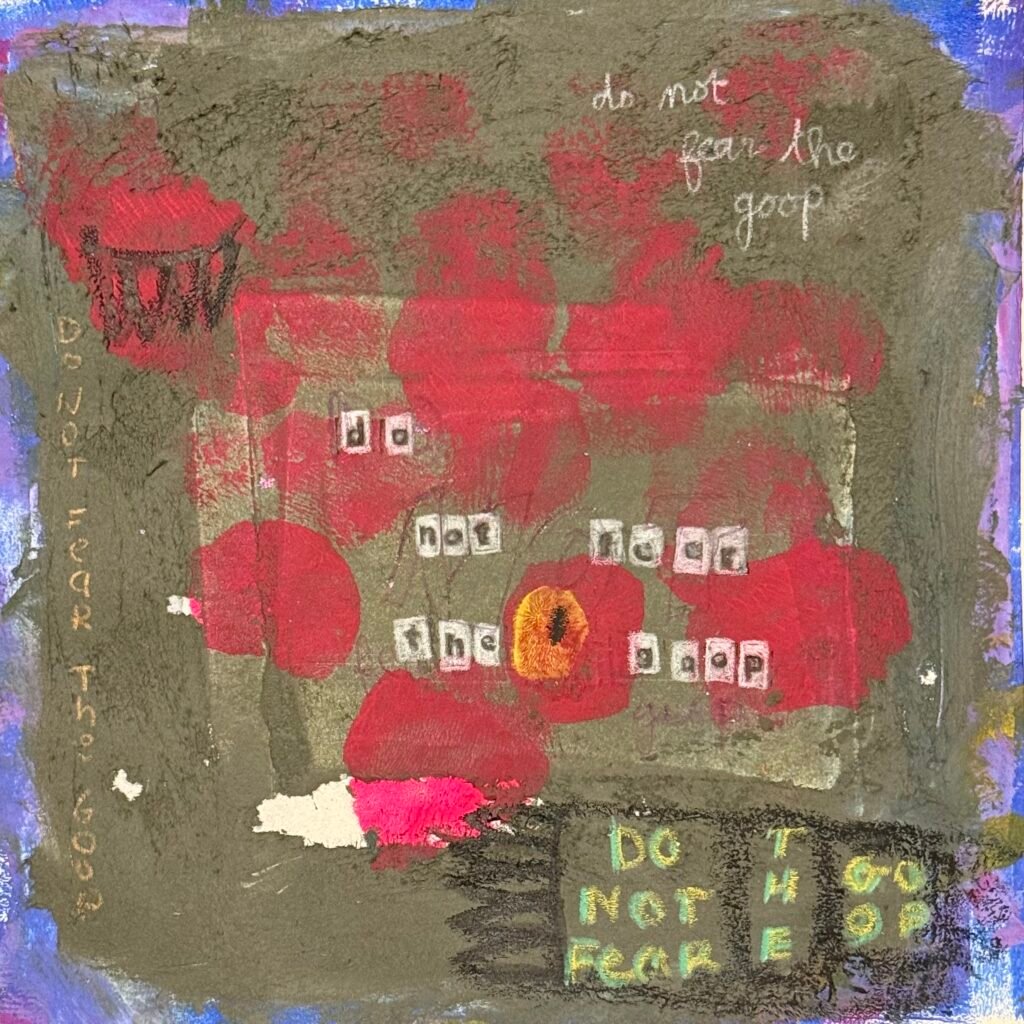
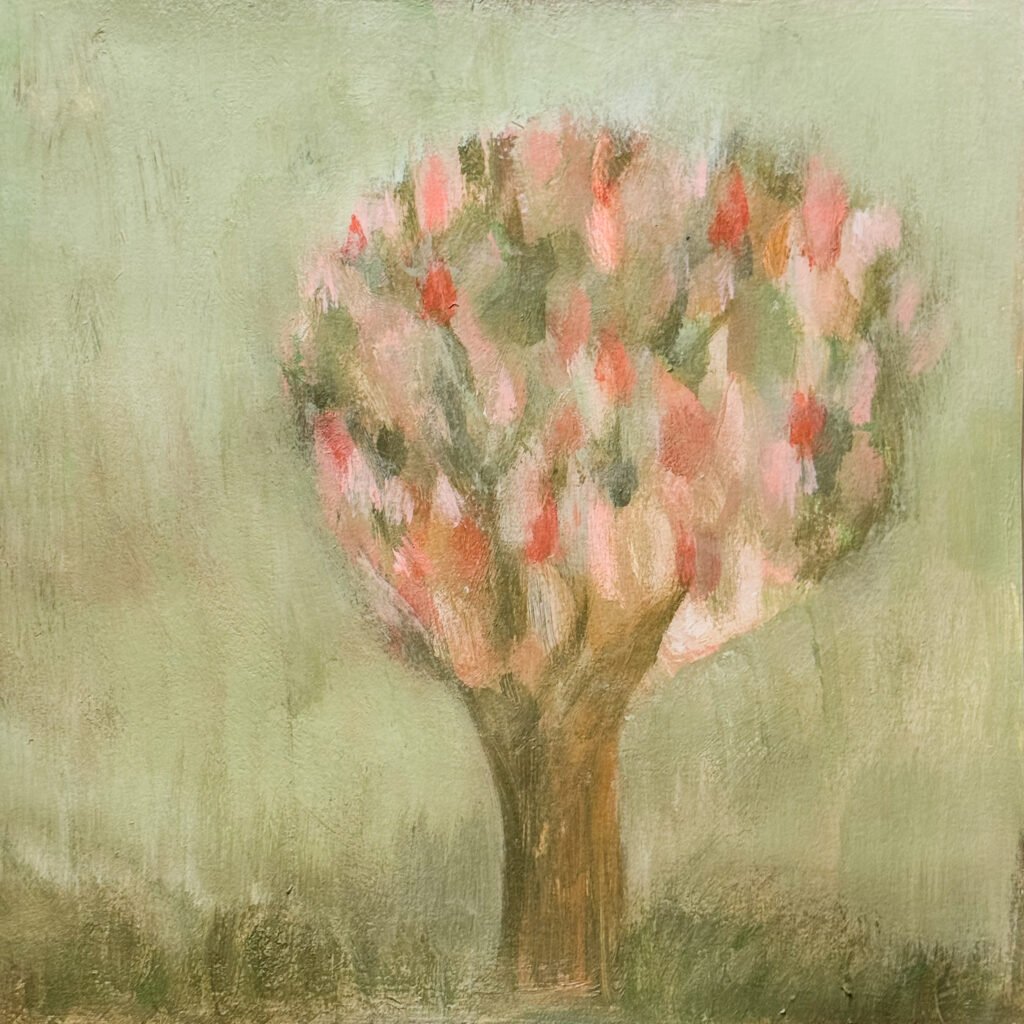
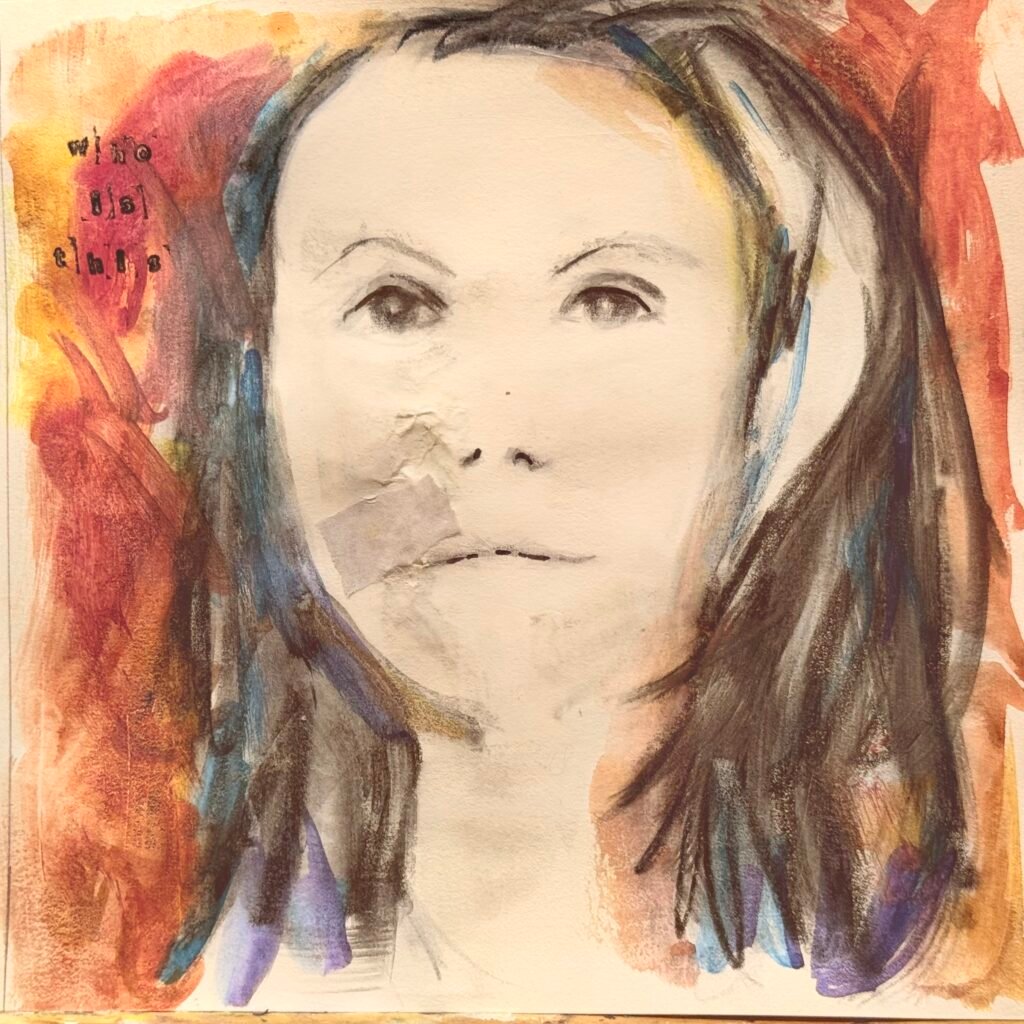
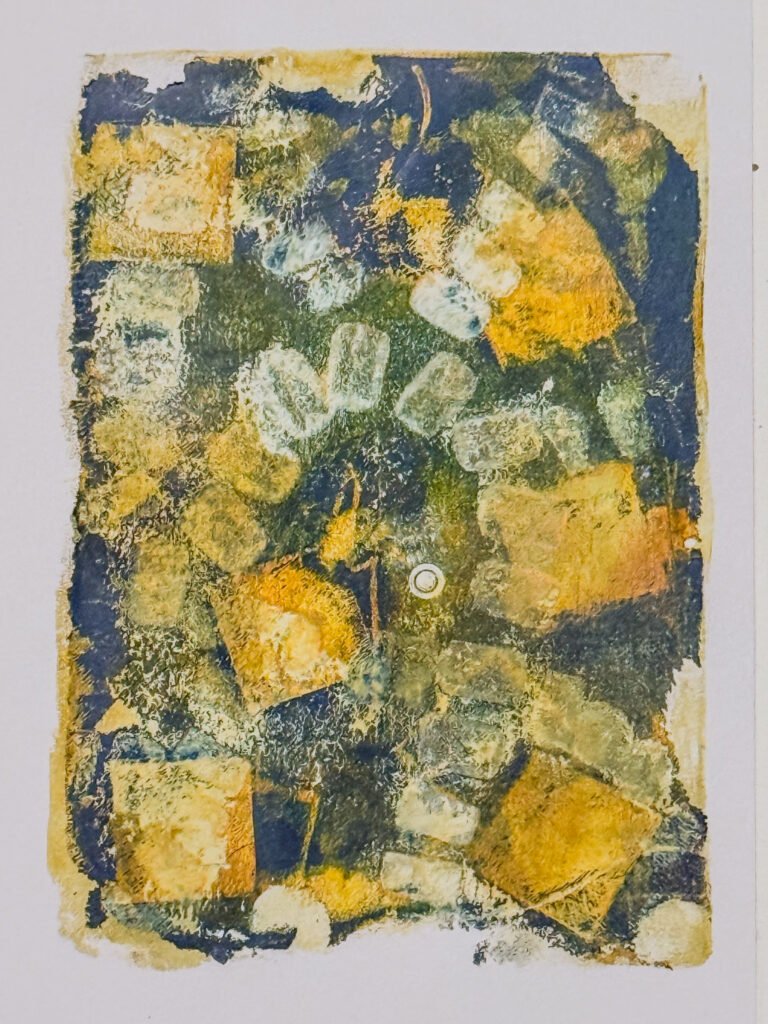
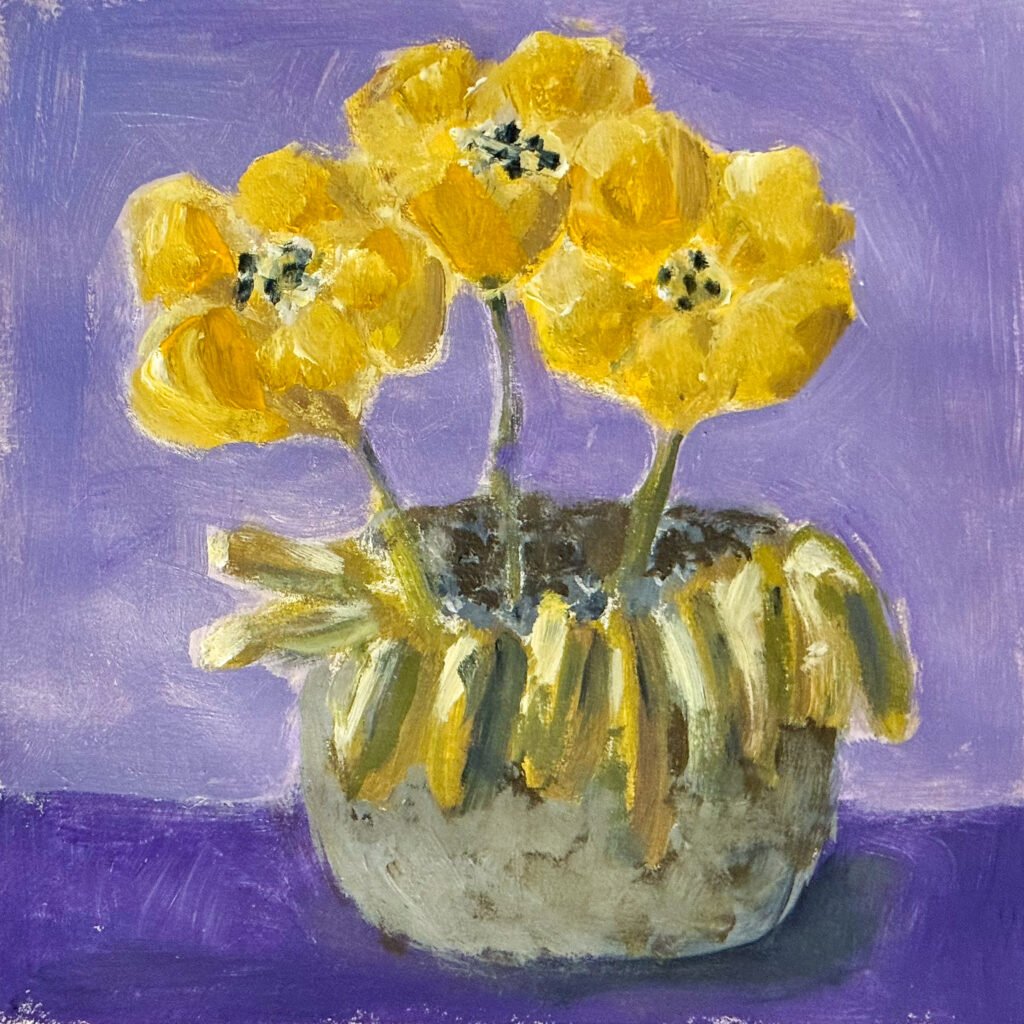
The challenge was quite interesting. I liked the energy of having to complete a piece in a limited amount of time and having minimal constraints (e.g., use colours you don’t usually use). It also got me to use paints and colour mixing and made me realise how much I had missed using those on a more regular basis. It was interesting also to see how some of these pieces were without a reference and others were only loosely inspired from a reference. It freed me from the process of planning, and got me back into doing what I very much enjoy: applying paint. I recognise there’s some roughness and amateurish quality to these sketches but at the same time they feel more “like me” than the refined drawings. Yet there is something in me that is attracted to the quality coming from the slow build up in those earlier drawings.
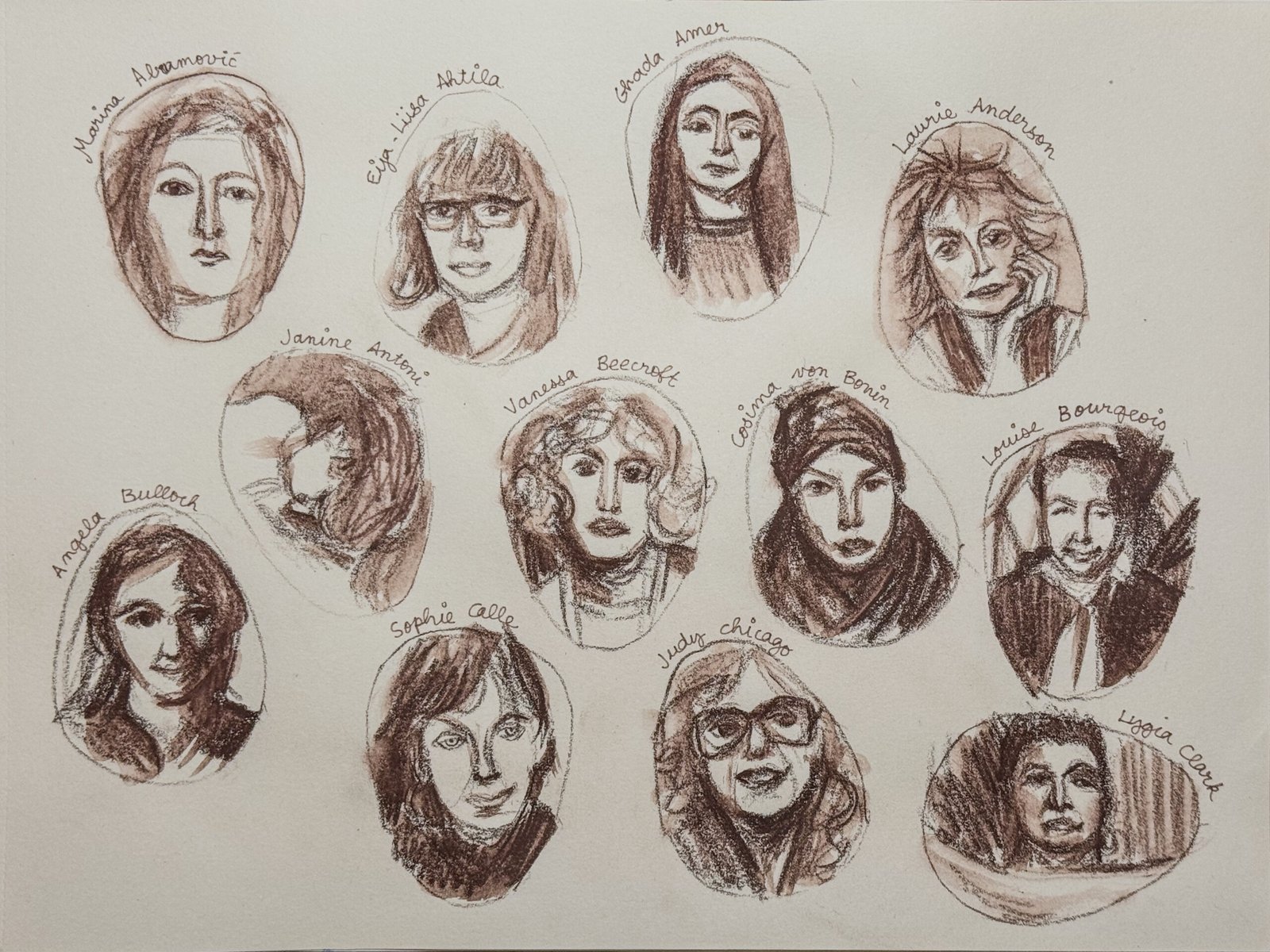
12 women artists small portraits
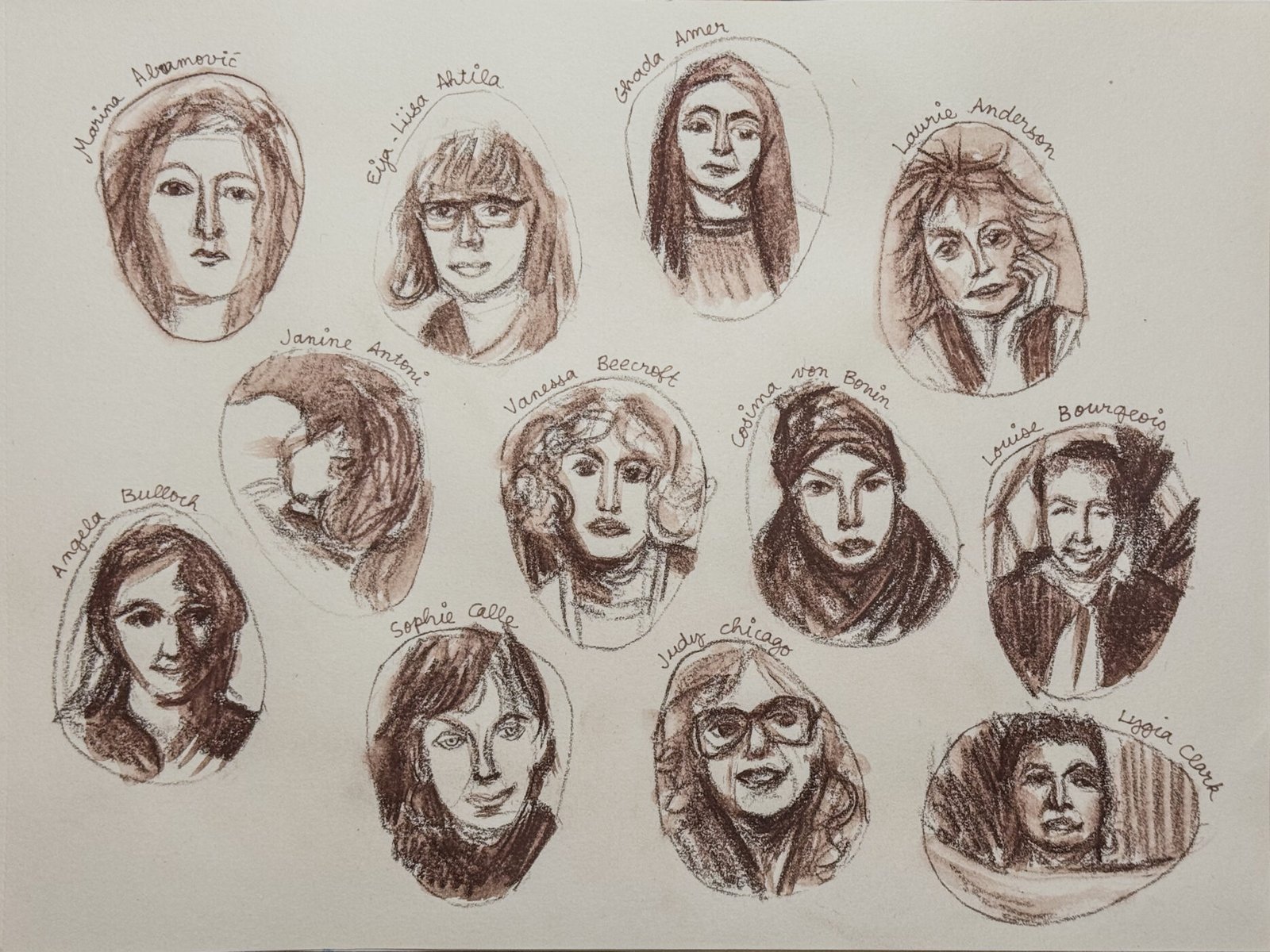
As I reviewed my outputs from the 303030 sketchbook challenge, I was a little taken aback by how productive this had been: the set-up and the “rules” really helped me to get out of my overthinking trench. Yet, at the same time, I could not help bemoaning how “all over the place” my series was. So while the time and “a prompt-a-day” constraint worked well I wanted to see if I could stick to one approach but repeated several times. I chose to create 12 quick mini-portrait sketches inspired by the table of content of Grosenick’s (2001) Women Artists in the 20th and 21st Century. I used the same approach for all portraits: an organic shape as a frame from a cut-out piece of paper, a brown watercolour pencil, and a wet fine round brush for the final touches. It took a few hours to complete 12 portraits and they were by no means reflective of labour in the same way that my tree or my cross-hatching drawing were, and they were not as “perfect” or “realistic” but they were cohesive and lively.
Reflections
Drawings which take time can lose some of the energy which comes from more gestural approach. At the same time, quicker sketches lack the precision of the slow drawings. I enjoyed reflecting on time, time scales, and “rules”. Not unlike Vija Celmins, I think that when I’m engaging in slow labour or extended labour, using rules or constraints may be beneficial.