In this post, I share my thoughts on the BA Painting pathway and the Unit 1.1’s aims and learning outcomes.
Degree Educational aims and objectives
I found out the educational aims and objectives of my degree pathway are as follows:
- Widen access to education in painting at undergraduate level through Open and Flexible Learning;
- Support a systematic understanding of key aspects of painting and your place in the discipline through coherent and detailed knowledge, informed by research, practice and theory in contemporary painting and wider art and curatorial practice including their critical, contextual, historical, conceptual, economic, social environmental and professional and ethical dimensions;
- Equip you to manage your own learning, make use of scholarly reviews and primary sources, and navigate, manage and analyse information from a variety of sources. Enabling you to devise and sustain arguments and solve problems, using ideas and techniques, to include an appreciation of the uncertainty, ambiguity and limits of knowledge;
- Encourage the development of ideas through to outcomes using materials, processes and environments making effective connections between intention, process, outcome, context and methods of dissemination;
- Support the creation of a body of work independently employing processes of observation, investigation, speculative enquiry, visualisation and making through appropriate use of materials, processes, technologies, environments and modes of presentation which demonstrates a well-considered personal practice.
What are my goals with this degree?
I feel I have something to share and contribute, something to say through painting, only I don’t know what it is. I’m hoping that, through learning about contemporary painting, I will be able to get clarity on why I am drawn to this discipline, and how I could fit in, even though I’m late to the party! In that sense the educational aim of the degree “Support a systematic understanding of key aspects of painting and your place in the discipline” resonates for me.
I come to the degree as an academic so I feel I have a head start on the degree’s aim to “manage your own learning, make use of scholarly reviews and primary sources, and navigate, manage and analyse information from a variety of sources” but I’m also very aware that my experience might come as an asset as well as a hurdle. I know different disciplines have different ways of writing and my academic writing is based on the scientific model, which is quite dry and technical. I will probably have to unlearn some ways of argumenting and conceptualising ideas, but I welcome the challenge (and advice!). I look forward to grow in that area and perhaps even reach a level where I can add a publication in an Art journal to my C.V. by the end of my degree!
The fourth and fifth objectives of the degree, “making effective connections between intention, process, outcome, context and methods of dissemination” and achieving a “well-considered personal practice” are one that I feel I have the most to learn from. In the foundation, I started to learn about this process but I did not have a clear intention or context. By the time I graduate, I hope to have become a practicing artist, with a clear vision of what my contribution is, and how I approach it. By practicing artist, I mean an artist who is not just making “pretty pictures” but an artist who is able to articulate what they are aiming to accomplish with their art, an artist who takes part in exhibitions, confidently submit her artworks to art competitions without feeling like an imposter and who has started to built a C.V. that showcases artistic achievements and have found her place and made authentic connections in the “Art world”.
Aims and Learning Outcomes of the Drawing for Painting Unit (1.1)
This year, my course unit aims to:
- A1: Introduce me to a range of media and methods in drawing.
- A2: Develop my ability to express and explore information and ideas visually.
- A3: Support me to build skills in critical thinking and research.
- A4: Support me to explore how artists have used drawing in the context of painting.
By the end of the year, I will (hopefully) have learnt to:
- Use drawing processes and methods to explore a range of media and techniques.
I take this to mean using drawing as a means to explore different media (charcoal, pastel, etc.). In the Foundation course, I have found that drawing was a way to get to know my subject but I draw mainly using graphite pencils. I enjoy working on shapes, shading and highlights and meditate on what I am drawing in the process, notice the smallest details. I’ve also enjoyed using looser drawings, for creating video animations, for example.
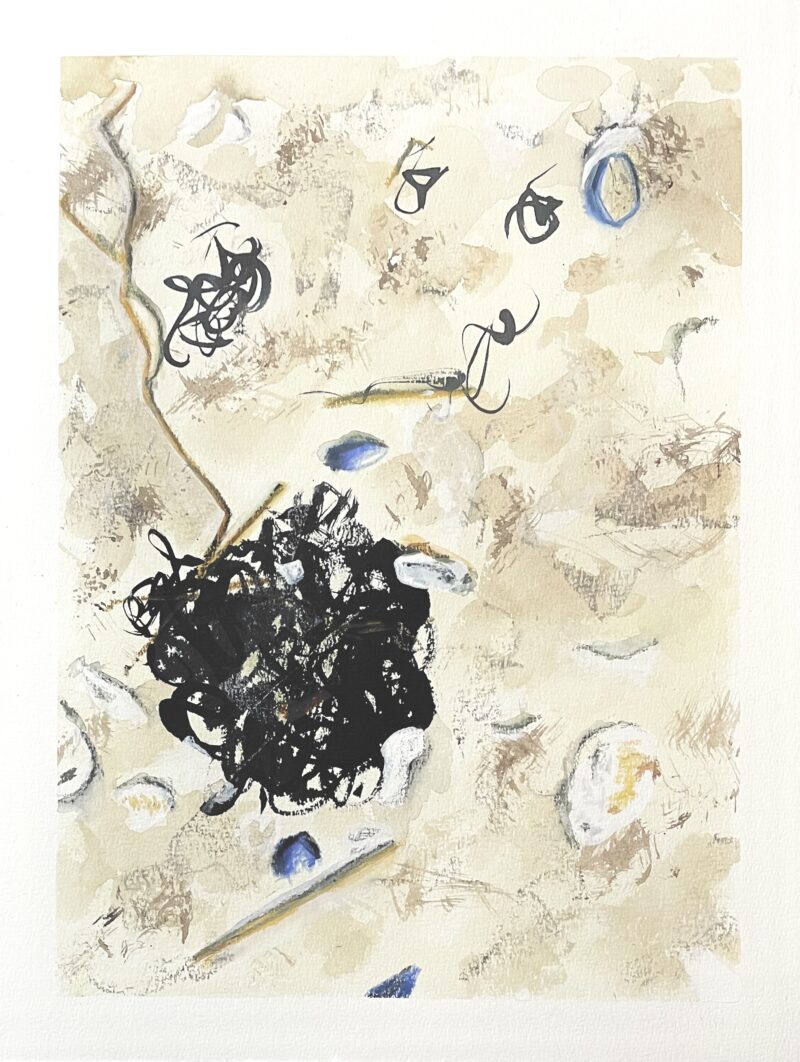
I am not sure how I can explore media and techniques through drawing. I enjoy experimental mark-making as an exercise but the outcome always feels a little superficial. I haven’t yet found a way to combine draughtsmanship and mark-making.
- Apply drawing skills in the development and delivery of outcomes
This is what I’m mostly interested in but again I know there is much I can improve. I’m comfortable and enjoy drawing objects that are carefully designed like a chair or an accessory. I can build upon my Foundation work here. I find myself thinking of the life of things we take for granted like sugar and sweets, a shampoo bottle, a fork…
- Develop creative, practical, and research skills relevant to the creation and development of your personal practice.
I look forward to this and starting to reflect on what skills I would like to develop. I tend to be a little all over the place and my ambition is really to find a way to channel my creative energy. Right now, I would like to practice drawing skills through Nicolaides’s schedule, although somehow there is always something else in the way, like writing this reflection! As I mentioned before, I think research skills won’t be an issue but I’m eager to learn how to improve my research skills in the arts and humanities.
I’m not sure what creative and practical skills refer to. I understand technical skills but I am not sure how to learn to be “more creative”.
- Use reflective skills to explore a personal perspective on drawing within contemporary painting practices, debates, and your own practice.
I look forward to engaging in this and develop my own perspective. I have two books I started to read and would like to complete during my studies this year: The story of drawing (Owen, 2024) and How painting happens and why it matters (Gayford, 2024).
Reflecting on my pathway
Some choices are grouped around wanting to build core drawing skills such as working from observation, drawing using tone, translating space and volume, utilising perspective and developing composition. Others are grouped around wanting to investigate new possibilities for making and thinking, develop greater awareness of the material properties of drawing materials, drawing as ‘process’ and the act of making as a generator of new ideas.
From the OCA website
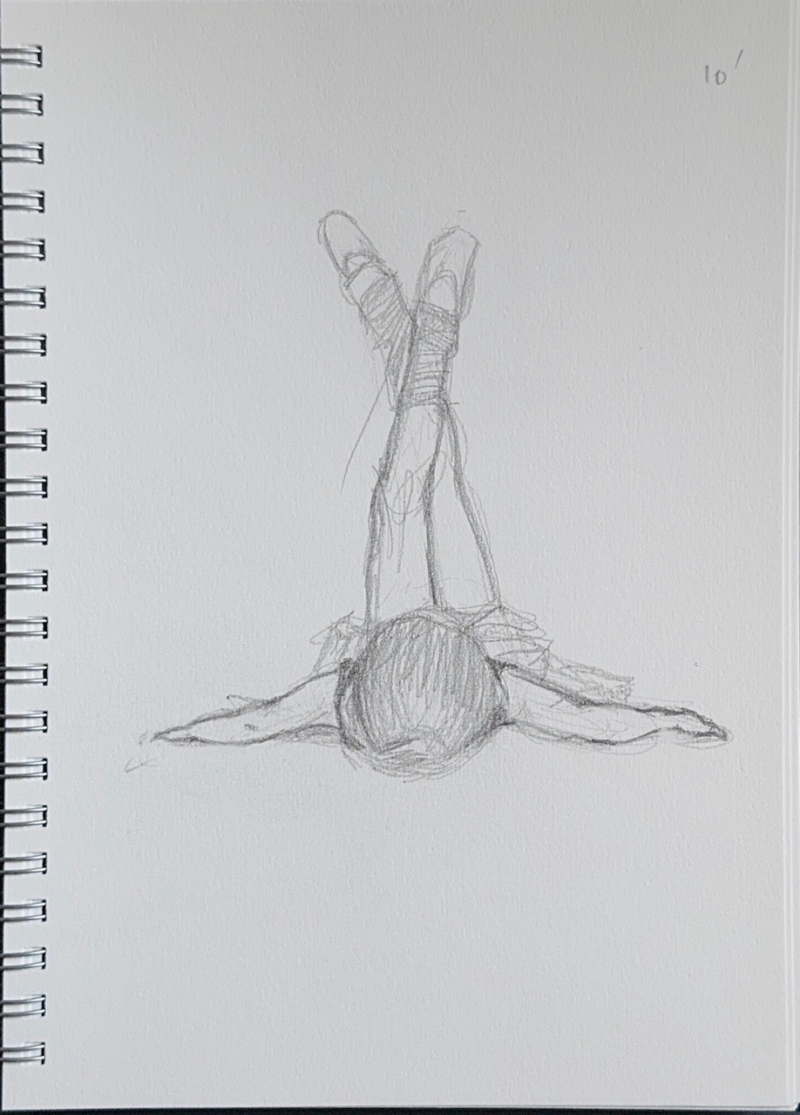
I started to think this was a tricky choice I didn’t want to have to make so I decided to write freely about it and realised I already had the answer glaring at me from the path I took until now. The realisation was that I am really drawn to classical drawing. I deeply admire the craftsmanship of draughtsmen such as Albrecht Dürer, Picasso, Matisse, Wayne Thiebaud. I have seen some of their drawings in museums and exhibitions, I have reproductions and books of their drawings at home. I have also worked on exercises from Juliette Aristides’ (2019) Beginning Drawing Atelier and Betty Edwards’ (2013) Drawing on the Right Side of the Brain. I’ve also started to follow the practice recommended from Kimon Nicolaides’ (2022/1941) The Natural Way to Draw and completed (with difficulty!) the first 15 hours of practice. My aspiration for this year is to develop my ability to see through my senses as an artist.
Learning to draw is really a matter of learning to see — to see correctly — and that means a good deal more than merely looking with the eye. The sort of ‘seeing’ I mean is an observation that utilizes as many of the five senses as can reach through the eye at one time. (…) we see through the eyes rather than with them. It is necessary to test everything you see with what you can discover through the other senses — hearing, taste, smell, and touch — and their accumulated experience.
Nicolaïdes (1941, pp. 5-6)
This really appeals to me, learning to draw from a situated, embodied perspective. I’m not interested in learning to draw an ultra-realistic image and, equally, I’m not interested in making marks that are not anchored somehow in what I have experienced while I am observing or have observed. I think, especially now, with the threat of AI invasion in every realm of human creation, we need more than ever to reconnect with what it means to see as a human being in connection with corporeal reality, rather than as an algorithmic machine producing images based on pixels and probabilities.
Here, Nicolaïdes also makes a very intriguing point:
Our understanding of what we see is based to a large extent on touch. (…) If you go into a dark room to get a book, you will not bring back a vase by mistake even though the two are side by side. (…) Imagine that your pencil is touching the model instead of the paper. Without taking your eyes off the model, wait until you are convinced that the pencil is touching that point on the module upon which your eyes are fastened.
Nicolaïdes (1941, pp. 6-9)
This is the kind of drawing practice I wish I could develop: not a practice that aims to be mechanical and merely “correctly” and “accurately” translate space and volume on paper, nor one that explore mark making and the materiality of drawing through the immediate experience of interacting with pigments, binders and surfaces. Instead a practice that helps me reconnect with what it means to be a sensing human.
But, as I write this, I am humbled by the effort required to achieve this. I am afraid that I will not have the stamina or executive control to pull it through. I am not the type who goes to the gym and follow through a programme with dedication and consistency. I am more of the type who constantly gets distracted by the adrenaline, the buzz, the alluring new and shiny, the type who starts strong and finishes weak, if at all. I’m also more of the type who procrastinates, dreams big, overthinks, imagines, doubts, and misses deadlines rather than gets things done on time and efficiently. Sometimes I think the elephant in the room is resistance. I have procrastinated reading many books about what may be stopping me from entering the War of Art (Pressfield, 2022). I know it will be a struggle yet I enlisted for it so I must be ready somehow. If not now, then when? I won’t be a human forever!
References
Aristides, J. (2019). Beginning Drawing Atelier: An Instructional Sketchbook. Monacelli Press.
Edwards, B. (2013) Drawing on the right side of the brain: A Course in Enhancing Creativity and Artistic Confidence. 4th ed. Souvenir Press.
Gayford, M. (2024) How Painting Happens (and Why It Matters). 1st ed. Thames & Hudson, Ltd.
Nicolaides, K. (2022/1941) The Natural Way to Draw. Souvenir Press Ltd.
Owens, S. (2024) The Story of Drawing: An Alternative History of Art. New Haven (Conn.) Yale University Press.
Pressfield, S. (2012). The War of Art: Winning the Inner Creative Battle (R. McKee, Ed.). Black Irish Entertainment LLC.