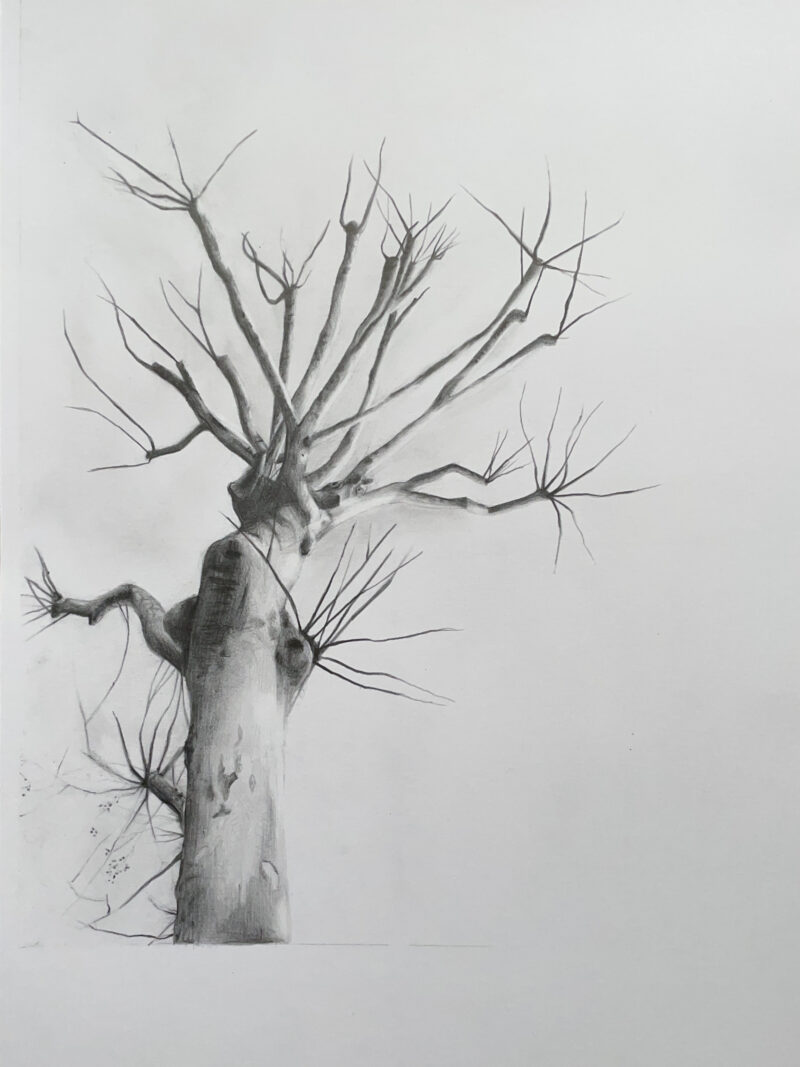
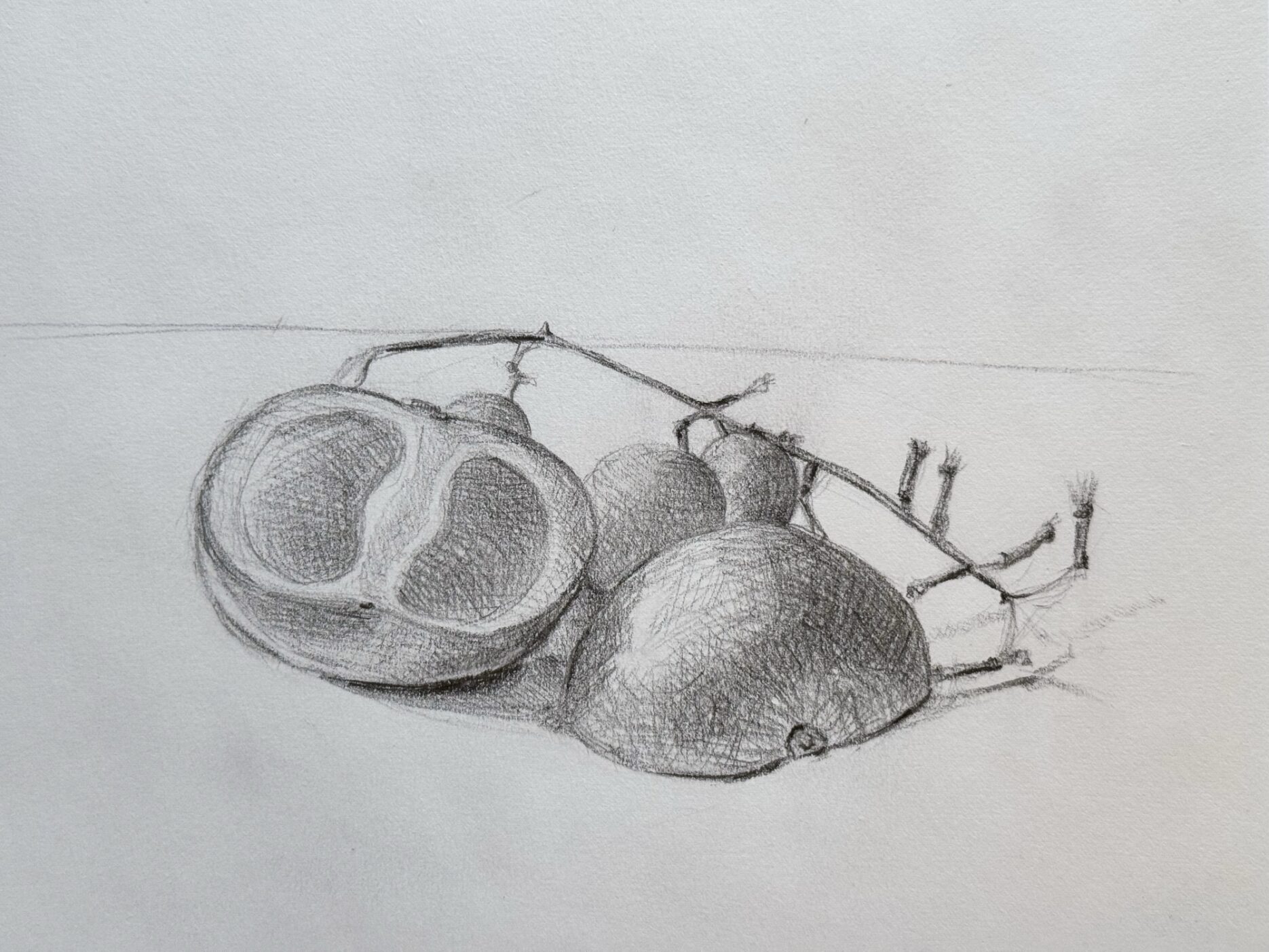
In Project 2, I’m aiming to develop my drawing skills. My priority is to practice my drawing and develop my understanding of tonal values, aiming to use the full tonal range visible when I look at my subject matter, using monochrome drawing.
I chose the first exercise from Project 4 as it seemed the most appropriate to get me going. I’m asked to make a series of four studies of individual objects, creating dark, medium and light tones using hatching and cross-hatching techniques combined with soft and medium grade pencils and altering the direction of the strokes.
I’m aiming to spend about 15 hours practicing for this first exercise.
First drawing
For my first drawing, I worked from a still life in my light box.
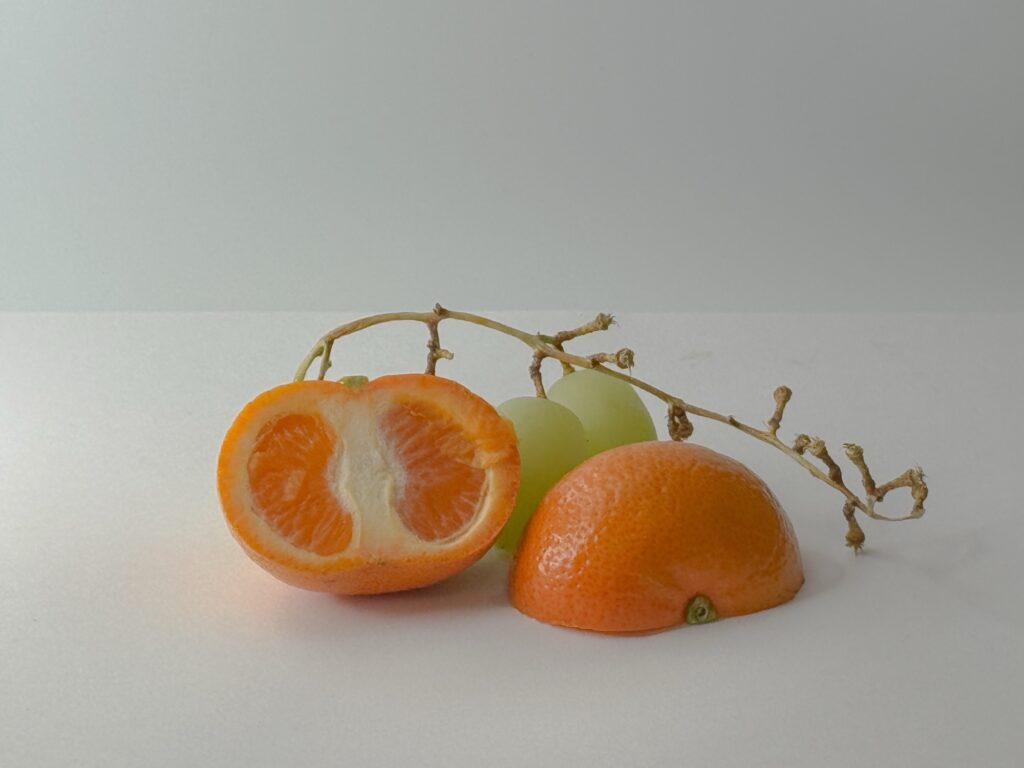
First attempt – tonal variations
I remembered to use blocking, following what I learnt from Juliette Aristides’ atelier and started with lines around the subject. Then I started to add shadows. I was aiming to capture different tones. I was quite surprised by the result, it was quite pleasing to build up the shape on paper.
I was building up subject after subject.
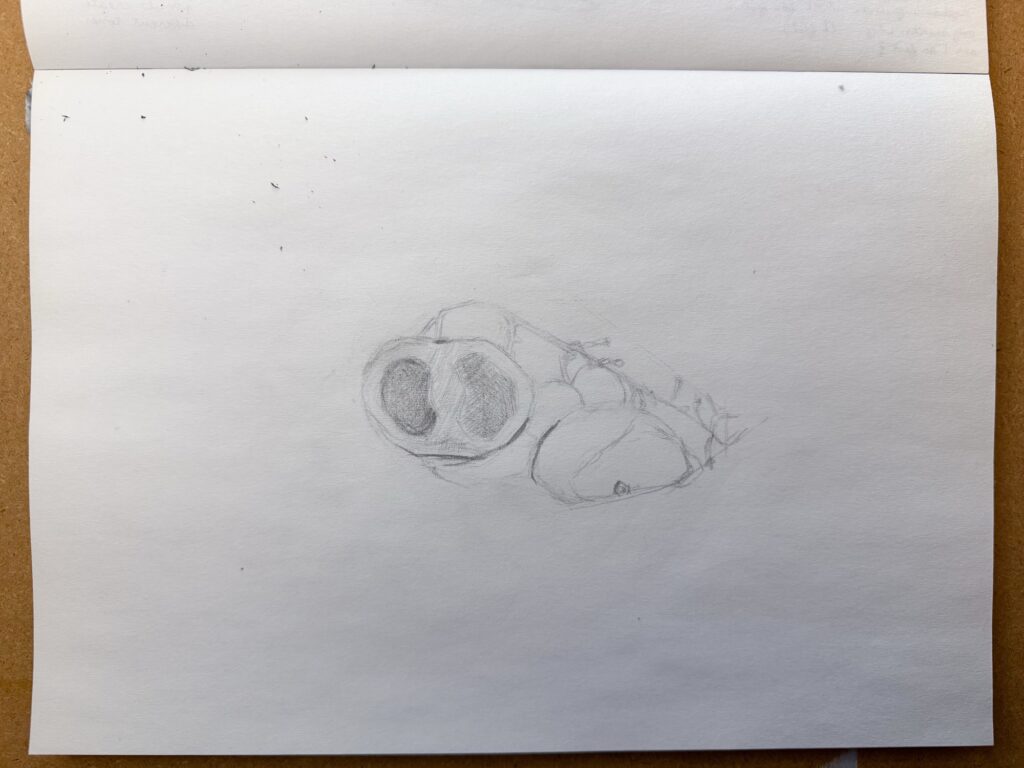
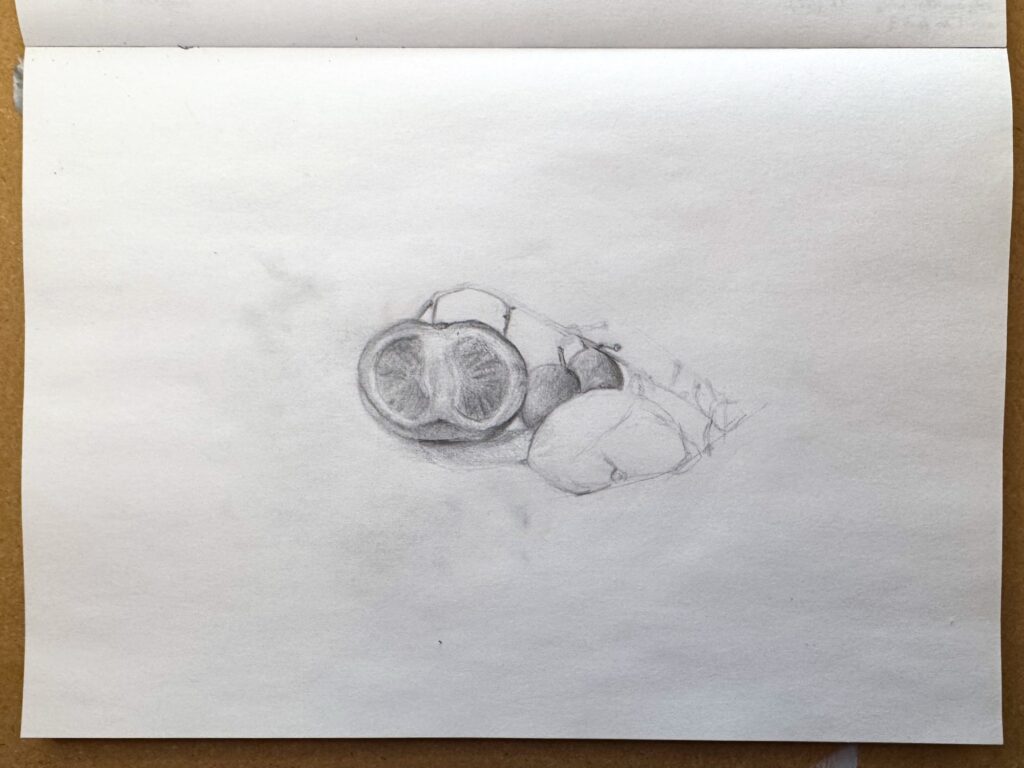
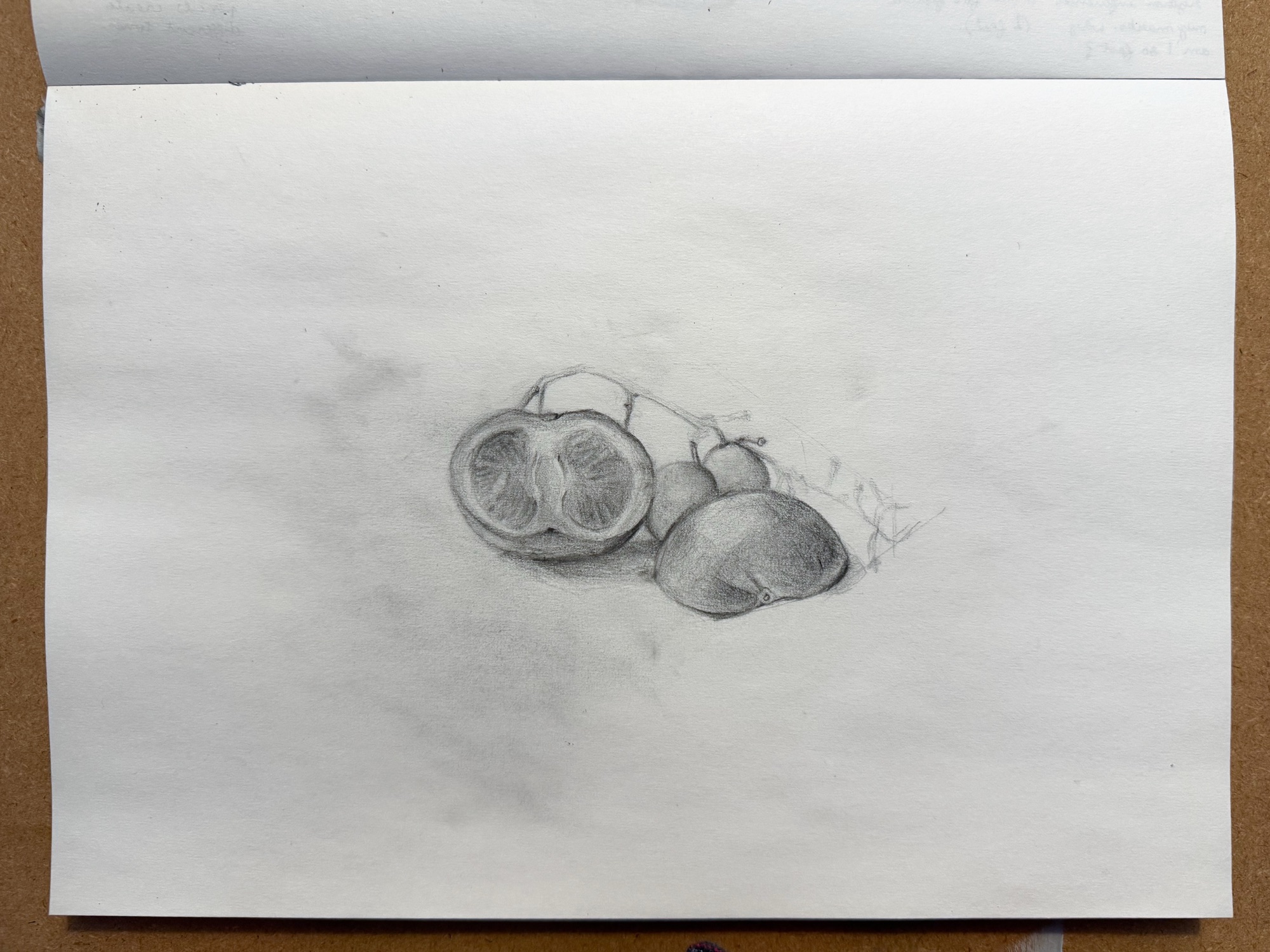
I’m not sure what to say about the final result. It’s not bad but I suppose it still does not have enough contrast? I think perhaps the back shadow of the front satsuma is too much like a line and the grapes are possibly too dark. Still the final image is aesthetically pleasing (to my eyes at least!).
Second attempt: cross hatching
I realised for this exercise, we are invited to use cross hatching as a way to sketch.
I watched a video to help me better understand what the difference was and also read about it in Stanyer and Rosenberg’s Foundation course in Drawing. There I learnt that Picasso was using it so I went back to my book “Picasso and the Art of Drawing” to look at examples of his drawings.
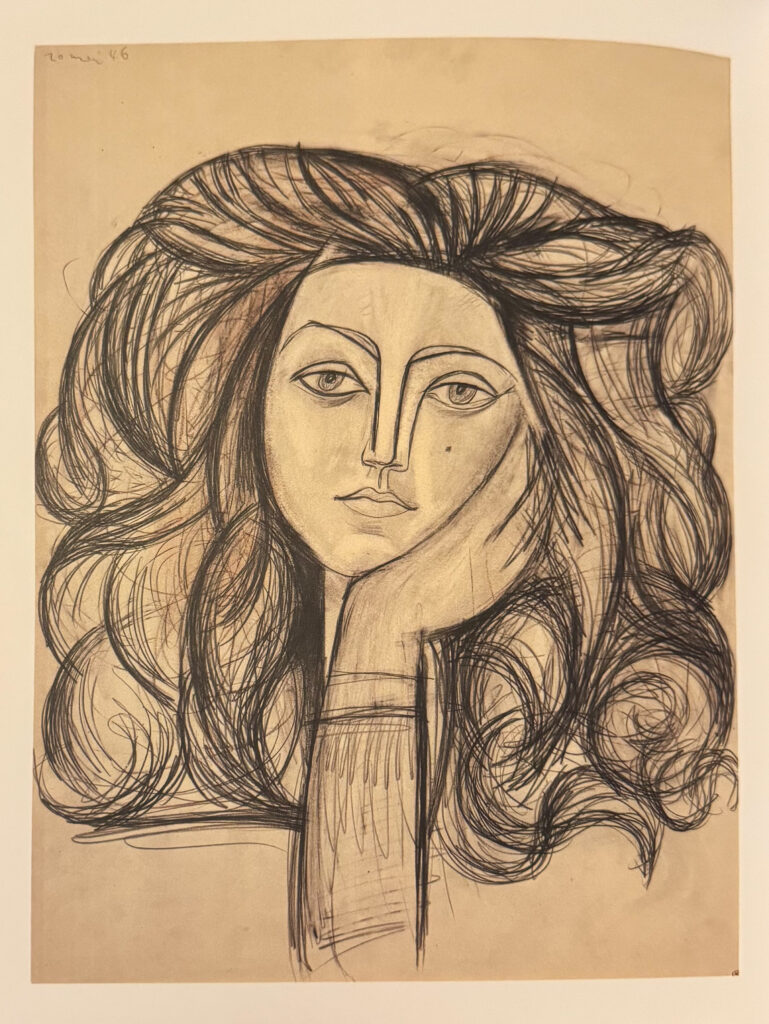
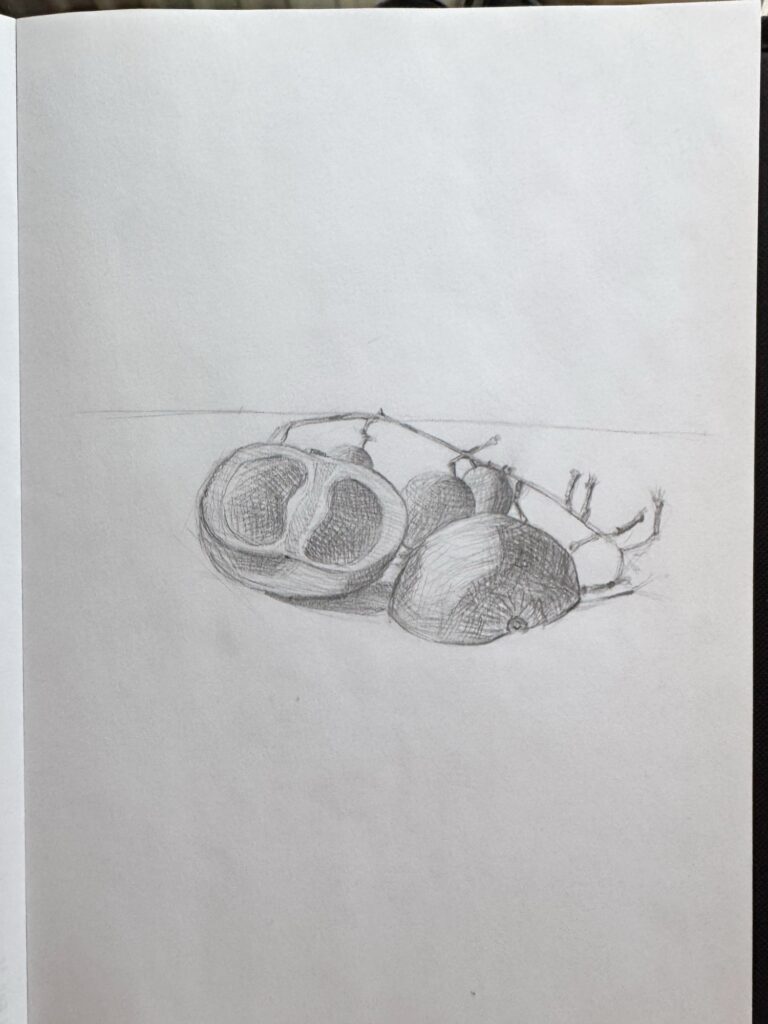
To my surprise, I created an almost complete drawing in only 30′! It was a little rougher but also somewhat more interesting than the tonal drawing. I used a 2B pencil for it.
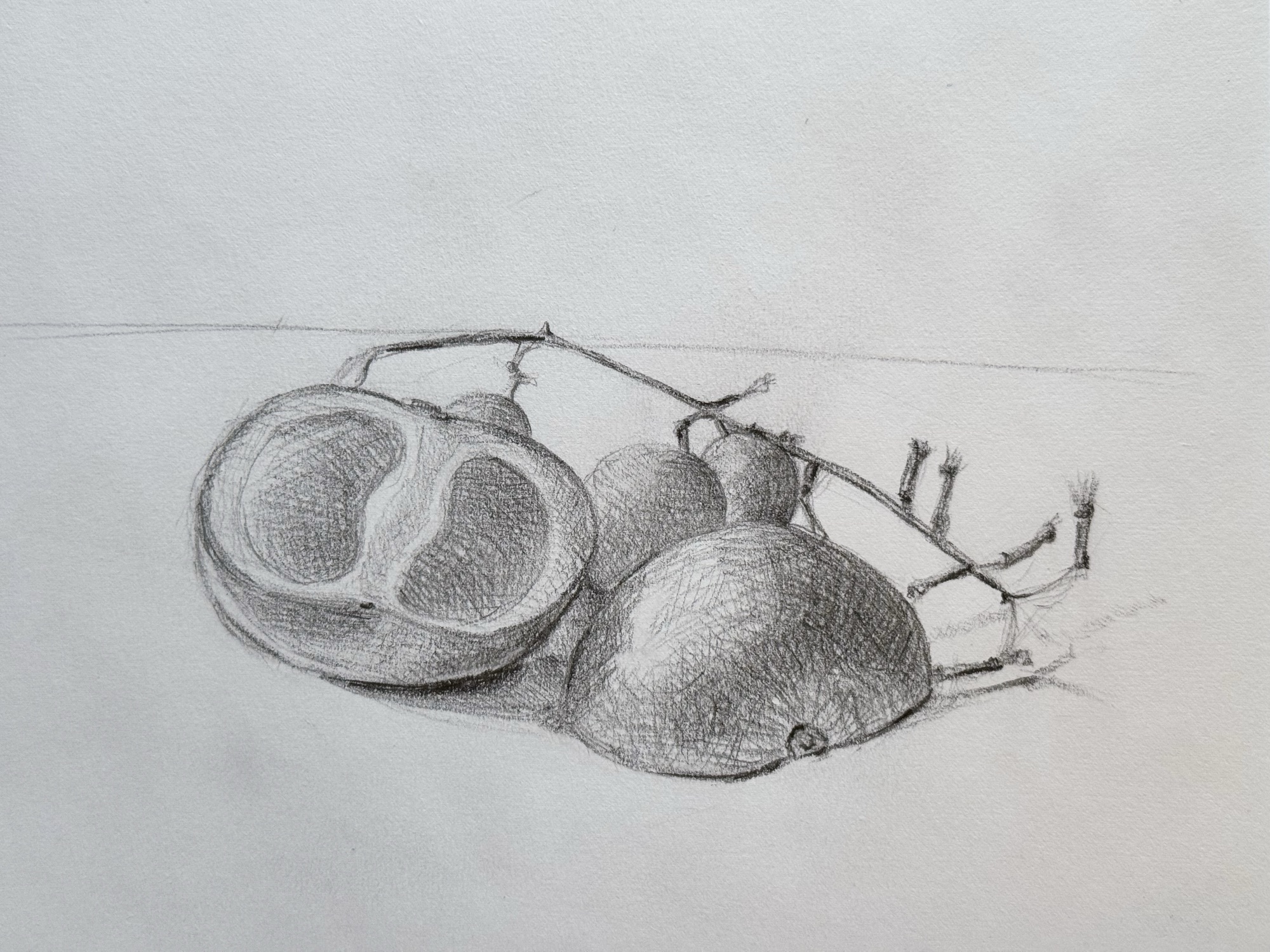
I had another go on the next day using darker pencils (6B and 8B). I much prefer this one to the tonal drawing one. The cross hatching adds interest. I think the grapes are still a little too dark but other than that I’m quite pleased with the outcome and I think I’ll submit this as my first drawing.
Third practice: Sea shells
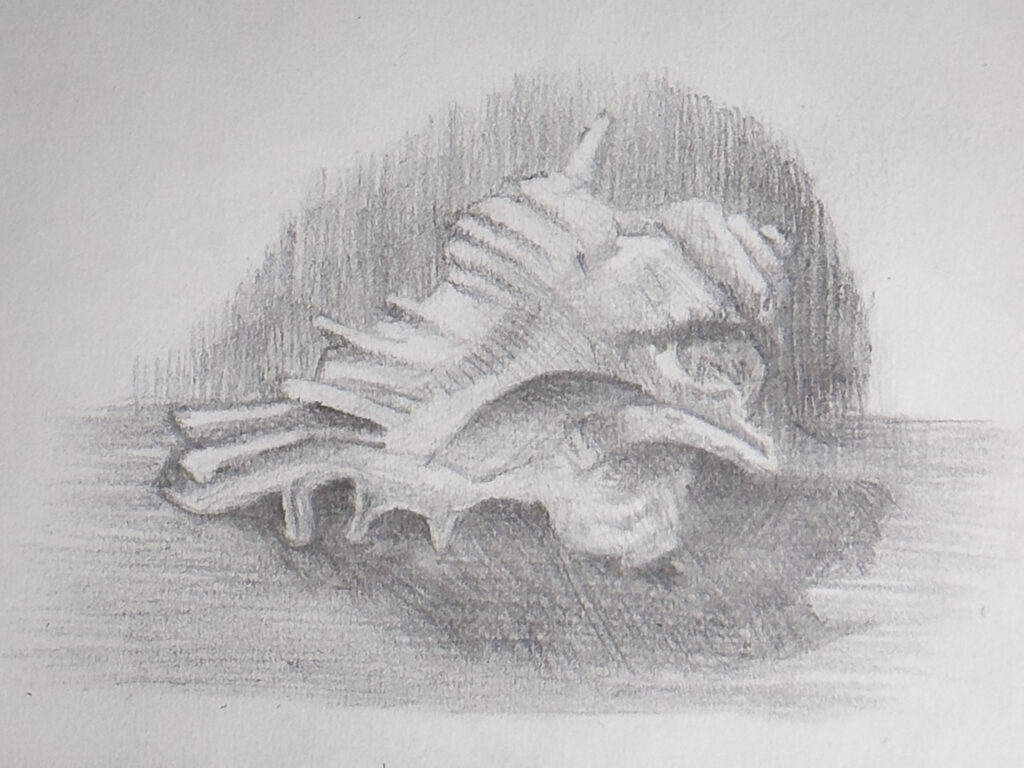
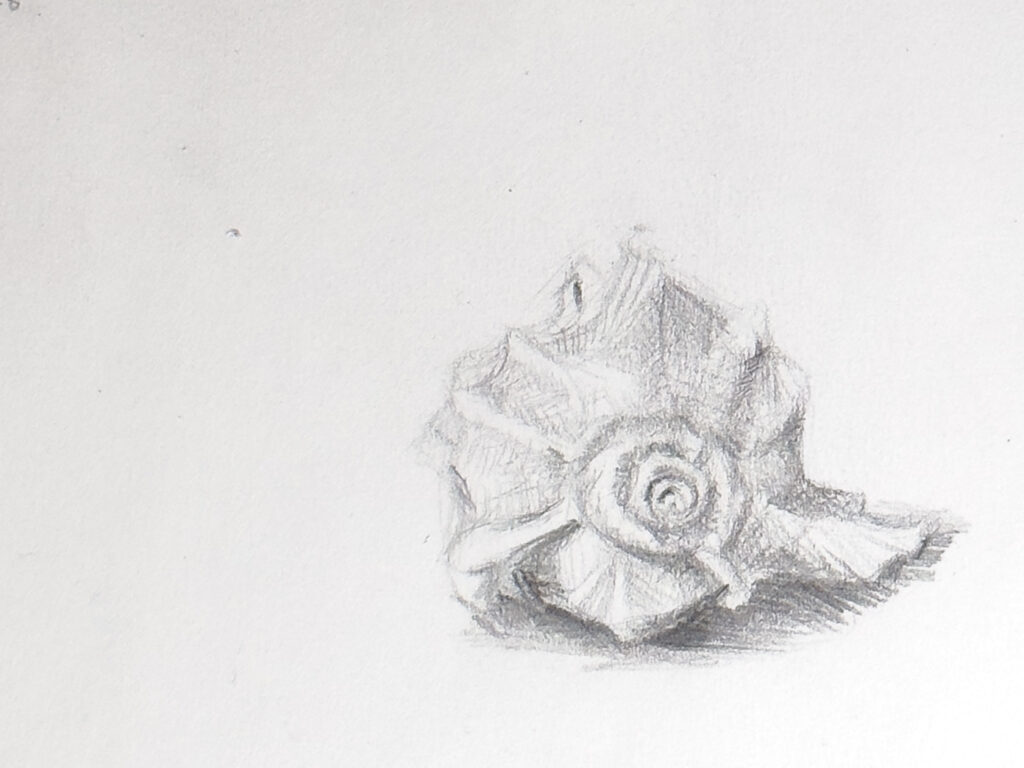
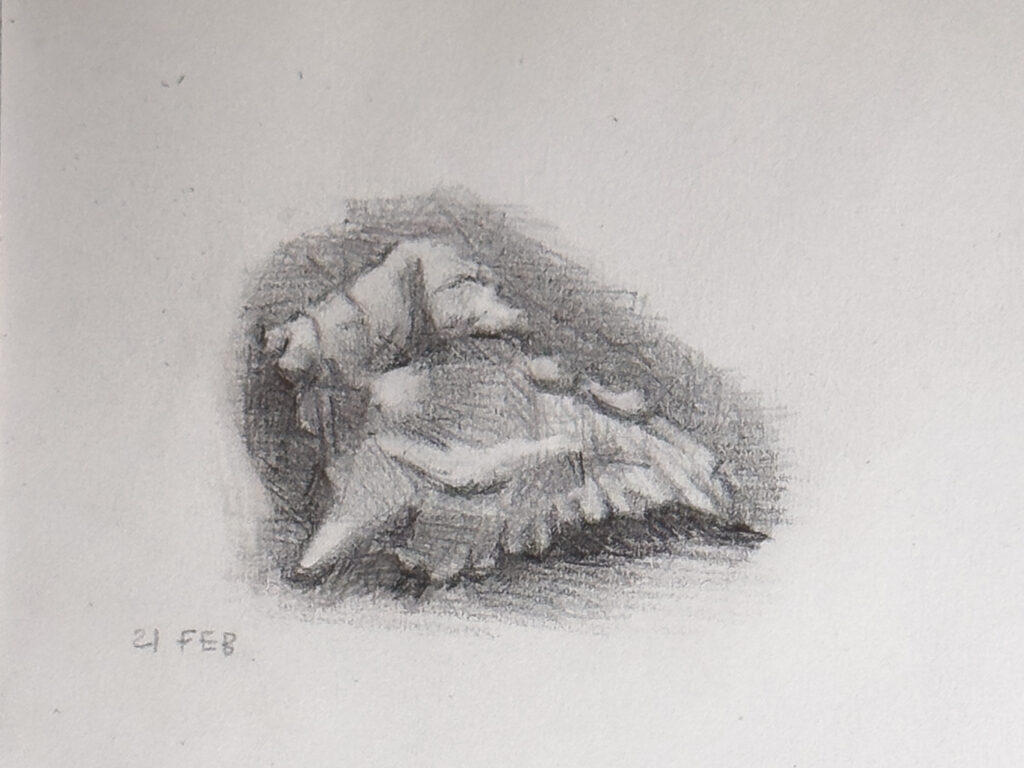
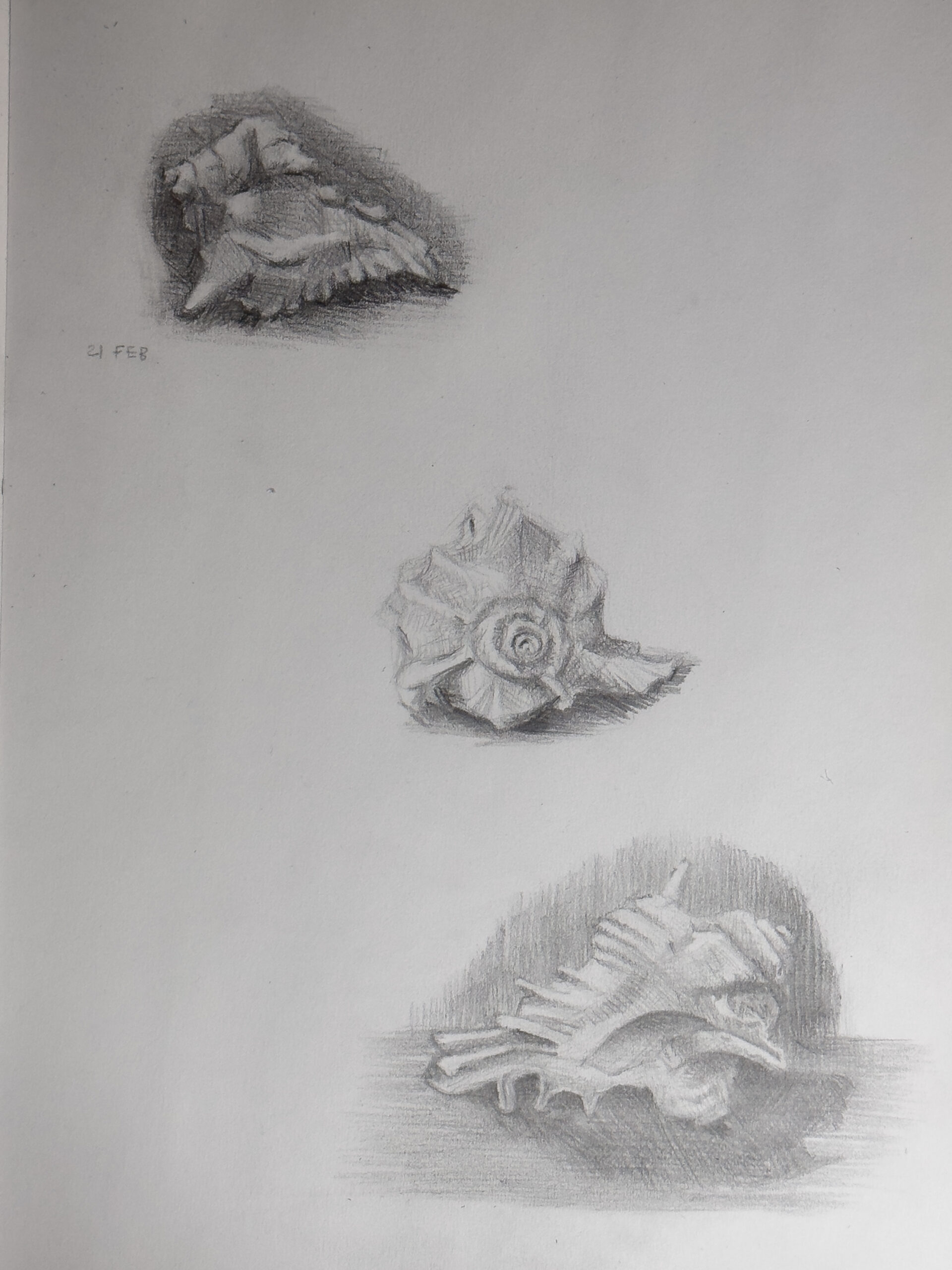
For my third practice, I selected a sea shell and placed it in my Lightbox for close inspection. I completed three mini studies, trying to vary the tones and use the cross-hatching and the angle.
Reflections
I feel I need regular practice and perhaps I should allocate time during the week when complete a drawing. I was surprised by the time differences: the first drawing was two hours and the last were half an hour each. I suppose with practice the marks would become more precise, more directed. What is difficult is to keep doing it without feeling it is an end in itself and without seeing progress: am I getting better at this? Can I?
This being said, I could tell the materials make a difference: the paper, the lines. I’ve only used pencil and conté crayons for this. They are well observed although not exact replicas. At first I didn’t like them because they did not look like the original, but returning to them afterwards and examining them for their own sake, I felt happier with the result. They have nowhere near the energy of Picasso’s drawing of Françoise Gilot, however. The energy in that drawing is mesmerising.
Mine were a little small, and limited in terms of paper and drawing materials. I need to be bolder!